Most people who say they do not like whisky tried one bottle, usually at high strength and often heavily peated, and concluded the whole category was not for them. The category is enormous and the styles inside it have almost nothing in common, so the first choice deserves a little thought.
What should you avoid at the start?
Two things. Heavily peated whisky, because intense medicinal smoke is a genuinely acquired taste and a poor introduction. And cask strength bottlings, because they need dilution to be enjoyable and a beginner has no reference point for judging how much.
Also avoid spending a great deal. An expensive bottle raises the stakes and creates a sense that you ought to be appreciating something you may simply not enjoy yet. A modest bottle you feel free to experiment with is more useful.
Which style matches which taste?
Start from flavours you already like elsewhere.
- If you like sweet things, vanilla, caramel and dessert flavours, start with bourbon. It is the most immediately approachable whiskey style and reasonably priced.
- If you like light and easy drinking, start with a blended Irish whiskey. Triple distillation produces a soft, gentle spirit that is very hard to dislike.
- If you like dried fruit, Christmas cake and richness, look for a sherry cask matured Speyside single malt.
- If you like spice and dryness, try a rye whiskey, ideally one at the lower end of the rye percentage.
- If you like crisp and delicate flavours, a Lowland or unpeated Highland malt suits better than anything heavier.
Smoke is worth exploring eventually, but as a fourth or fifth bottle rather than a first.
How much should you spend?
Between twenty five and forty pounds buys a genuinely good bottle in almost every style. Below that the quality drops off quickly. Above it you are paying for age, scarcity or packaging, none of which help a beginner learn anything.
A better use of money at the start is buying two or three inexpensive bottles in different styles rather than one expensive bottle in a single style. Comparison teaches more than quality does, because a flavour is far easier to recognise when something sitting next to it lacks that flavour entirely.
How should you taste it?
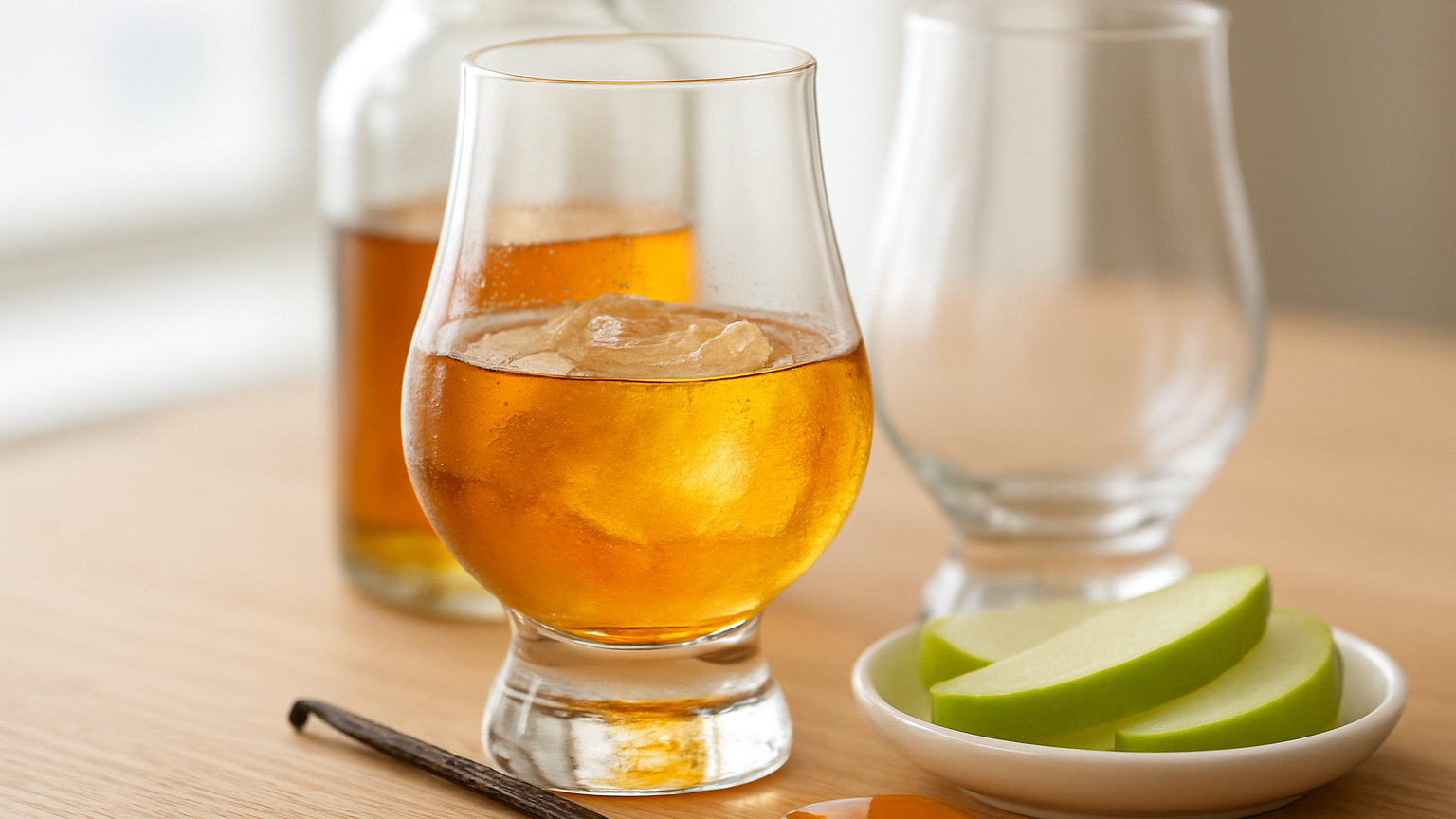
Use a glass that narrows at the top, which concentrates the aroma. A copita or a small wine glass works; a tumbler is comfortable to hold but lets the aroma escape.
- Pour a small measure, around 25 to 35 millilitres.
- Smell it with your mouth slightly open, which reduces the alcohol burn in the nose.
- Take a small sip and hold it briefly before swallowing. The first sip mostly registers alcohol; the second is the one that tells you anything.
- Add a few drops of water and repeat. Notice what changes.
Do not worry about identifying specific notes. Broad impressions such as sweet, dry, smoky, fruity or spicy are far more useful early on, and precision comes with time.
Is it acceptable to mix it?
Entirely. A whisky highball, which is whisky and soda water over ice in a tall glass, is one of the best ways to drink whisky and one of the most popular serves in Japan. Whisky with ginger ale is straightforward and good. Neither is a beginner's crutch.
What mixing changes is which bottle to buy. For mixed drinks, choose a blend or a bourbon rather than a delicate single malt, because the mixer will flatten subtlety.
How do you find the next bottle?
Keep a note of what you drank and one line about whether you liked it and why. After five or six bottles a pattern appears, and that pattern is more reliable than any recommendation list.
Bars and tasting events are the cheapest way to try widely, since a measure costs a fraction of a bottle. Sample sets from specialist retailers do the same job at home and are the most efficient way to cover several styles before committing to a full bottle.