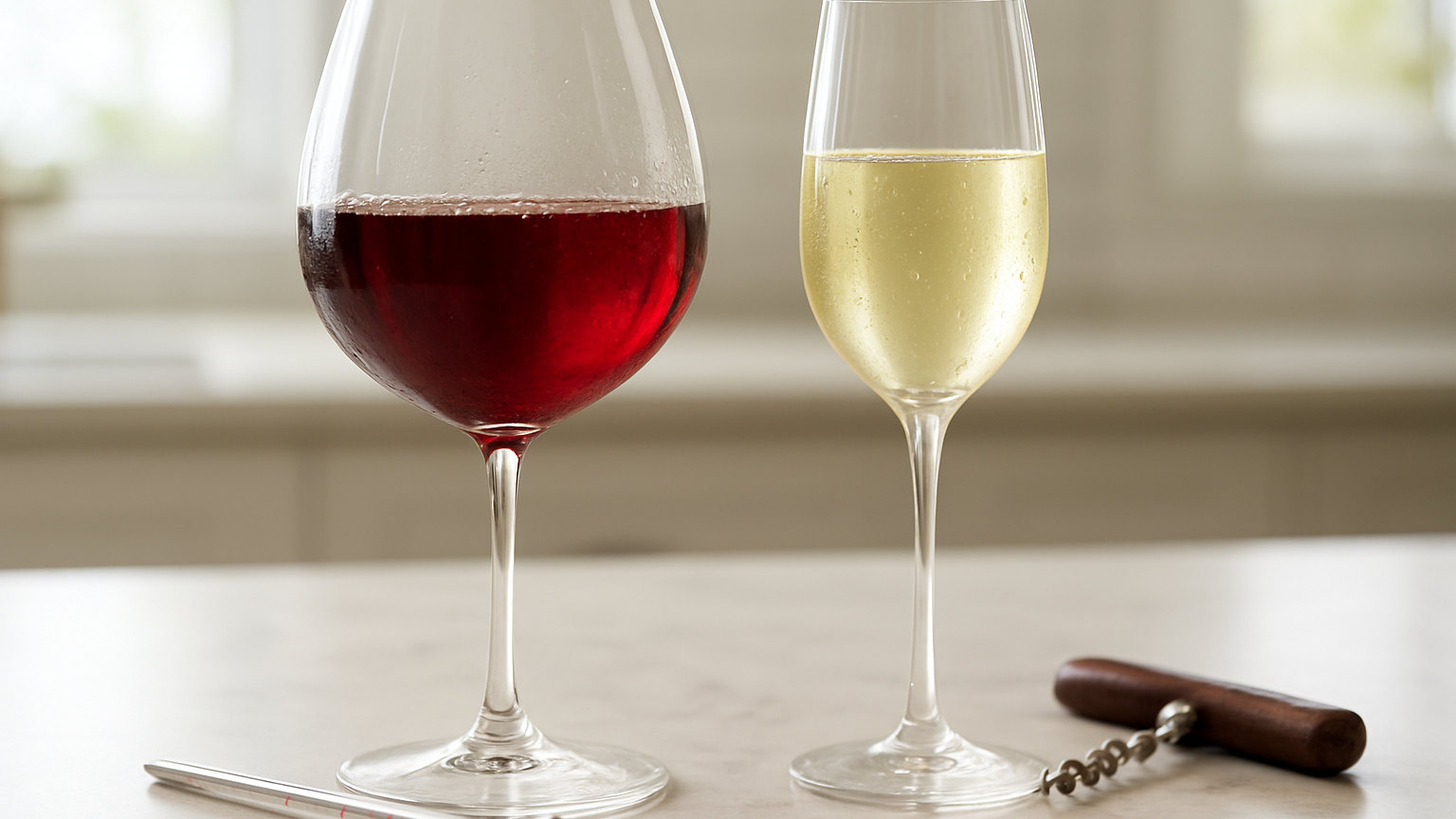
Serve sparkling and light whites at six to eight degrees, fuller whites and rosé at eight to twelve, light reds at twelve to fourteen, and full reds at fifteen to eighteen. Most homes serve red too warm and white too cold, and fixing both is free.
The temperatures, by style
- Sparkling wine: six to eight degrees. Cold keeps the bubbles in solution.
- Light, crisp whites: seven to nine degrees.
- Fuller, oaked whites: ten to twelve degrees. Too cold and the texture disappears.
- Rosé: eight to ten degrees.
- Light reds: twelve to fourteen degrees. Noticeably cooler than most rooms.
- Medium and full reds: fifteen to eighteen degrees.
- Fortified wine: varies by style, from around eight degrees for a fino sherry to sixteen for a vintage port.
A domestic fridge runs at around four degrees, which is below every figure on that list. A modern centrally heated room sits at around twenty or twenty two, which is above all of them.
So almost everything needs adjusting in one direction or the other.
Why room temperature is wrong
The convention that red wine should be served at room temperature is genuinely old, and it dates from a time when rooms were considerably colder.
A drawing room in an unheated house sat at perhaps fifteen or sixteen degrees, which is exactly right for a full red.
A modern living room at twenty two is several degrees too warm, and the effect is not subtle. Alcohol becomes more prominent, the wine tastes heavier and slightly sweet, and the aromatics blur.
Twenty minutes in the fridge before serving is the correction, and for most people it is the single largest improvement they can make to how their red wine tastes. Our red wine guides go into this further.
Why very cold white is also wrong
Cold suppresses aroma. Take a white wine down to four degrees and much of what you paid for is simply not reaching you.
It also emphasises acidity and hides sweetness and texture, which is why a cheap sharp white benefits from being very cold and a good one does not.
For anything with real character, take it out of the fridge fifteen or twenty minutes before pouring. Our white wine guides cover which styles need what.
What temperature actually changes
Three things, all of which matter.
Aroma. Volatile compounds evaporate more readily when warm, so a warmer wine smells stronger. Since most of what we call flavour arrives through the nose, that is a large effect.
Perceived sweetness and alcohol. Both read as more prominent when warm. A wine that tastes balanced at fourteen degrees can taste sweet and hot at twenty.
Perceived acidity and tannin. Both read as sharper and firmer when cold. A tannic red served too cold tastes austere and grippy.
How to chill wine quickly
The fastest practical method is an ice bath with water and salt.
Fill a container with ice, add water until the bottle is submerged, and add a generous handful of salt. Water conducts heat far better than air, so a bottle in ice water chills several times faster than one in ice alone, and the salt lowers the temperature of the bath below zero.
A bottle goes from room temperature to properly chilled in around fifteen minutes. Rotating it occasionally speeds it further.
The freezer works and takes thirty to forty minutes. Set a timer, because a forgotten bottle will crack as the liquid expands.
The fridge takes two to three hours from room temperature and gives the most even result.
How to warm a wine that is too cold
Simply pouring it and waiting works, since a glass of wine warms by several degrees within fifteen minutes in a normal room.
Cupping the bowl of the glass in your hands speeds it up considerably, which is the one legitimate reason to hold a wine glass by the bowl.
Do not warm a bottle in hot water or a microwave, which heats unevenly and drives off aromatics.
The glass matters too
A chilled wine in a warm glass rises by a degree or two within a minute, which undoes some of the effort.
Surface area drives how quickly a wine warms in the glass, so a large bowl filled generously will be warm before it is finished. Pouring smaller measures more often keeps white wine cold without any equipment at all.
A stem exists so your hand is not against the bowl, and using it genuinely slows the warming.
Keeping a bottle at temperature
An ice bucket with ice and water, rather than ice alone, holds a white at the right temperature through a meal.
For red, the practical approach in a warm room is to put the bottle back in the fridge between pours rather than leaving it on the table.
Insulated sleeves work well and require no ice.
Do you need a thermometer?
No. The useful skill is recognising the two common errors rather than hitting a precise number.
If a red tastes hot, heavy or sweet, it is too warm. If a white tastes of very little, it is too cold.
Twenty minutes in the fridge for the red, twenty minutes out for the white, and both will be closer than most wine served anywhere. Our tasting and serving guides cover the rest of the serving decisions.
Sparkling wine and fortified wine
Sparkling wine should be properly cold, because carbon dioxide stays in solution better at low temperatures and a warm bottle foams over when opened.
It is also the one category where opening technique depends on temperature: a warm bottle is genuinely harder to open safely. Our sparkling wine guides cover it.
Fortified wine varies more than any other category. A fino or manzanilla sherry should be served as cold as a white wine and treated as perishable once opened. A vintage port is served at around sixteen degrees.