A great many of the best classic cocktails contain exactly three ingredients, and several are equal parts, which means there is no ratio to remember. Every measure here is given in both ounces and millilitres.
The equal-parts drinks
These are the easiest cocktails in existence, because you cannot forget the proportions.
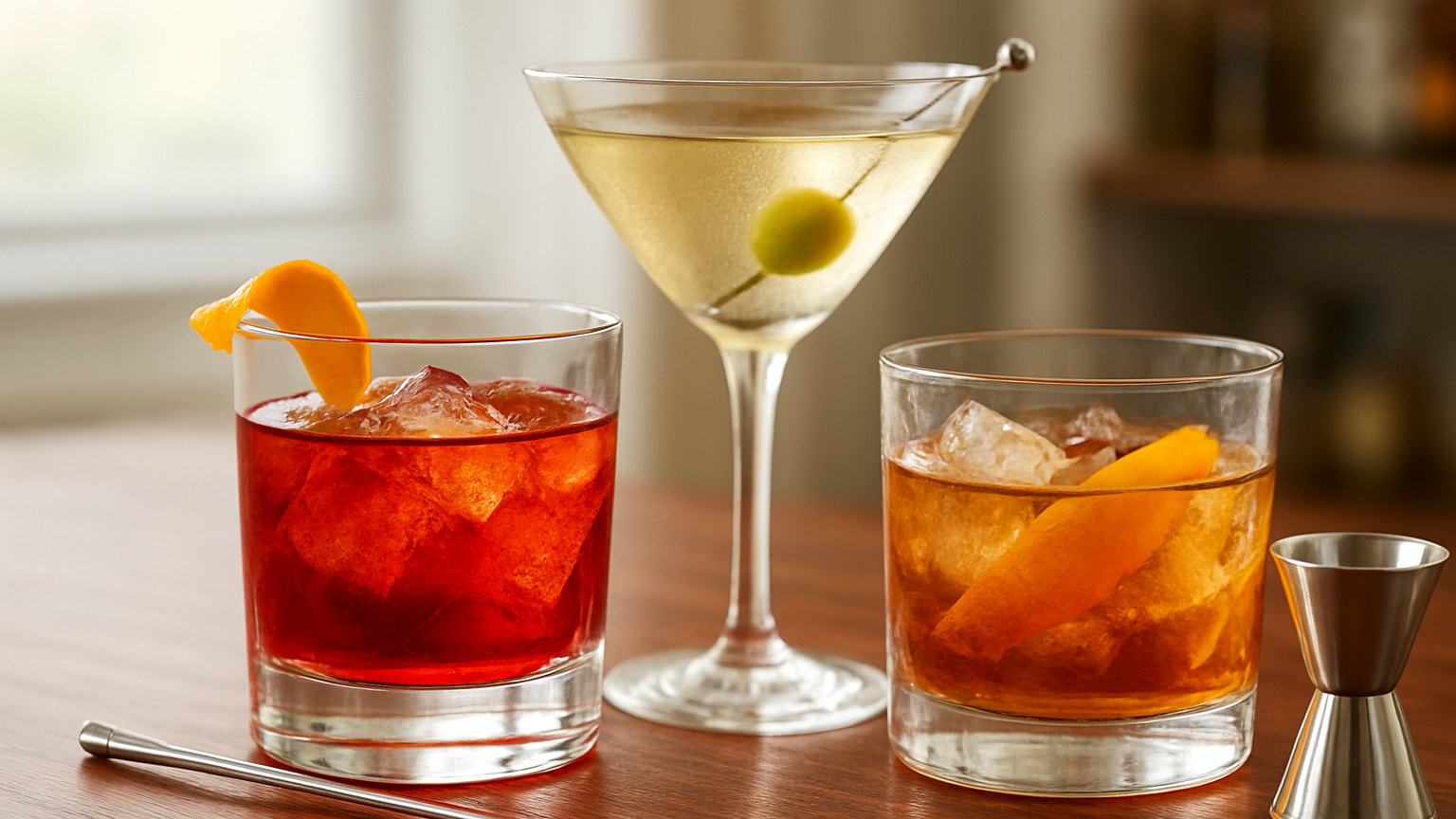
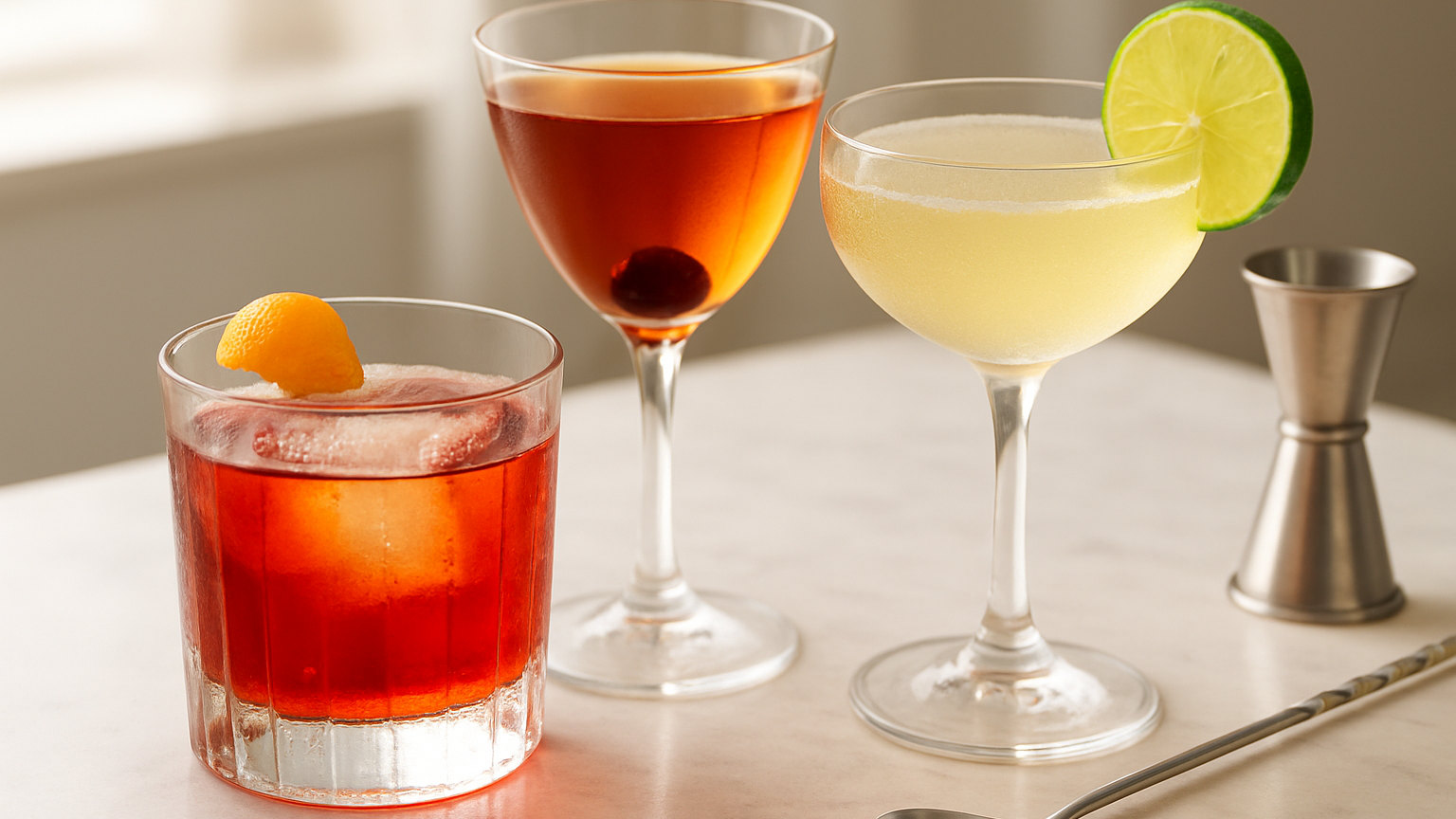
Negroni
Equal parts gin, red bitter aperitivo and sweet vermouth. One ounce, or 30ml, of each.
Stir over ice, strain over a large cube, express an orange peel over the top.
Boulevardier
The same drink with bourbon or rye in place of gin. Richer and rounder, and better in cold weather.
Many people prefer it slightly whisky-heavy, at one and a quarter ounces, or 37ml, of whisky to one ounce, or 30ml, of each of the others.
Last word
Equal parts gin, green Chartreuse, maraschino liqueur and lime juice. Three quarters of an ounce, or 22ml, of each.
Four ingredients rather than three, and it earns its place because equal parts makes it effortless. Shake and double strain.
Corpse reviver number two
Equal parts gin, orange liqueur, Lillet or a similar aperitif wine, and lemon juice, with a dash of absinthe rinsed round the glass.
The sour template
The single most useful thing to learn in cocktails, because it generates a dozen drinks from one ratio.
Two parts spirit, one part citrus, three quarters of a part sweetener. In practical terms: two ounces, or 60ml, of spirit, one ounce, or 30ml, of citrus, and three quarters of an ounce, or 22ml, of syrup.
Shake hard with ice for ten to fifteen seconds and double strain.
Swap the spirit and you have a different drink:
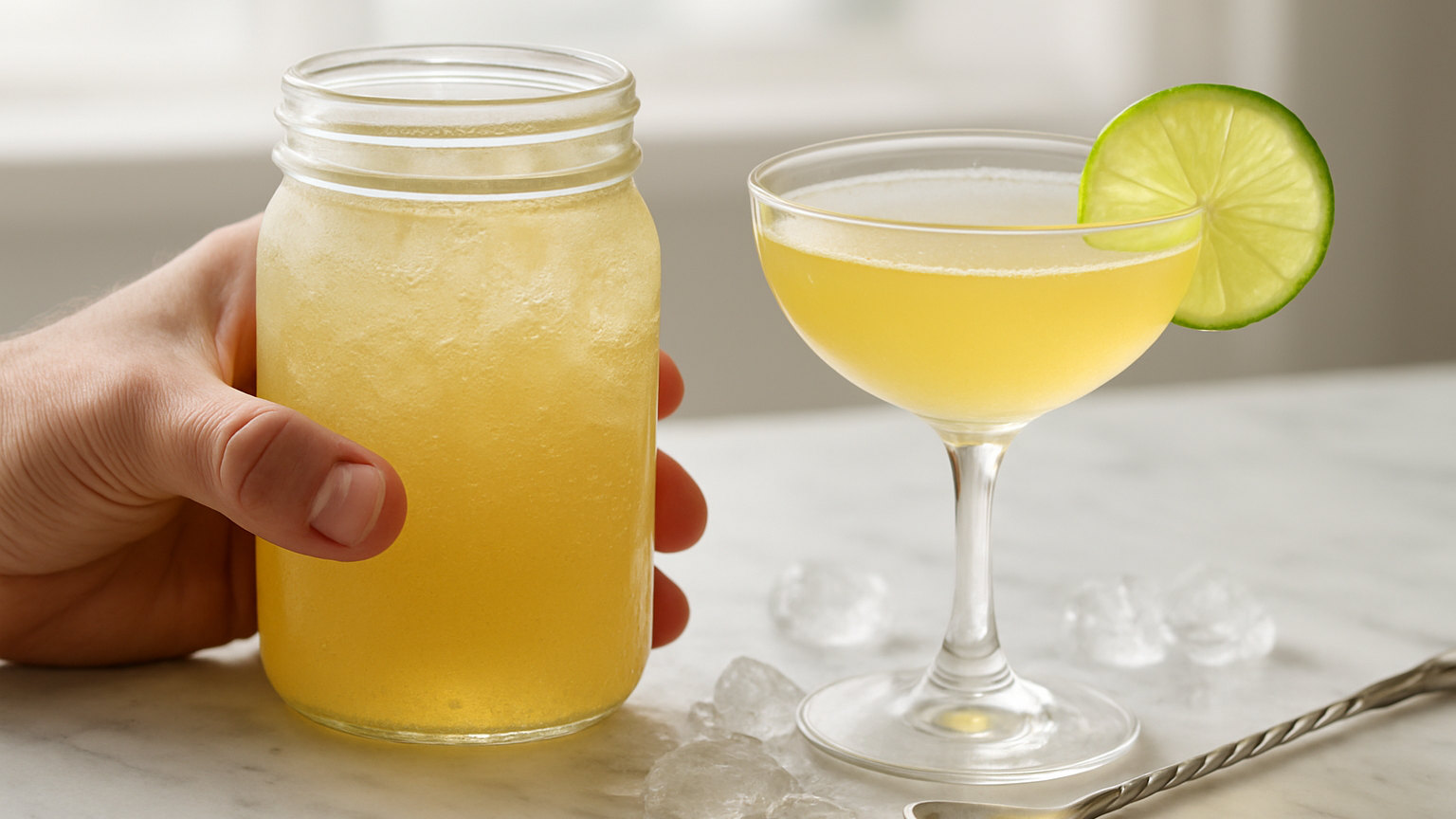
- Daiquiri: white rum, lime, sugar syrup.
- Whisky sour: bourbon, lemon, sugar syrup.
- Gimlet: gin, lime, sugar syrup.
- Pisco sour: pisco, lime, sugar syrup, egg white.
- Margarita: tequila, lime, orange liqueur in place of the syrup.
- Sidecar: cognac, lemon, orange liqueur in place of the syrup.
Our sours guides cover the template in detail and how to adjust it.
Spirit, sugar and bitters
Old fashioned
Two ounces, or 60ml, of bourbon or rye, a teaspoon of sugar syrup, two or three dashes of aromatic bitters.
Stir over ice for thirty seconds, strain over a large cube, express an orange peel.
Technically three ingredients plus water, and the water from the ice is genuinely part of the recipe rather than an accident.
Manhattan
Two ounces, or 60ml, of rye, one ounce, or 30ml, of sweet vermouth, two dashes of bitters. Stir and strain into a chilled glass.
Martini
Two ounces, or 60ml, of gin, three quarters of an ounce, or 22ml, of dry vermouth. Stir and strain.
Two ingredients, and the fresh vermouth is doing more work than most people credit. Our martinis and stirred guides cover the ratios.
Two-ingredient long drinks
Barely recipes, and worth making properly.
- Gin and tonic: gin and tonic over a full glass of ice, with a wide citrus peel.
- Whisky highball: whisky and soda, one part to three or four, over plenty of ice.
- Americano: equal parts bitter aperitivo and sweet vermouth, topped with soda. Around one unit, and one of the best low-strength drinks there is.
- Dark and stormy: dark rum floated over ginger beer and lime.
Our highballs and long drinks guides cover getting these right, which is mostly about ice.
Three-ingredient drinks without alcohol
The same templates work, and the good ones are built rather than diluted.
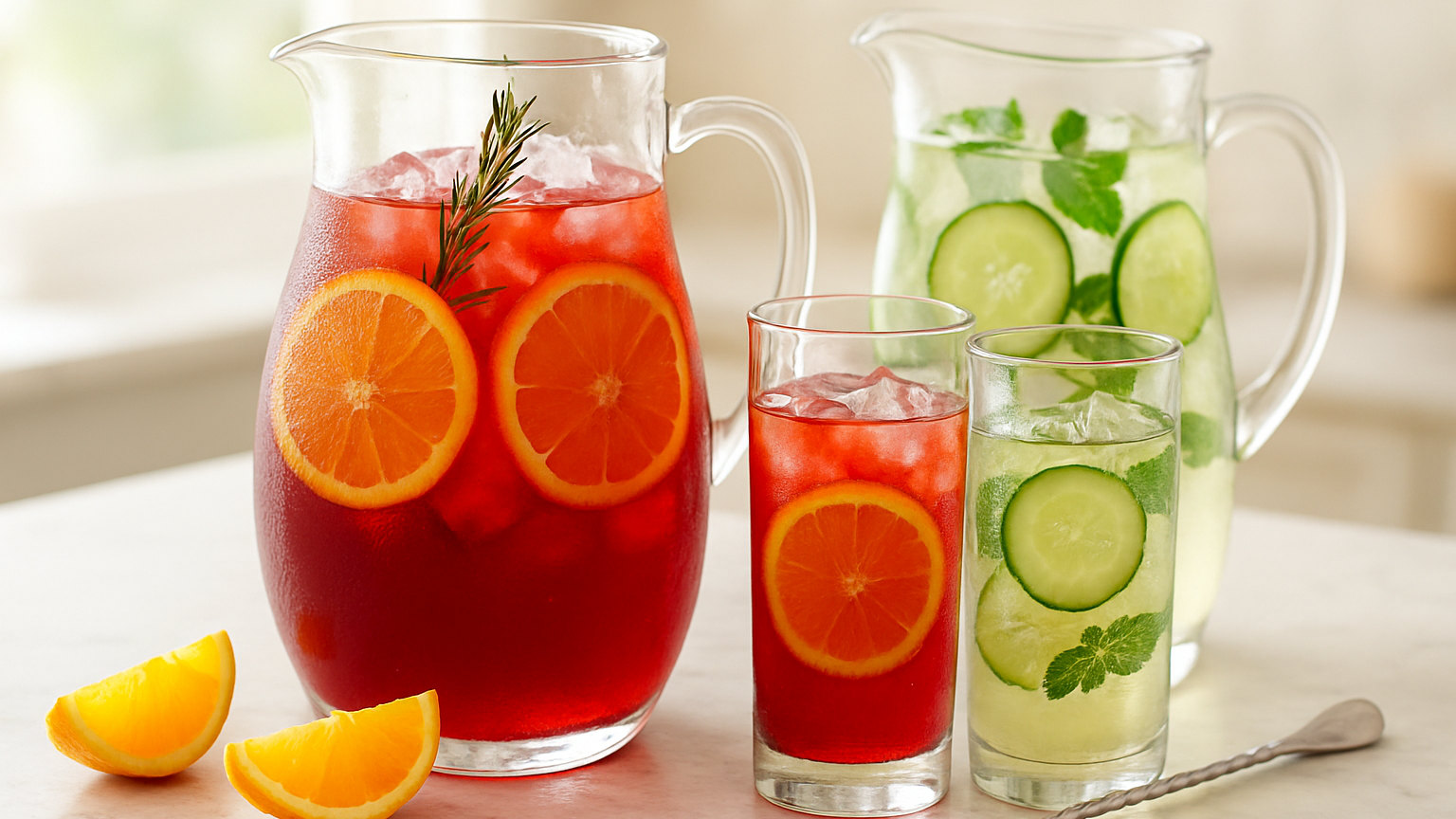
Strong cooled black tea with lemon juice and honey syrup over ice makes a genuinely good drink, because tea supplies the tannin and length that alcohol would otherwise provide.
A bitter non-alcoholic aperitif with soda and a wide grapefruit peel is even simpler.
Our mocktail guides cover building these properly rather than serving fruit juice.
What you need to make all of these
A jigger, a shaker, a strainer, ice and fresh citrus.
On the bottle side: a London dry gin, a bourbon or rye, a white rum, a red bitter aperitivo, sweet vermouth and aromatic bitters. That is six bottles and it covers everything above.
Keep the vermouth in the fridge and replace it monthly. A stale bottle is the most common reason a home negroni or martini disappoints.
The one habit that matters most
Measure everything. A three-ingredient drink has nowhere to hide, so a heavy free pour throws the balance out completely.
A jigger costs a few pounds and improves every drink you make. Our bar equipment guides cover what else is genuinely worth owning.
How to adjust them to your taste
Published ratios are a starting point rather than a rule, and citrus varies enormously between individual fruits and across the year.
Taste the drink in the shaker before straining, which takes three seconds.
If it is too sharp, add syrup three to five millilitres at a time. If it is too sweet, add citrus rather than reducing the syrup, which is faster and generally more effective.
If it tastes harsh and hot rather than unbalanced, it needs more dilution rather than more sugar. Shake or stir for longer.
Most people find after a dozen drinks that they consistently prefer less sugar than recipes suggest, and that single piece of self-knowledge improves everything they make thereafter.
Which to learn first
The daiquiri, because it is three ingredients with nothing to hide behind and it teaches the sour template that generates everything else.
Then the negroni, because equal parts removes any question of ratio and it teaches stirring.