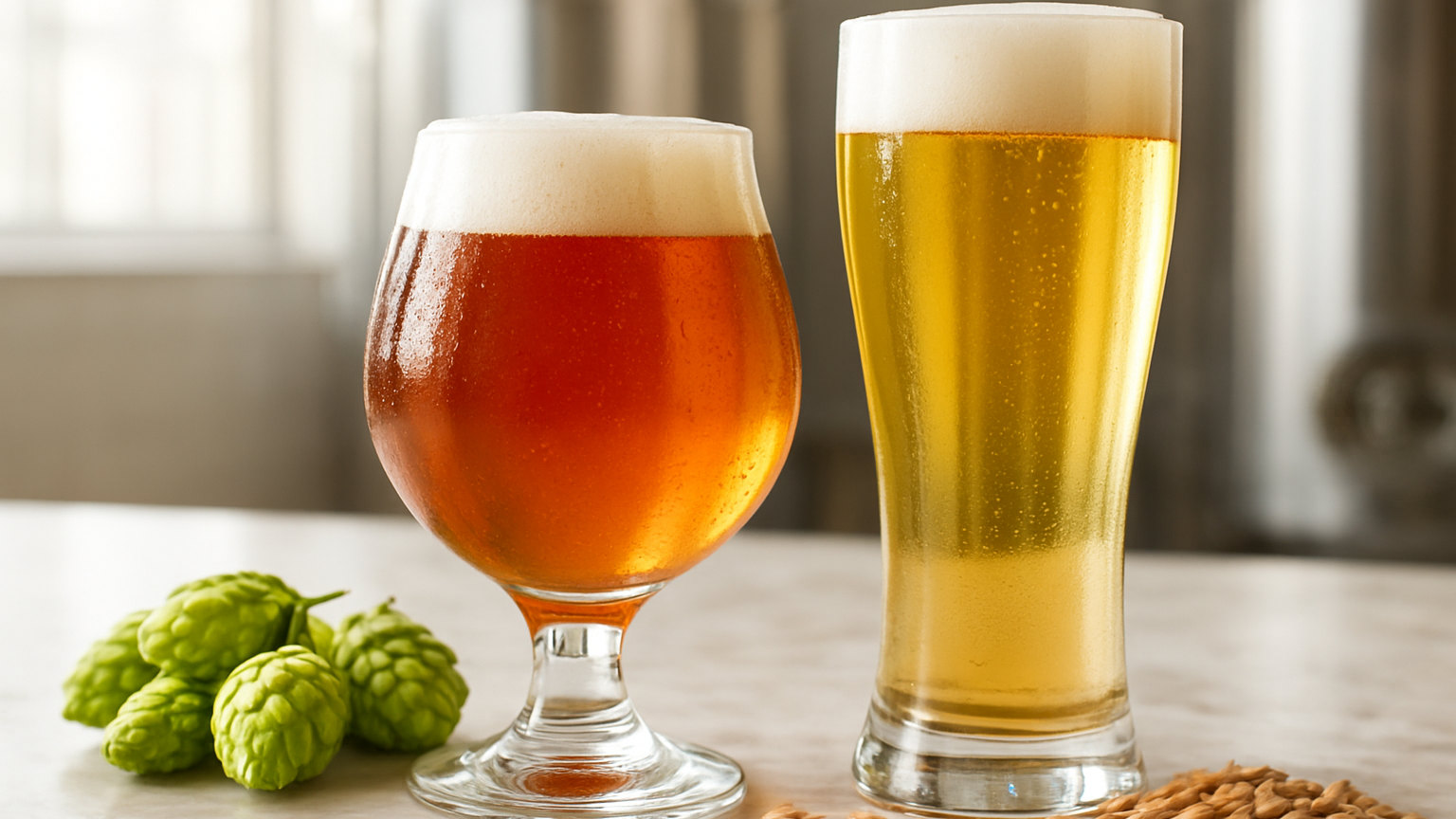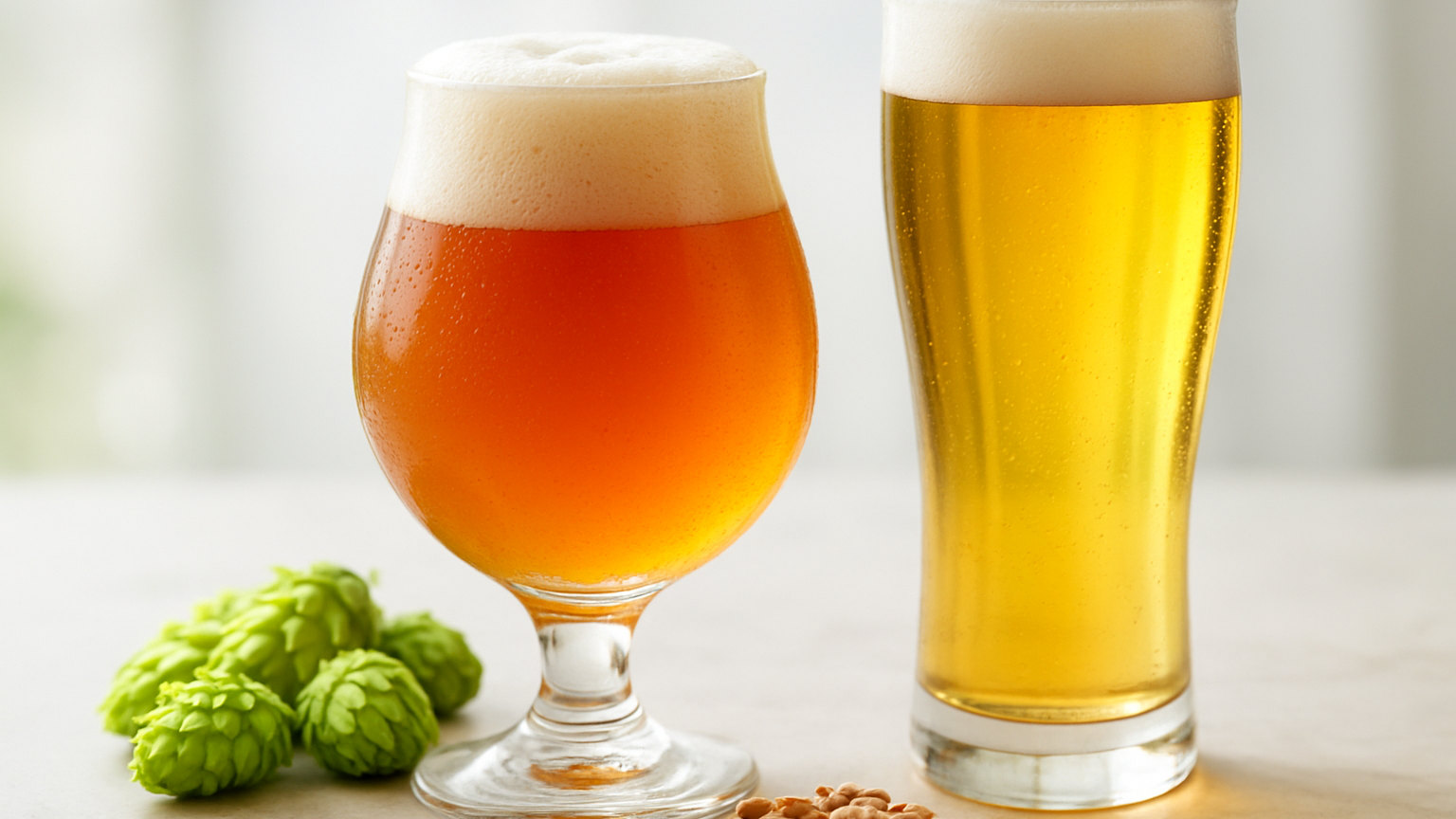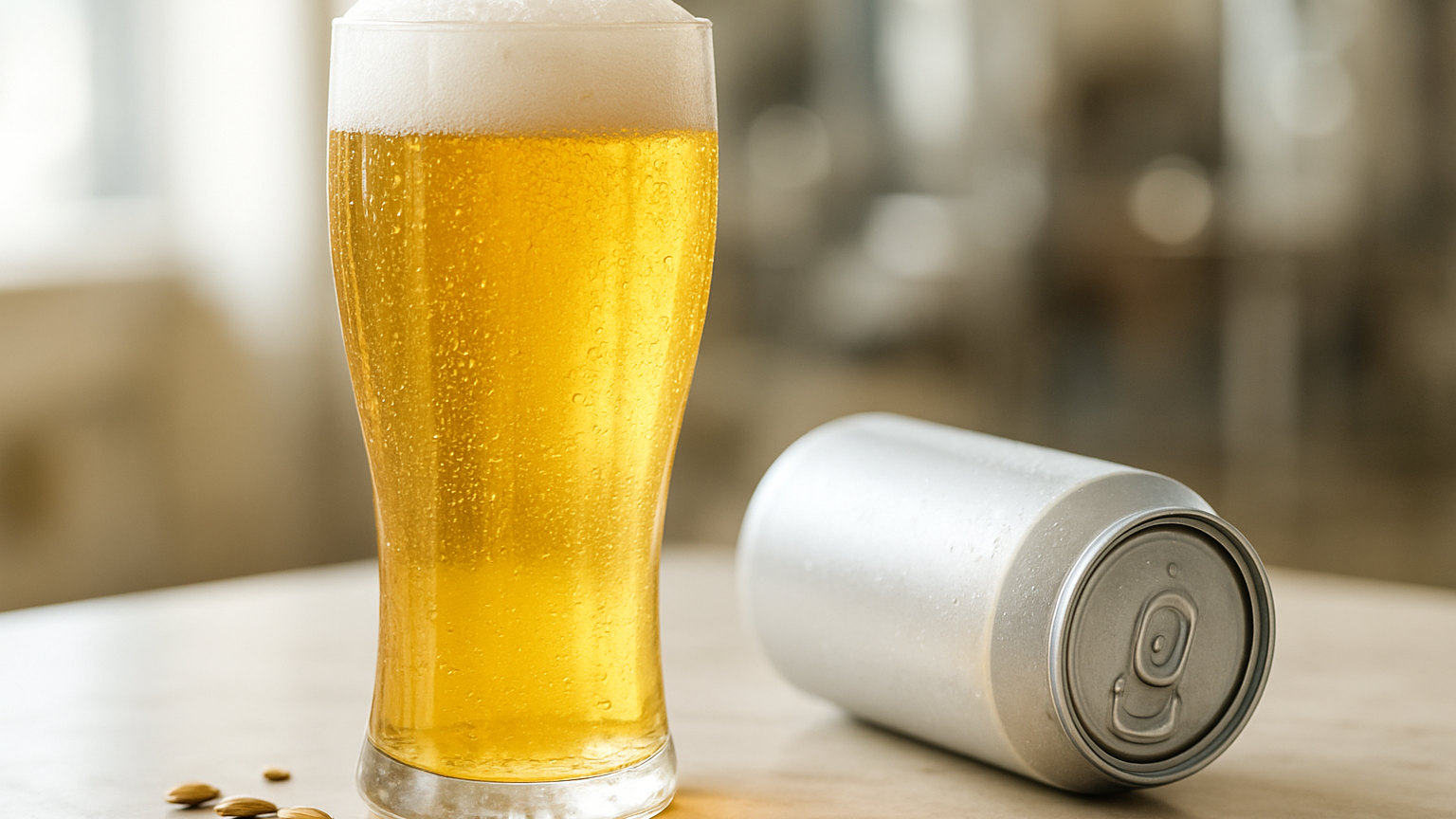
The numbers on a beer label are ABV for strength, IBU for measured bitterness, EBC or SRM for colour, and a date for freshness. The date is the most useful of the four and the one most people ignore.
ABV: alcohol by volume
The percentage of the beer's volume that is pure alcohol, and the most reliable single indicator of body and intensity.
As a rough guide, session beers sit at around three to four per cent, standard beers at four to six, stronger styles at six to nine, and imperial styles above that.
Strength correlates with body because alcohol itself contributes weight and a degree of sweetness, so a beer at eight per cent will feel fuller than one at four regardless of style.
It also tells you how much you are actually drinking. A pint at four per cent contains around two and a quarter units; a pint at six contains around three and four tenths. That is a substantial difference for the same-looking glass, and our units and ABV guides cover the arithmetic.
IBU: international bitterness units
A laboratory measurement of the concentration of the compounds that make beer bitter.
The important thing about IBU is that it correlates only loosely with how bitter a beer actually tastes, because sweetness from malt masks bitterness.
A sweet imperial stout at sixty IBU can taste far less bitter than a bone-dry pilsner at forty. The number measures what is in the beer, not what you perceive.
It is also a poor guide to hop aroma, which is what most modern hoppy beers are really about. A hazy IPA may have a modest IBU figure and smell enormously of hops, because the hops were added late in the process where they contribute aroma rather than bitterness.
Useful for comparing beers of similar style and sweetness, and misleading across styles. Our IPA and pale ale guides go into this further.
EBC and SRM: colour
Both measure how dark a beer is, with EBC used in Europe and SRM in the United States. Higher numbers mean darker beer.
Colour comes from how darkly the malt was kilned, and it is a reasonable proxy for roasted flavours: pale beers taste of bread and biscuit, dark ones of coffee, chocolate and burnt sugar.
What colour does not tell you is strength, bitterness or whether the beer is an ale or a lager. Dark lagers exist and are smooth and moderate. Strong pale beers exist too.
These figures appear mostly on craft labels and are of limited use to a drinker, since you can see the colour through the glass.
Original gravity and final gravity
Occasionally printed, particularly on British ales.
Original gravity measures the density of the liquid before fermentation, which reflects how much sugar the yeast had to work with. Final gravity measures it afterwards.
The difference between the two tells you how much sugar was converted, which determines the alcohol content and how dry or sweet the finished beer is.
A high final gravity means residual sugar and a fuller, sweeter beer. A low one means a dry, crisp finish.
The date, which matters most
Beer does not improve on a shelf, with a small number of exceptions.
Hop aroma is volatile and fades quickly. Oxygen dulls everything over time. Light damages beer in clear and green bottles within minutes of direct exposure, producing a distinctly skunky aroma.
A hazy IPA is at its best within about four to eight weeks of packaging and noticeably declining after that. A hop-forward beer bought six months old is not the beer the brewery made.
Some producers print a packaging date, which tells you exactly what you want to know. Others print only a best before date, which is less useful because you have to know the intended shelf life to work backwards.
If the choice is between two cans and one is fresher, take the fresher one. This single habit improves the beer you drink more than any amount of style knowledge.
The exceptions that do age
Strong dark beers can improve for years. Imperial stout, barley wine and strong Belgian ales develop sherry-like and dried fruit character as they oxidise slowly.
Lambic and gueuze are made to age, and bottles are cellared for years deliberately.
Everything else, and particularly anything hoppy or pale, should be drunk young. Our craft and breweries guides cover buying and storing.
Words rather than numbers
A few terms on the label carry real information.
- Unfiltered and unpasteurised generally means a fresher, more perishable beer.
- Bottle conditioned means a second fermentation happened in the bottle, so there is yeast sediment and the beer should be poured carefully.
- Dry hopped means hops were added after fermentation for aroma rather than bitterness.
- Cask and keg describe the serving format rather than the beer itself.
What actually predicts whether you will like it
Style, then freshness, then strength. IBU and colour figures are secondary.
Reading the style name and the date on the bottom of the can will serve you better than any of the numbers on the front. Our pouring and serving guides cover what to do once you have chosen.
Container size and why it varies
British cans and bottles are commonly 330ml or 440ml, and 500ml for many bottled ales. A UK pint is 568ml.
Strong beers are frequently sold in 330ml cans specifically because a pint of a nine per cent imperial stout would be a great deal of alcohol in one serving.
Worth checking the size alongside the strength, since a 440ml can at six per cent contains substantially more alcohol than a 330ml can at five, and the two sit side by side on the same shelf.