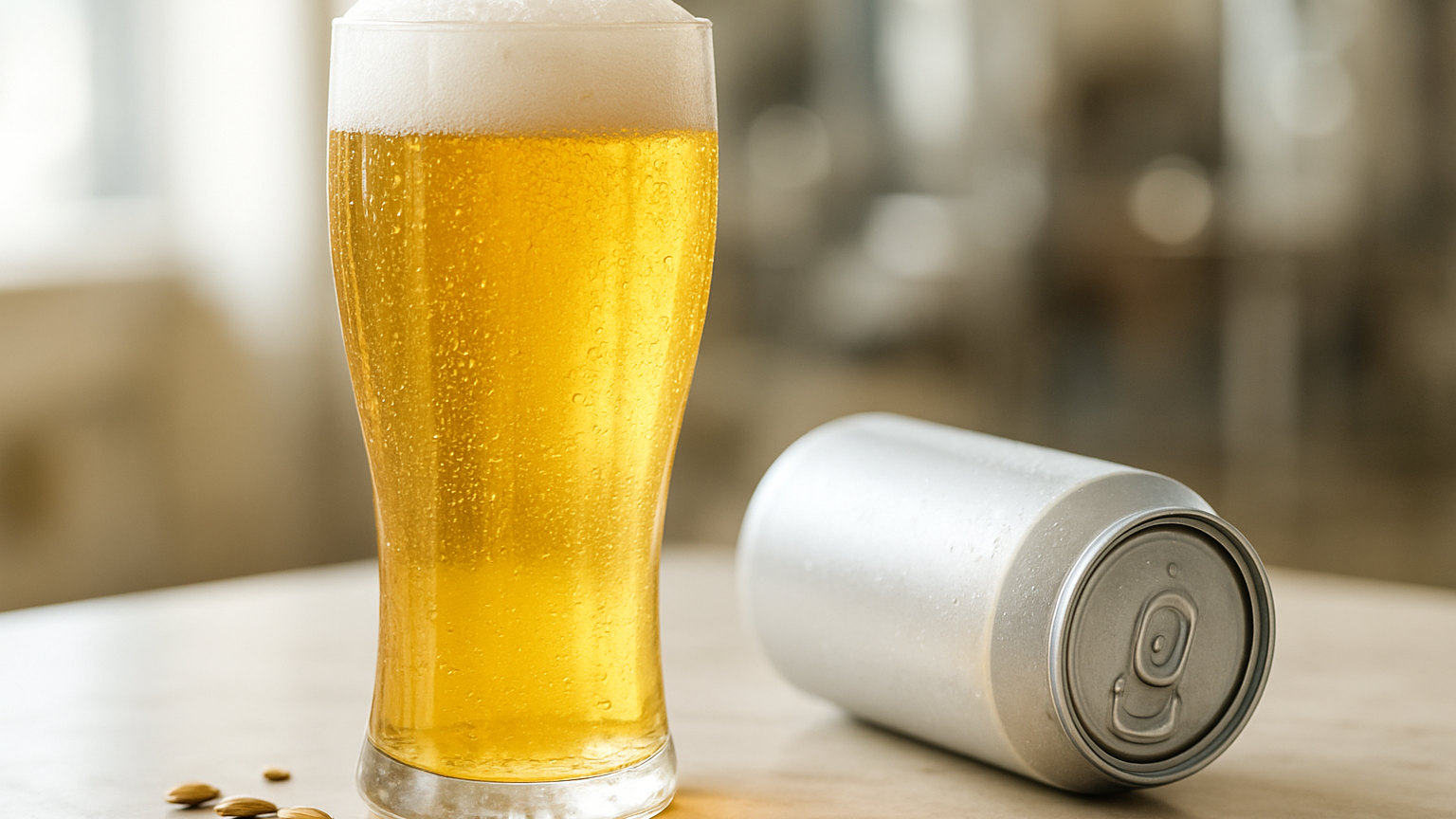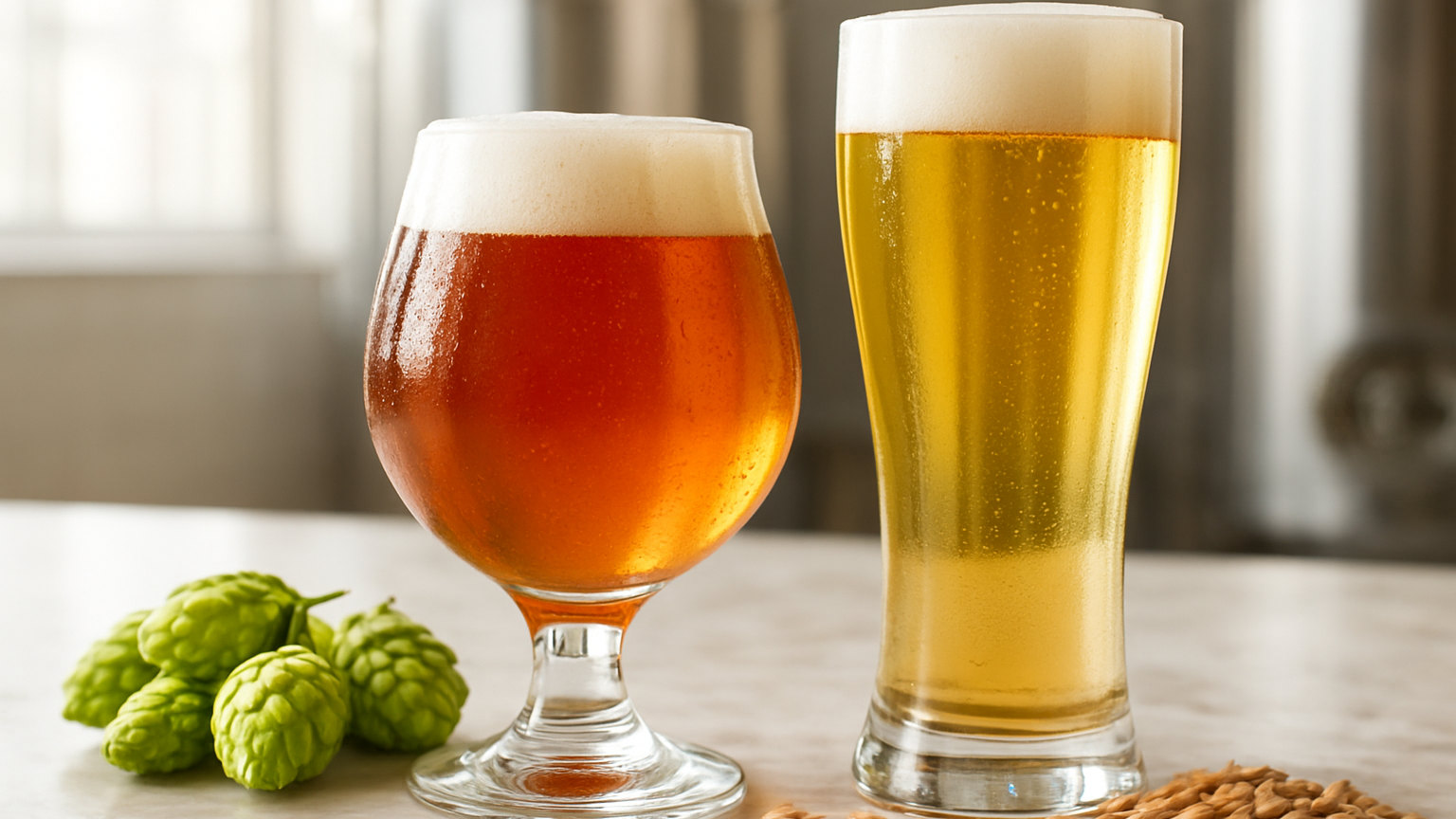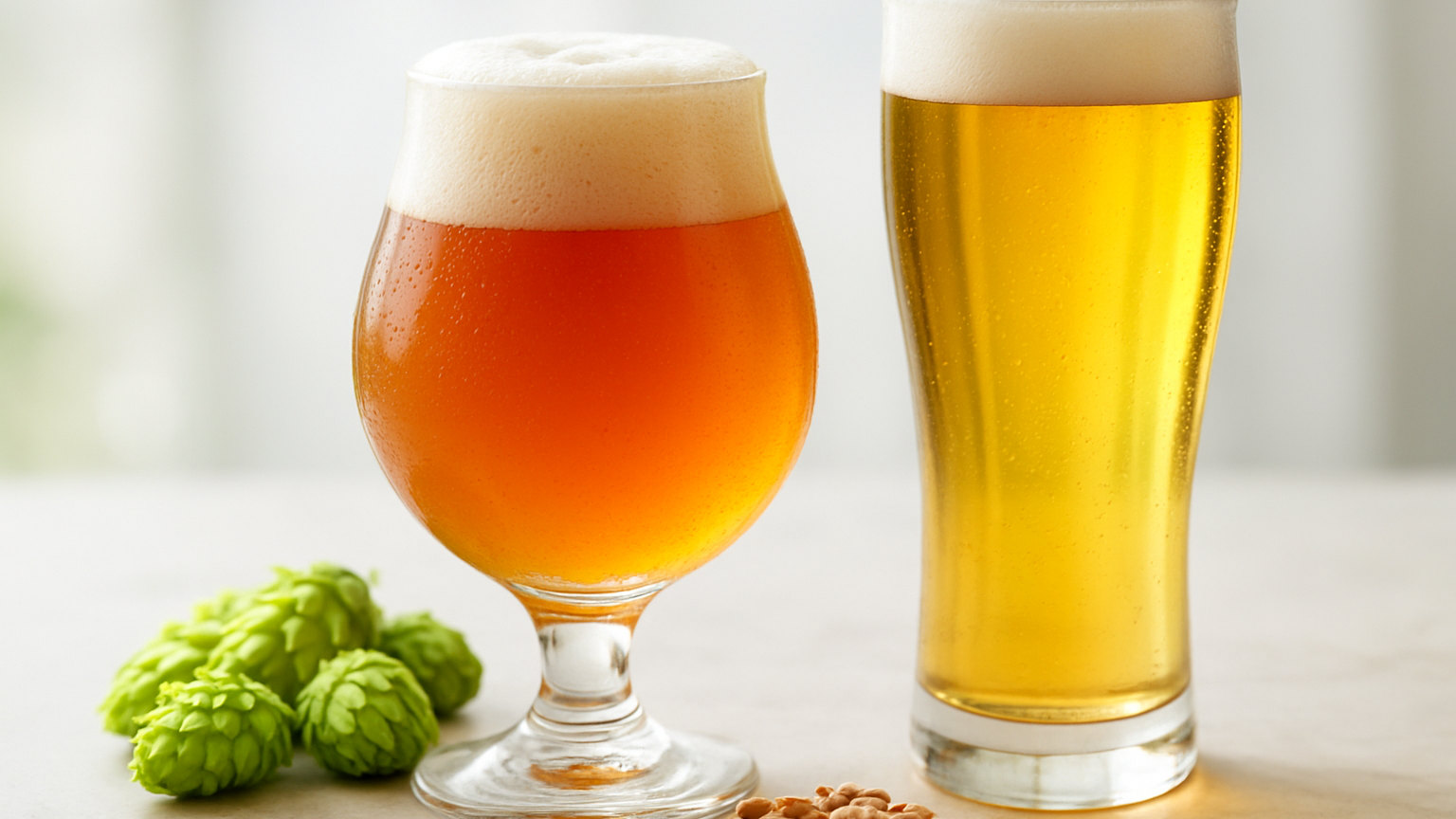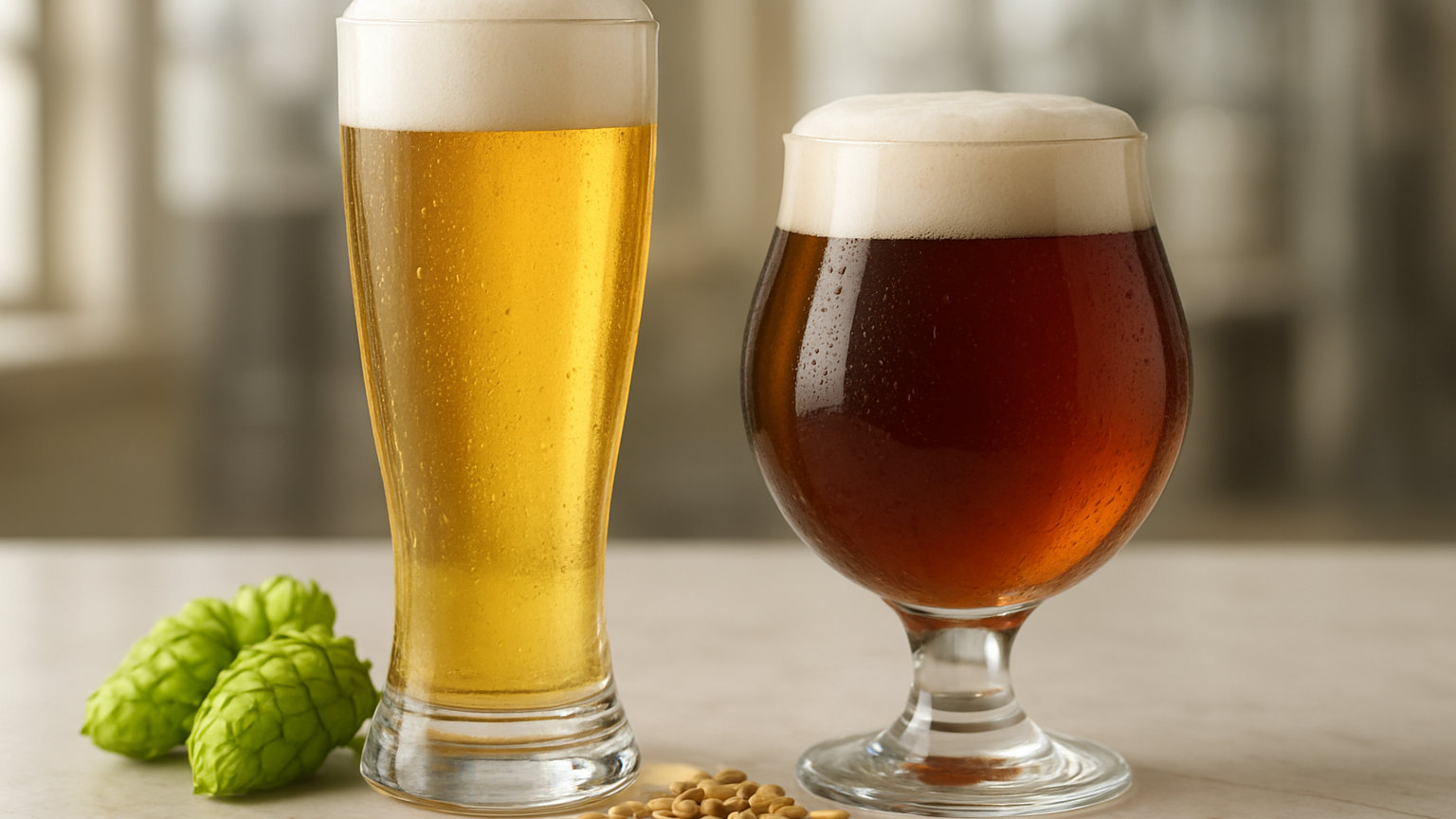
Most people would describe lager as pale, fizzy and cold, which describes a great deal of it and defines none of it. Lager is a category determined by how the beer is fermented, not by how it looks, and the definition includes dark beers, strong beers and beers that bear no resemblance whatsoever to what comes out of a supermarket multipack.
Two things separate lager from ale: the yeast and the temperature. Everything else follows from those.
The yeast that works in the cold
Ale is fermented with Saccharomyces cerevisiae, which works best between about eighteen and twenty two degrees and rises to the top of the vessel during fermentation. Lager uses Saccharomyces pastorianus, which works at seven to thirteen degrees and settles to the bottom, which is why the two are traditionally called top-fermenting and bottom-fermenting.
The lager yeast is a hybrid, and its origins were a genuine mystery for a long time. It combines the familiar brewing yeast with a cold-tolerant wild species, and the second parent was only identified in the last couple of decades, found growing in Patagonia. How it reached Bavarian brewing cellars is still debated.
The practical consequence of the low temperature is that the yeast produces far fewer of the aromatic compounds that give ale its character. Ale fermentation generates esters and phenols smelling of banana, clove, pear and spice. Lager fermentation, run cold, generates very few, which leaves the malt and hops exposed with nothing to hide behind.
What lagering means
The word comes from the German lagern, meaning to store, and it refers to the conditioning period after fermentation. The beer is held close to freezing for anything from a few weeks to several months.
Three things happen during that time. Yeast and protein settle out, which produces the clarity the style is known for. Sulphur compounds produced during fermentation, which give a young lager a distinctly vegetal, sweetcorn-like smell, gradually dissipate. And the beer's flavours integrate and smooth out.
This is the expensive part of making lager. A tank occupied for six weeks by conditioning lager is a tank not producing anything else, which is why long-lagered beer costs more and why a great deal of commercial lager is conditioned for a fraction of the traditional period.
Why the style is unforgiving
Brewers describe lager as the hardest style to make well, which sounds counterintuitive for a beer often regarded as bland. The reason is precisely the lack of ester and phenol character.
An ale with a technical flaw can carry it, because there is a great deal happening aromatically. A lager has nowhere to hide. Any off-flavour from poor fermentation, inadequate conditioning or careless handling is immediately apparent, which is why a well made lager is a genuine demonstration of brewing competence.
The range within the category
Once you know the definition is about yeast rather than appearance, the breadth of the family makes sense.
Pale lagers include Czech and German pilsner, Munich helles, and the international pale lager that dominates supermarket shelves. Dark lagers include Munich dunkel, schwarzbier and the amber märzen served at Oktoberfest. Strong lagers include bock, doppelbock and the freeze-concentrated eisbock.
Beyond those sit smoked rauchbier from Bamberg and the hybrid styles, kölsch and altbier, which are fermented warm like an ale and then conditioned cold like a lager.
The useful takeaway for a drinker is that disliking one lager tells you very little about the category. A supermarket pale lager and a Bamberg rauchbier are technically siblings, and the distance between them is greater than the distance between most ales.
Where the hybrids sit
Two German styles complicate the neat division and are worth knowing about. Kölsch and altbier are fermented warm with ale yeast and then conditioned cold in the lager manner, which puts them in both camps at once.
The results are pale and clean like a lager with a subtle fruitiness from the warm fermentation. American steam beer, or California common, does the reverse, using lager yeast at warmer temperatures. These hybrids demonstrate that the categories describe a spectrum of technique rather than two sealed boxes, and that the yeast and the temperature can be varied independently.