Whisky is a spirit distilled from fermented grain and aged in wooden casks. That definition covers Scotch, bourbon, rye, Irish and Japanese whisky, and almost everything that separates them happens at one of five stages. Understanding those stages is the fastest way to stop relying on the marketing on the front of the bottle.
Which grains can whisky be made from?
Barley, corn, rye and wheat are the four in common use. Malt whisky is made entirely from malted barley. Bourbon must be at least 51 per cent corn. Rye whiskey in the United States must be at least 51 per cent rye. Blends and grain whiskies use whatever combination the distiller wants, usually with a large proportion of corn or wheat because they are cheaper and yield more alcohol per tonne.
Grain choice sets a broad direction rather than a precise flavour. Corn tends towards sweetness, rye towards a dry peppery bite, wheat towards softness, and malted barley towards cereal and biscuit notes. The recipe is called the mash bill, and American producers list it far more openly than Scottish ones.
What does malting do?
Barley is steeped in water until it begins to germinate, then dried to stop the process. Germination wakes up enzymes inside the grain that convert starch into fermentable sugar, which is the entire point: yeast cannot eat starch, only sugar.
The drying stage is where peat enters the story. If peat is burned in the kiln, smoke compounds settle on the damp grain and survive all the way through to the glass. This is the only point at which smokiness is added to a Scotch, which is why peatiness is decided months before distillation.
How does mashing and fermentation work?
The dried malt is milled and mixed with hot water in a mash tun, dissolving the sugars into a sweet liquid called wort. The wort is cooled, transferred to a washback or fermenter, and yeast is added.
Fermentation typically runs between 48 and 96 hours and produces a low-strength beer of around 7 to 9 per cent alcohol, known as the wash. Longer fermentations allow bacteria to work alongside the yeast and generally push flavour towards fruity and floral notes; shorter ones tend to leave a nuttier, more cereal character. Distillers who talk about fermentation times are usually telling you something real about house style.
What happens during distillation?
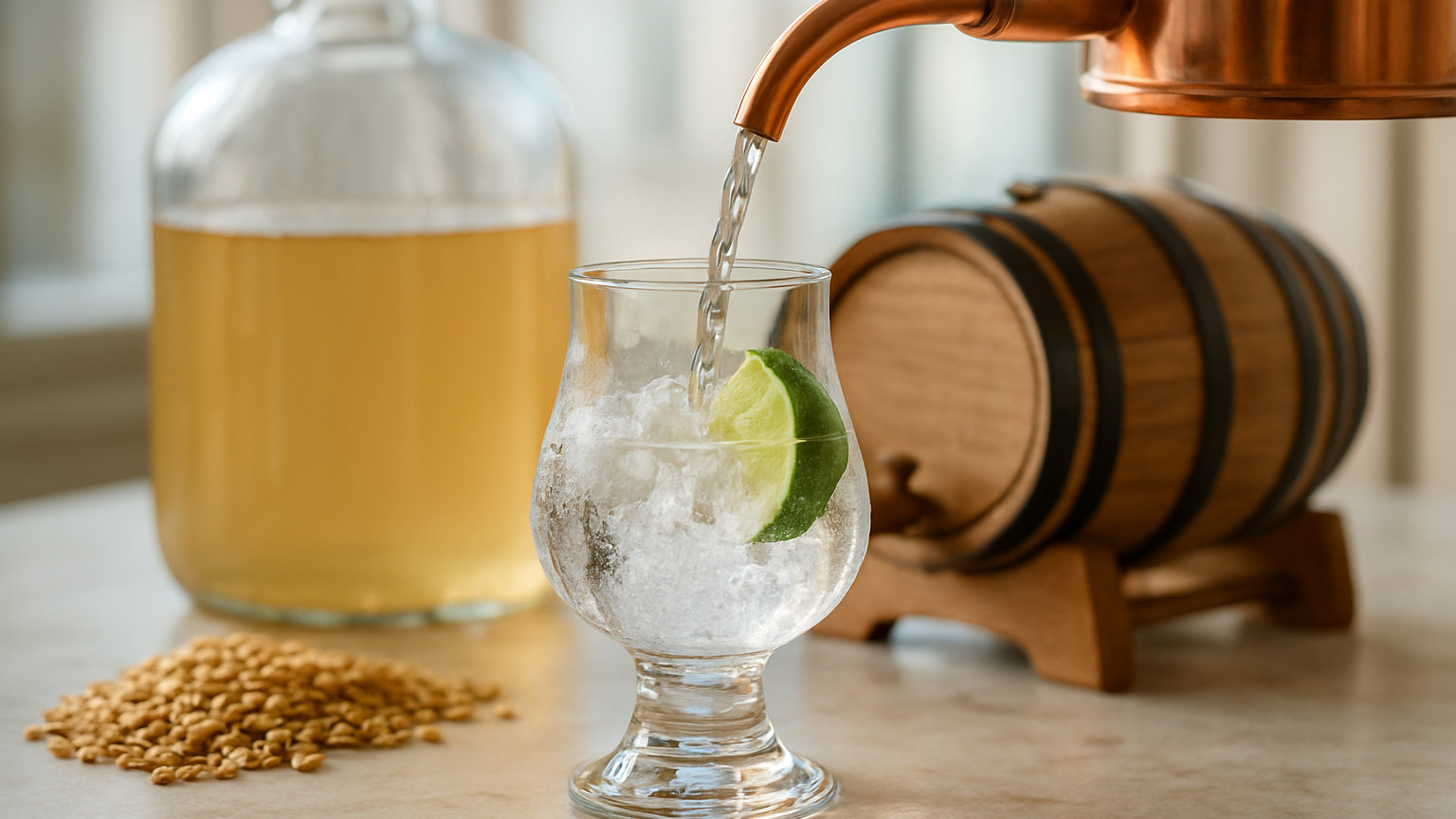
Distillation concentrates alcohol by exploiting the fact that alcohol boils at a lower temperature than water. Two designs dominate.
- Pot stills work in batches and are used for single malt Scotch, Irish pot still whiskey and most American whiskey character. They carry more flavour compounds through, and the shape and height of the still influence how much. Tall stills give lighter spirit because heavier compounds fall back before reaching the top.
- Column stills run continuously and produce a lighter, cleaner, higher-strength spirit. They are used for grain whisky, which forms the bulk of most blends.
During each run the distiller divides the output into three portions. The first part, the foreshots or heads, contains volatile compounds that are unpleasant to drink. The middle cut, the heart, is kept. The final part, the feints or tails, contains heavier oily compounds. Where the distiller makes those cuts is one of the most important decisions in the whole process, and it is made by a person judging aroma and strength rather than by a machine.
Why does the cask matter so much?
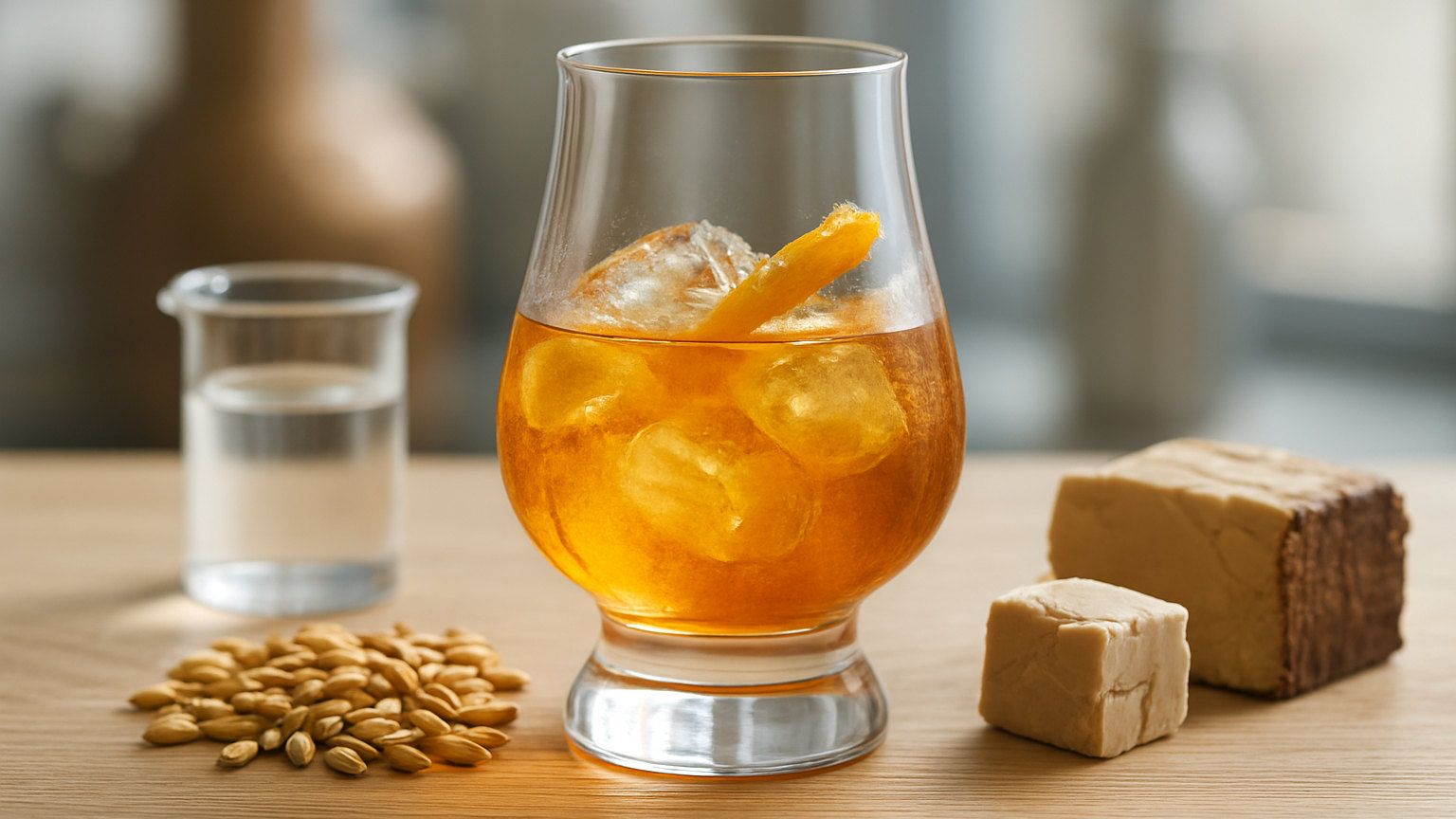
New spirit off the still is clear, sharp and not especially pleasant. Everything you recognise as whisky colour, most of the sweetness, and the vanilla, coconut, toffee and dried fruit notes come from years in oak. Depending on who you ask, somewhere between half and three quarters of the final flavour is contributed by the cask.
Scotch must spend at least three years in oak casks in Scotland. Bourbon must go into new charred oak, which is why it tastes markedly of vanilla and caramel. Scotch usually goes into casks that previously held bourbon or sherry, which arrive already softened and carrying flavours of their own.
What happens before bottling?
Most whisky is reduced with water to a bottling strength between 40 and 46 per cent. Many mainstream bottlings are also chill filtered to prevent cloudiness when cold, and some have a small amount of caramel colouring added for consistency. Bottles labelled non chill filtered and natural colour have skipped both steps, which is a genuine difference rather than marketing alone.