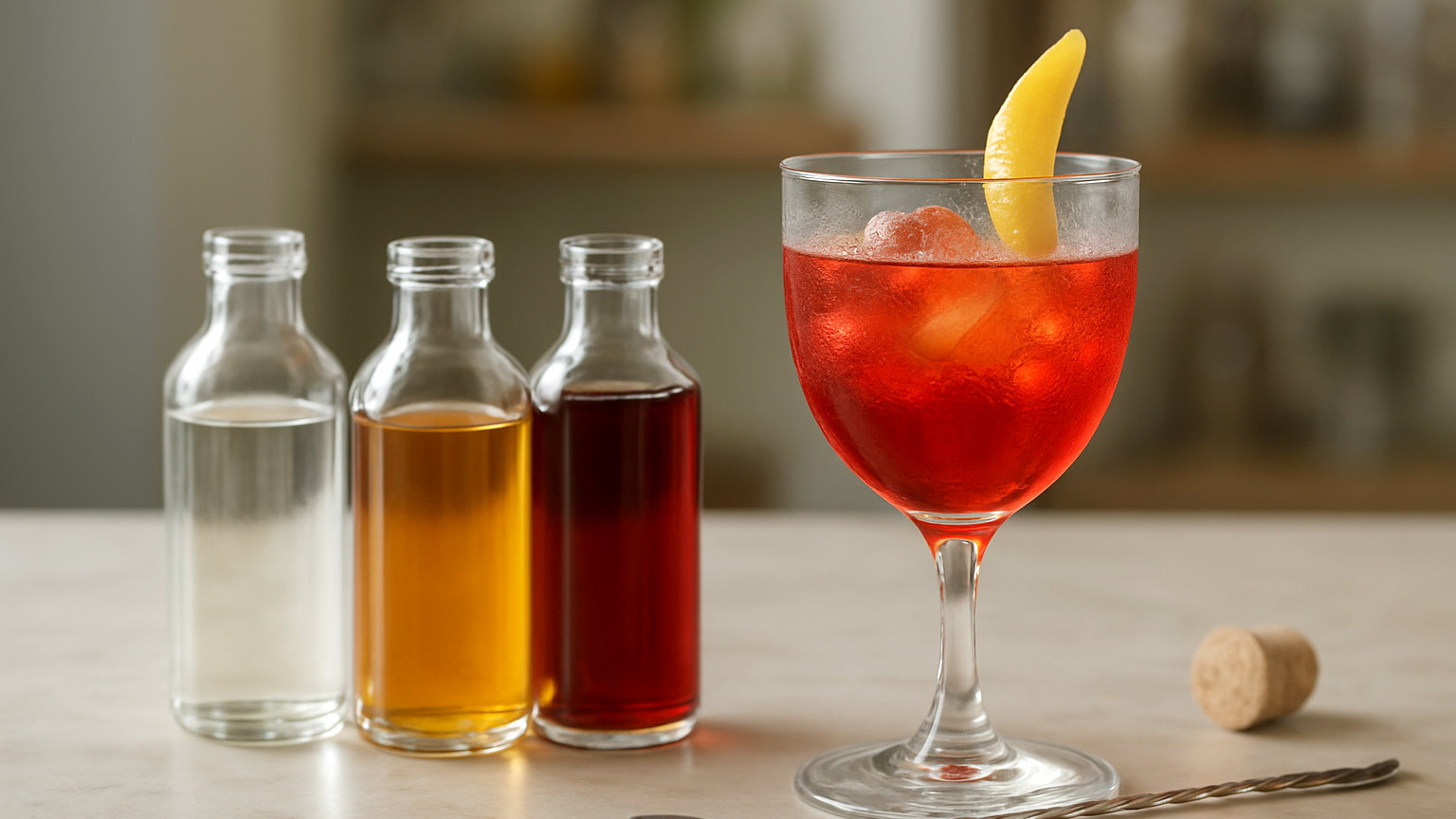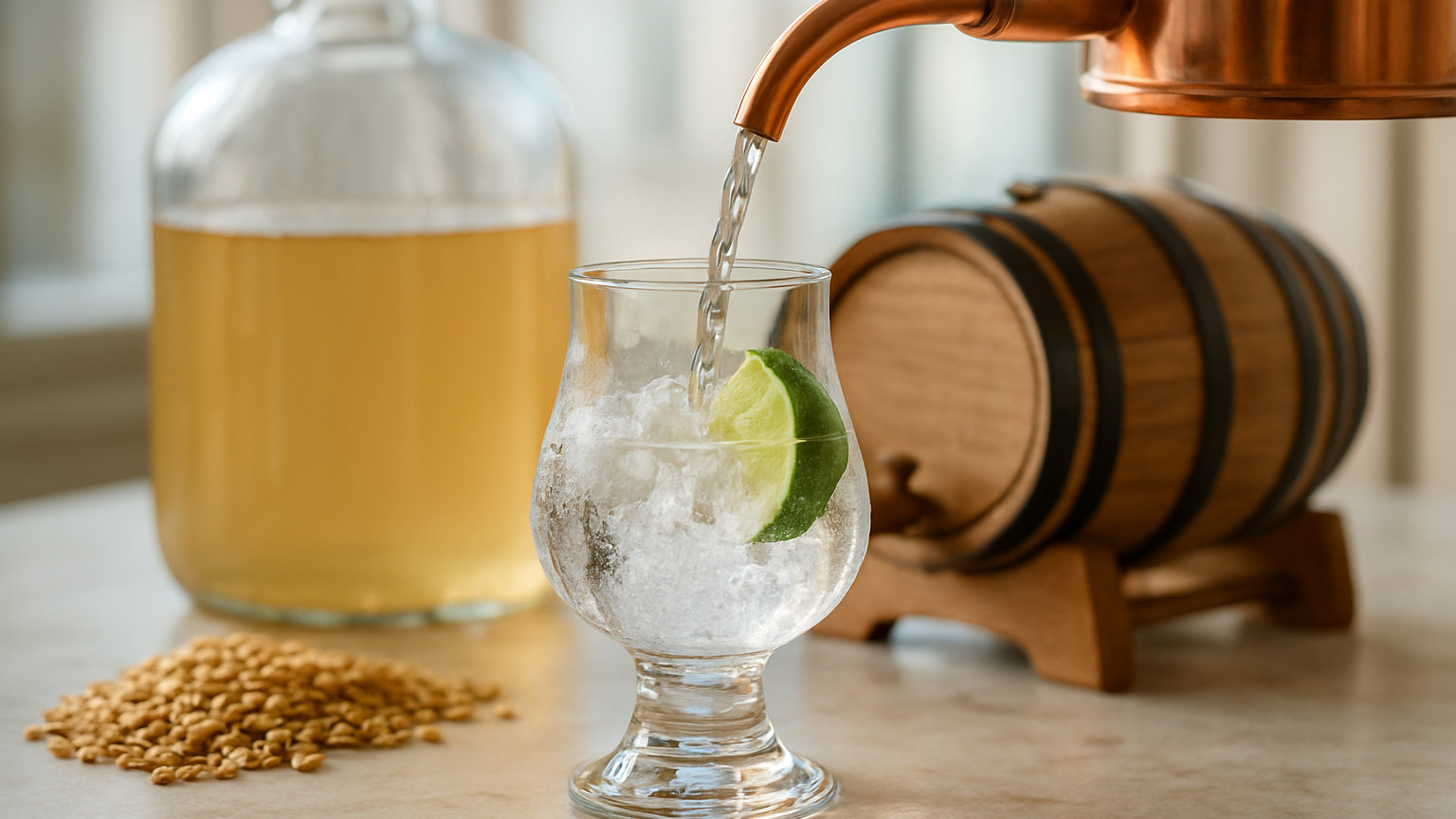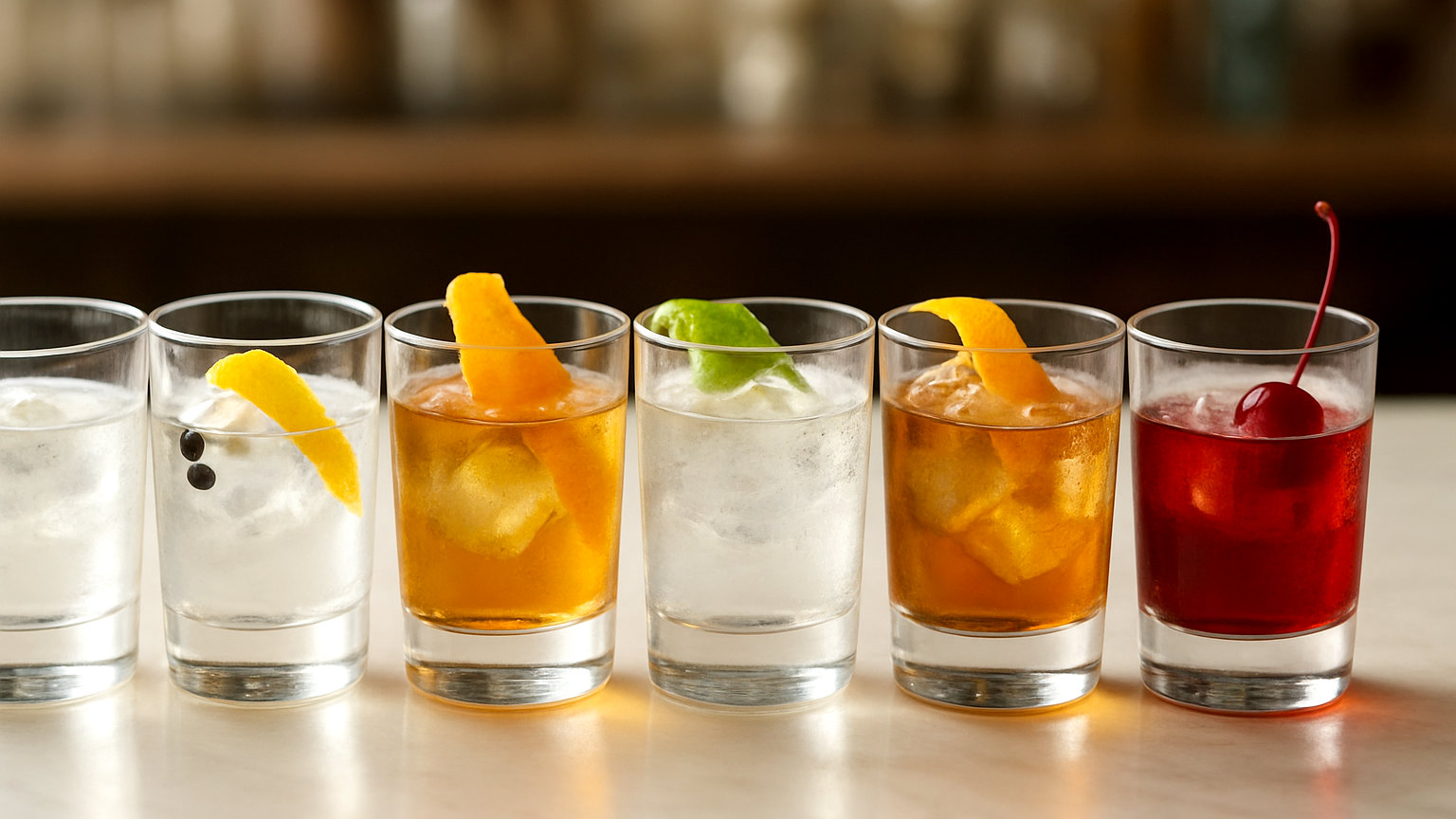
There are six base spirit categories: whisky, gin, vodka, rum, tequila and other agave spirits, and brandy. Liqueurs form a seventh group, and they are base spirits that have been sweetened and flavoured. What separates them is what was fermented before distillation, and what happened to the spirit afterwards.
What makes something a spirit?
A spirit is a drink made by distilling something that was already alcoholic. Fermentation produces alcohol; distillation concentrates it.
That is the whole distinction. Beer and wine are fermented and stop there. Spirits take a fermented liquid, heat it, and capture the vapour, which is richer in alcohol and in aromatic compounds than the liquid it came from.
Because of this, every spirit has a fermented ancestor. Whisky begins as an unhopped beer. Brandy begins as wine. Rum begins as fermented sugarcane. Knowing that ancestor tells you more about a spirit than most of what is printed on the label.
Whisky
Made from grain, matured in oak, and the largest and most subdivided category.
Scotch, bourbon, rye, Irish and Japanese whisky are all built on grain, and the differences come from which grains, whether the barley was dried over peat smoke, what kind of cask was used, and how long it sat there.
Colour and a great deal of the flavour come from the wood rather than from the distillate.
Our whisky guides cover what the categories actually mean and where the flavour comes from.
Gin
A neutral spirit redistilled with botanicals, of which juniper must be the dominant one.
That definition is unusually permissive. Gin is not defined by a raw material or a region but by a flavouring, which is why the category has expanded so far and why two gins can taste almost nothing alike.
London dry is a production method rather than a place. See our gin guides for what the styles mean.
Vodka
Distilled to a high strength and filtered so that very little character remains.
It can be made from grain, potatoes, grapes or almost anything fermentable, and the more thoroughly it is distilled the less the base ingredient matters.
Vodka is the category where price and quality diverge most sharply, which our vodka guides go into.
Rum
Made from sugarcane, either from molasses or from fresh pressed cane juice.
Rum has the loosest labelling rules of any major spirit. Terms like gold, dark and spiced are not defined consistently, and age statements mean different things in different countries.
Rhum agricole, made from fresh cane juice, is a genuinely different drink from molasses-based rum. Our rum guides explain what is worth trusting on a label.
Tequila and agave spirits
Made from the cooked hearts of agave plants rather than from grain or fruit.
Tequila must be made from blue agave in specific regions of Mexico. Mezcal covers a wider range of agave varieties and is frequently roasted in earth pits, which is where the smoke comes from.
The phrase to look for is one hundred per cent agave, which guarantees no other sugars were fermented. Our tequila and agave guides cover blanco, reposado and anejo.
Brandy
Distilled from fruit, most often grapes.
Cognac and Armagnac are both French grape brandies made under different rules and with different results. Calvados is made from apples. Fruit brandies exist across Europe.
The VS, VSOP and XO grades refer to the youngest spirit in the blend. Our brandy and cognac guides explain what each grade guarantees.
Liqueurs
Base spirits that have been sweetened and flavoured, generally lower in strength.
This group includes triple sec and curacao, herbal liqueurs and amari, cream liqueurs, and fruit liqueurs.
Vermouth and other aromatised wines are usually shelved alongside them and are technically fortified wine rather than spirit, which matters because they are perishable once opened. Our liqueur guides cover what keeps and what does not.
Which type should you buy first?
Buy for what you intend to drink rather than to assemble a set.
If you drink spirits neat, start with whichever category you already enjoy and buy one decent bottle rather than three cheap ones.
If you want to make cocktails, a London dry gin, a bourbon or rye, and an aged rum will cover a substantial part of the classic repertoire between them.
Spirits keep effectively forever unopened and for years once opened, so there is no urgency and no need to buy a bottle for a single recipe.
What the strength tells you
Most spirits are bottled at forty per cent, which is the legal minimum for several categories and the cheapest option for producers, since duty is charged on alcohol content.
Bottlings at forty three, forty six or higher are generally a deliberate choice, and higher-strength spirits are frequently unfiltered, which preserves texture that chill filtration removes.
A higher strength also means more alcohol per measure, which is worth accounting for when a recipe assumes forty per cent.
What about everything else behind a bar?
A few categories sit outside the six and are worth placing.
Absinthe is a high-strength botanical spirit flavoured with wormwood, anise and fennel. It is closer to gin in construction than to anything else.
Aquavit is a Scandinavian spirit flavoured with caraway or dill, made much as gin is.
Cachaca is a Brazilian spirit from fresh cane juice, related to rhum agricole and legally distinct from rum.
Baijiu and shochu are East Asian grain and vegetable spirits, and baijiu is by volume the most-drunk spirit in the world.
Vermouth, sherry and port are fortified wines rather than spirits, which matters because they are perishable once opened and belong in the fridge.