Tannin is the reason a mouthful of young Bordeaux leaves your gums feeling scoured while a glass of Beaujolais does not. It is described endlessly in wine writing and rarely explained, which leaves most people assuming it is a flavour they have failed to detect. It is not a flavour at all. Tannin is a physical sensation, and once you know what is causing it, a great deal of red wine becomes easier to understand.
The compounds responsible are polyphenols, and they bind to proteins. Your saliva is full of proteins whose job is to lubricate your mouth. When tannin binds to them, they stop working, and the result is the dry, grippy, slightly rough feeling that wine writers call astringency. This is why the sensation builds across several sips rather than arriving all at once, and why a wine can seem drier at the end of a glass than at the start.
Where the tannin comes from
Almost all of it arrives from the grape itself, and specifically from the parts that white winemaking discards. Red wine is fermented in contact with its skins, and the skins, seeds and sometimes the stems release tannin into the liquid during a period called maceration. The longer that contact lasts and the warmer the fermentation, the more tannin ends up in the finished wine.
This is the fundamental structural difference between red and white wine, and it explains why grape variety matters so much. Thick-skinned varieties such as cabernet sauvignon and nebbiolo have more tannin available to extract, while thin-skinned pinot noir has far less no matter what the winemaker does. A second, smaller contribution comes from oak barrels, which is why a heavily oaked wine can feel firmer than its grape alone would suggest.
Why it softens with age
Tannin molecules do not sit still in a bottle. Over years they gradually link together into longer chains, a process called polymerisation, and as those chains grow they eventually become too large to stay suspended and drop out as sediment. Fewer free tannin molecules means less binding with your saliva, which is why an old wine feels softer and smoother than the same wine did at five years old.
That process is the entire basis of cellaring red wine, and it is why the wines worth ageing are usually the ones that are least pleasant young. A tannic wine has the structure to survive a decade while its fruit slowly evolves. A soft, low-tannin wine has nothing to soften and simply fades.
What tannin does with food
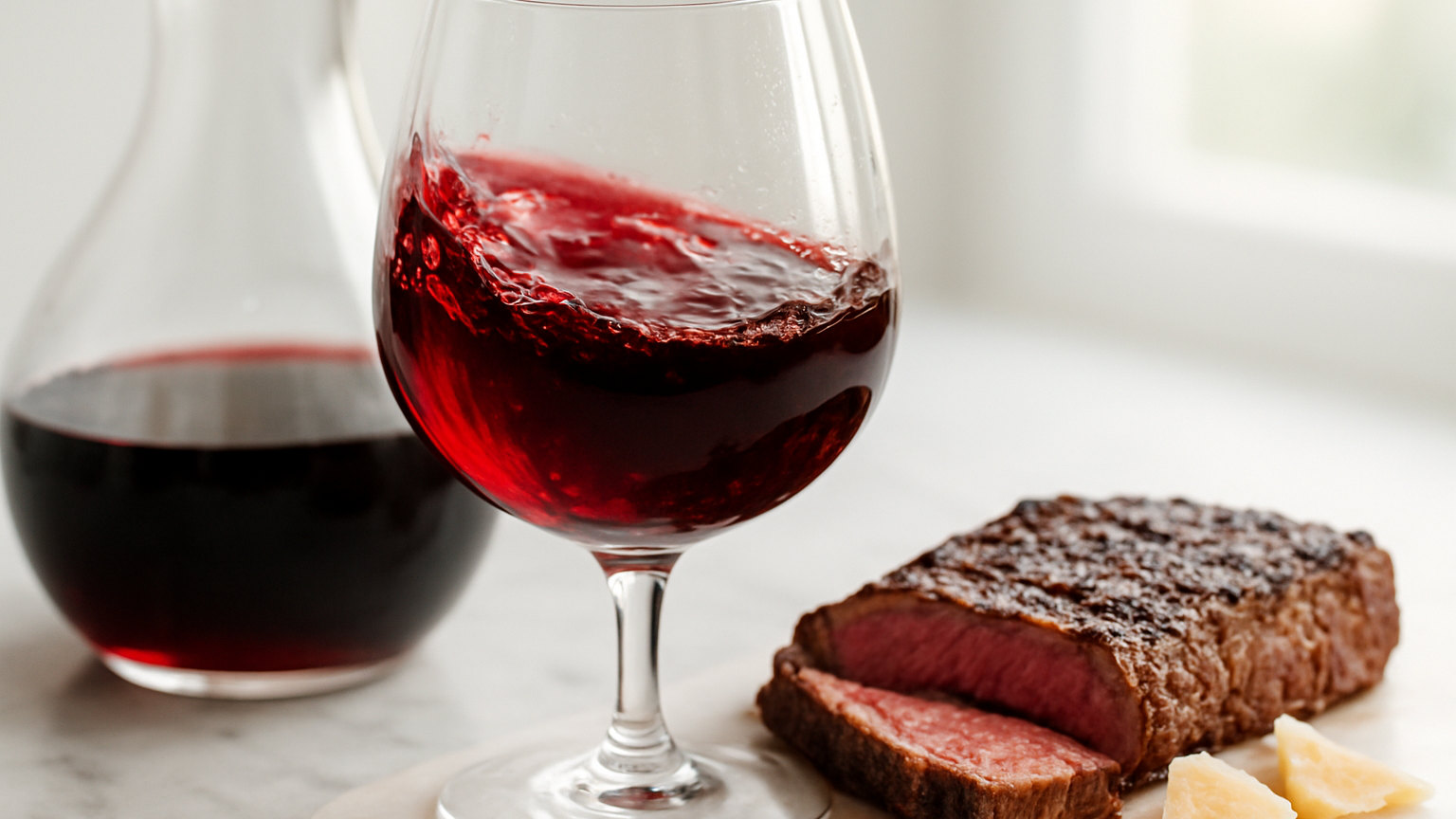
The protein-binding behaviour that makes tannin feel drying is also what makes it useful at the table. Introduce protein and fat from the food and the tannin binds to those instead of to your saliva. A steak and a young cabernet make each other better because the wine's astringency is neutralised and the meat's richness is cut through.
The same mechanism explains the failures. Salt and chilli both sharpen the perception of tannin, which is why a big tannic red alongside a hot curry tastes harsh and metallic. Oily fish is worse still, producing a distinctly unpleasant iron-like clash. If a red wine has ever seemed to taste wrong with a particular dish rather than merely unexciting, tannin was almost certainly the reason.
Judging it in the glass
The practical skill is separating tannin from acidity, because both make a wine feel sharper and beginners frequently confuse them. Acidity makes you salivate; tannin stops you salivating. Take a sip, swallow, and pay attention to your mouth ten seconds later. Watering means acid, drying means tannin, and most serious red wine has both.
Once you can feel the difference reliably, you can buy far more accurately. A wine described as firm or structured will need food or time. One described as soft or supple will not. Neither is better, and the useful question is not how much tannin a wine has but whether the tannin it has suits what you plan to do with the bottle tonight.