Whether to add water is the question that generates the most unnecessary anxiety in whisky drinking. The answer from almost everyone who makes whisky professionally is yes, frequently, and in larger quantities than most drinkers expect. Blenders assess samples diluted to around 20 per cent because that is where the aroma is easiest to read.
Why does water change the flavour?
Whisky contains aromatic compounds, many of which are more soluble in alcohol than in water. At high strength they stay dissolved in the liquid. Add water and they become less soluble, migrate to the surface, and evaporate into the air above the glass, which is where your nose meets them.
Alcohol also has a physical effect on the nose. At high strength the vapour irritates the nasal receptors, producing a burn that masks subtler aromas. Reducing the strength lowers the burn and lets everything underneath come through.
This is why a cask strength whisky often smells of very little at first, then opens up dramatically after a few drops of water. Nothing has been added; something has been released.
How much water should you add?
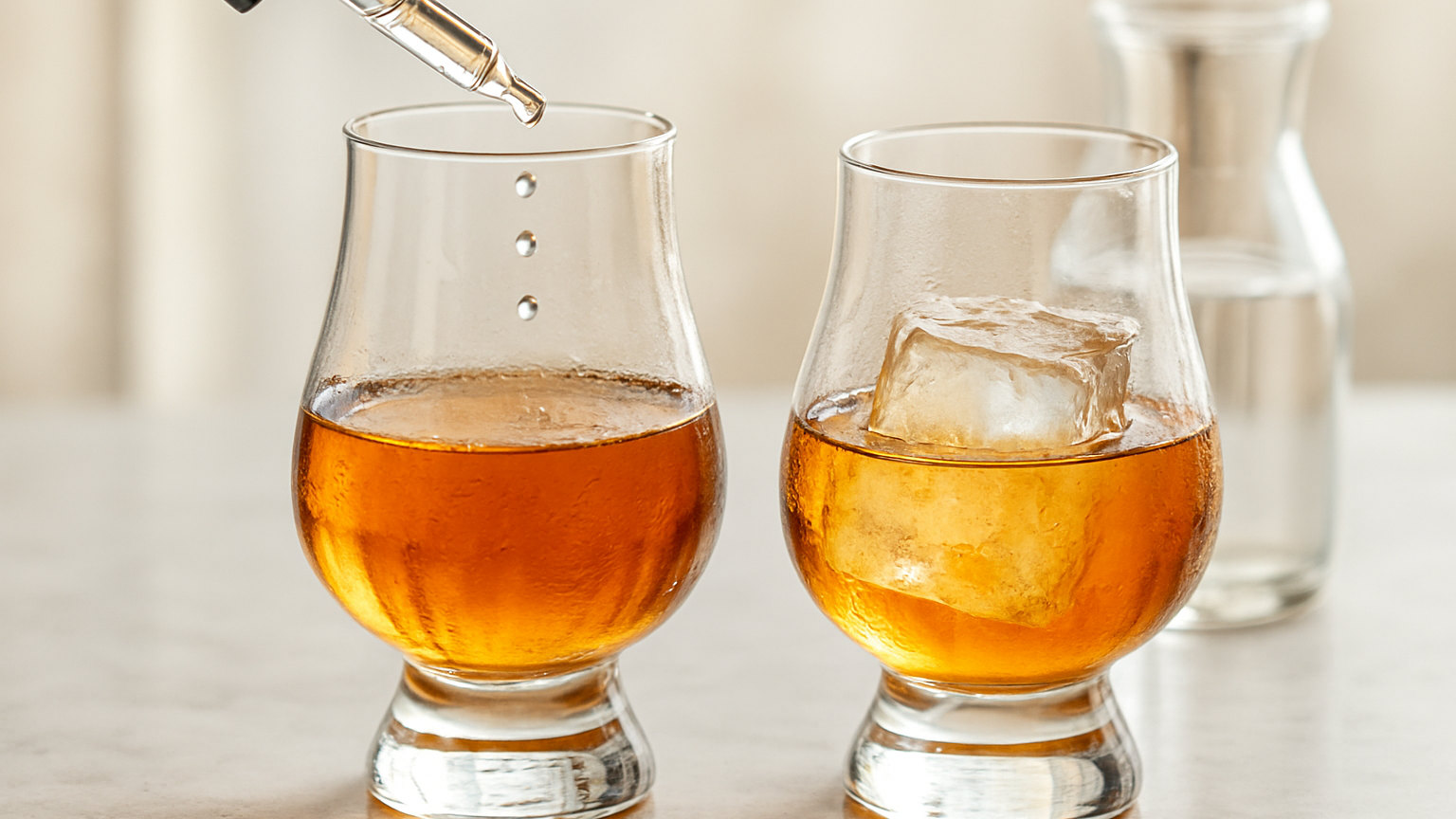
Start with a few drops. Swirl, wait thirty seconds and smell again. If the aroma has grown, add a few more. Stop when the whisky is at its most expressive, which you will notice as the point at which further water makes it start to taste thin or watery.
- Whisky at 40 to 43 per cent has already been reduced substantially and usually needs little or no water.
- Whisky at 46 to 50 per cent often improves with a small addition, particularly if it is non chill filtered.
- Cask strength whisky at 55 per cent and above almost always benefits, sometimes from a considerable amount.
Add water gradually and taste as you go. You can always add more; you cannot take it out.
What kind of water should you use?
Still water at room temperature, low in minerals. Heavily mineralised water can flatten the aroma, and sparkling water introduces carbonation that changes the texture. A small jug or a pipette gives control, and a pipette is the cheapest useful piece of whisky equipment you can own.
Does ice ruin whisky?
No, though it does something different from water. Ice dilutes and chills at the same time, and cold suppresses aroma. A whisky over ice smells and tastes less; what remains is smoother, cleaner and refreshing.
That is a perfectly reasonable thing to want on a warm evening or with a robust bourbon. It is a poor choice for a delicate, expensive malt you bought for its complexity, because you are numbing the part you paid for.
If you use ice, use large cubes. A single large cube has less surface area than several small ones, melts slower, and gives you chill without the drink watering down within minutes. Cloudy fast melting ice from a freezer tray is the main reason whisky on the rocks gets a bad reputation.
Are whisky stones any good?
Not particularly. Stones chill a little, less than ice does, and add no dilution at all. Since dilution is the part that helps the flavour, stones deliver the drawback of cold without the benefit of water. They are a solution to a problem few people have.
When should whisky be served neat?
The first sip of anything, so you have a reference point. Also whisky already bottled at 40 per cent, where further dilution has little left to give, and any occasion where you simply prefer it that way.
Preference is the deciding factor and there is no correct answer to defend. The only genuinely wrong approach is refusing to try water because someone suggested it would be improper. Pour two small measures of the same whisky, add water to one, and compare them side by side. The difference is usually larger than expected, and after that you will know what you like rather than what you have been told.