Bison grass vodka is a Polish speciality flavoured with hierochloe odorata, a wild grass that grows in the Białowieża forest on the Polish and Belarusian border. It is pale green, usually has a blade of the grass in the bottle, and tastes unlike anything else in the vodka aisle.
What does it taste like?
Soft and aromatic, with hay, fresh cut grass, vanilla, almond and a faint coconut note. There is often a gentle sweetness and a rounded texture. It is recognisably vodka underneath but with considerably more going on than a plain bottling.
The dominant aromatic compound is coumarin, which is what gives new mown hay its smell and appears in tonka bean, sweet woodruff and cinnamon.
Why is coumarin a regulatory issue?
Coumarin is restricted as an added food ingredient in the United States, which is why the traditional Polish product could not be sold there for many years. The version available in that market is made with a coumarin free extract, replicating the flavour without the compound.
Quantities in the traditional product are small and it is sold widely across Europe. Anyone taking anticoagulant medication or with liver concerns may wish to raise it with a pharmacist, as with any coumarin containing food or drink.
How is it made?
Rye vodka is infused with an extract of the dried grass, which is harvested by hand in summer and dried before use. The result is filtered and bottled, usually with a single blade of grass added to each bottle as a signature.
The blade is decorative rather than functional at that stage, since the flavour comes from the infusion. It does mean the vodka can continue to develop very slightly in the bottle, and the colour deepens with light exposure.
What is the classic way to drink it?
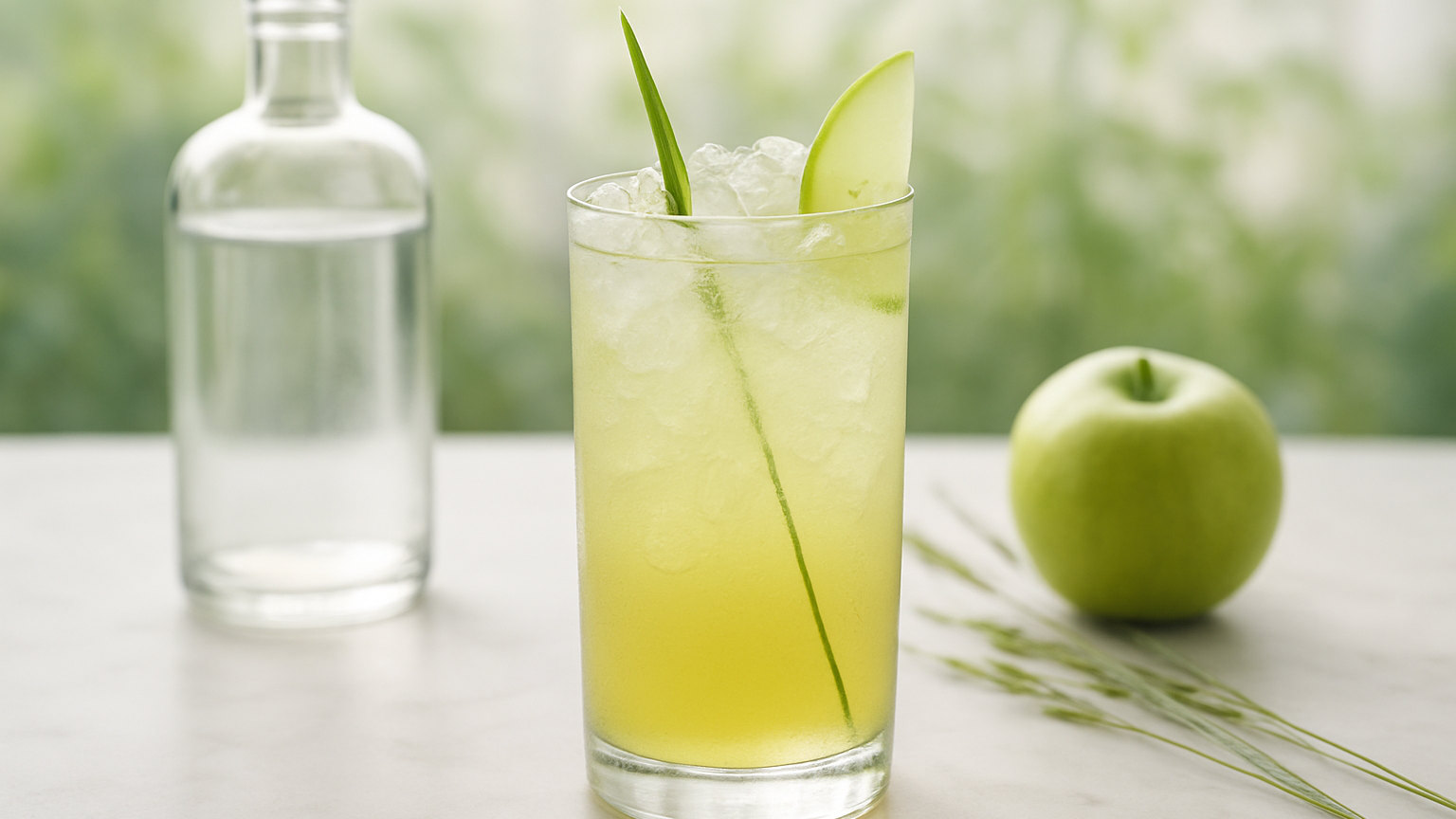
With cloudy apple juice, in a serve known in Poland as a szarlotka after the apple cake it is said to resemble. Roughly one part vodka to two or three parts apple juice over ice, with a squeeze of lemon and sometimes a cinnamon stick.
It works because the vanilla and hay notes sit naturally with apple, and the combination genuinely does taste like a dessert without being sweet in the way that description suggests. It is one of the most reliably good simple drinks in the flavoured vodka category.
What else can you do with it?
- Neat and very cold, in the traditional Polish manner, in a small glass alongside food.
- With ginger ale or ginger beer, where the spice meets the grassy sweetness well.
- In a sour, with lemon juice and a little sugar, where the almond note comes forward.
- In place of plain vodka in a mule, which adds an aromatic dimension the standard version lacks.
It is less successful in drinks built around strong bitterness or heavy citrus, which trample the delicate aromatics.
Is it a vodka or a liqueur?
A flavoured vodka. It is typically bottled at around 40 per cent and is not heavily sweetened, so it sits comfortably within the vodka category rather than crossing into liqueur territory. That distinguishes it from many modern flavoured products, which are both weaker and much sweeter.
Are there other herbal vodkas worth knowing?
Several, mostly from the same part of Europe. Pepper vodka is a Polish and Ukrainian staple and excellent in a bloody mary. Honey and spice vodkas appear across the region. Caraway flavoured styles are common in the Baltic states and Scandinavia, where they overlap with the aquavit tradition.
These are all older than the modern flavoured vodka boom and were made by infusion rather than by adding essences, which is why they generally reward drinking neat in a way that confectionery flavoured products do not.
How should you store it?
Upright, away from direct light, and at room temperature or in the fridge. Light is the main enemy here, since the green colour fades and the delicate grassy aromatics degrade faster than they would in a plain vodka. At full strength it keeps for years, though the freshness of the hay note is best in the first year after opening.