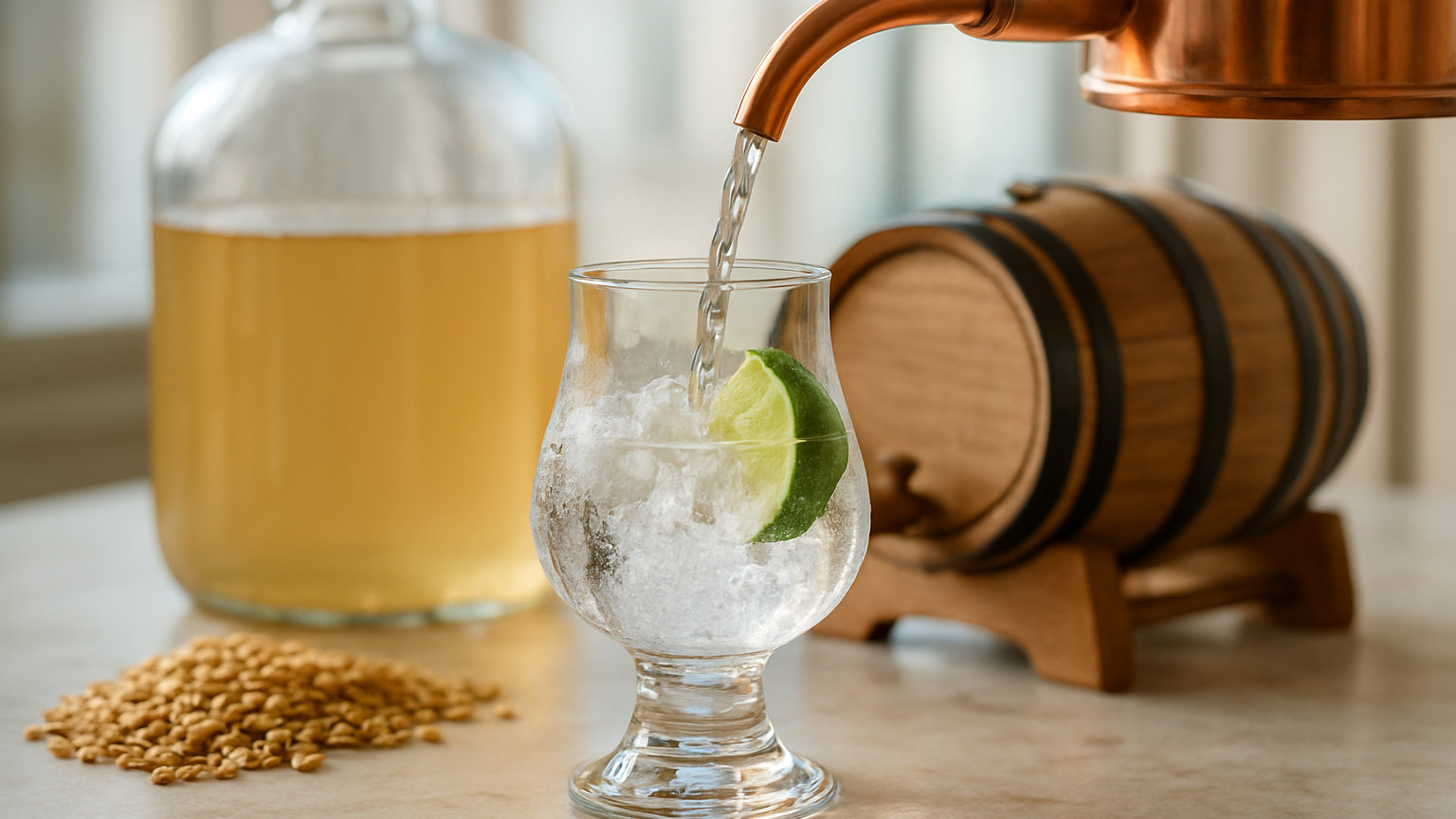
Three times, five times, seven times, and occasionally a figure well into double digits. Distillation counts have become the standard shorthand for vodka quality, and they are almost entirely unregulated, unverified and unhelpful.
What does the number refer to?
That is the first problem: it depends who is counting. In a pot still, one distillation is an unambiguous event, a batch run from start to finish. In a column still, which is what almost all vodka is made in, the process is continuous and the equivalent of many distillations happens inside a single column.
So a producer with one tall column can reasonably describe the process as multiple distillations by counting the theoretical plates inside it. Another with two columns might count two. Neither is lying, and the numbers are not comparable.
Why is more not better?
Because there is a ceiling. Ethanol and water form an azeotrope at approximately 95.6 per cent alcohol, meaning ordinary distillation cannot separate them beyond that point no matter how many times it is repeated. European rules require vodka's base spirit to reach 96 per cent, which is effectively at that limit.
Once a spirit is at the ceiling, further distillation removes nothing, because there is nothing left to remove. A vodka distilled ten times and one distilled four times can arrive at chemically indistinguishable spirit.
What actually determines how clean the spirit is?
- The quality of the fermentation. A clean ferment produces fewer unwanted compounds to remove in the first place.
- The height and design of the column. More plates give better separation in a single pass than repeating a poor separation many times.
- Where the cuts are made. Discarding a generous proportion of the run costs yield and improves the result. This is the decision that matters most and the one least often mentioned.
- The water used for dilution, which is around sixty per cent of the finished bottle.
None of these can be summarised as a single digit, which is precisely why the distillation count became the number on the label.
Is the claim regulated?
Barely. There is no standard definition of a distillation for labelling purposes in most markets and no requirement to substantiate the figure. A producer who buys neutral spirit from a third party and redistills it once may count the supplier's distillations in the total.
That last point is worth dwelling on. A large proportion of vodka brands do not operate a still at all. They buy rectified neutral spirit, dilute it, filter it and bottle it, which is a legitimate business and produces perfectly good vodka. The distillation count on such a bottle describes work done by a company whose name is not on the label.
Does distillation ever genuinely differ?
Yes, at the edges of the category. Vodkas made partly or wholly in pot stills, or deliberately rectified to below the usual purity threshold, retain more base ingredient character and taste distinctly different. That is a real production difference and producers doing it usually explain the method rather than quoting a number.
Equally, a producer who distils to the full 96 per cent and says so is telling you something concrete about the spirit, even though it is the same thing every other compliant vodka does.
What should you look at instead?
Base ingredient, whether the producer actually distils, the water source, the approach to filtration, and price relative to those. Then taste it neat at room temperature, which will tell you more in thirty seconds than any label claim.
If two bottles are otherwise similar and one advertises a large distillation count, that number should not move your decision. It is a figure chosen by a marketing department because it sounds like evidence, and it is the easiest claim in the spirits aisle to make.
The same caution applies to the related claims that cluster around it. Small batch, handcrafted and artisanal have no legal definition in most markets and can be applied to a production line of any size. Origin statements about water, base ingredient and who owns the still are checkable; adjectives about care are not.