If rectification removes flavour compounds, and vodka is rectified to 96 per cent, the base ingredient should be irrelevant. In theory that is close to true. In practice small differences survive, and they are consistent enough that experienced tasters can often group vodkas by their raw material.
Why does anything survive at all?
Because separation is never perfect. A column still leaves trace quantities of higher alcohols and other compounds in the ethanol stream, and those traces reflect what was fermented. Producers also make deliberate choices about how hard to strip the spirit, and some stop short of complete neutrality on purpose.
The other route is texture. Certain base materials appear to produce a fuller mouthfeel that survives rectification, which is why potato vodka has a reputation for weight that seems to hold up in blind tasting more reliably than any flavour claim.
What does each base tend to give?
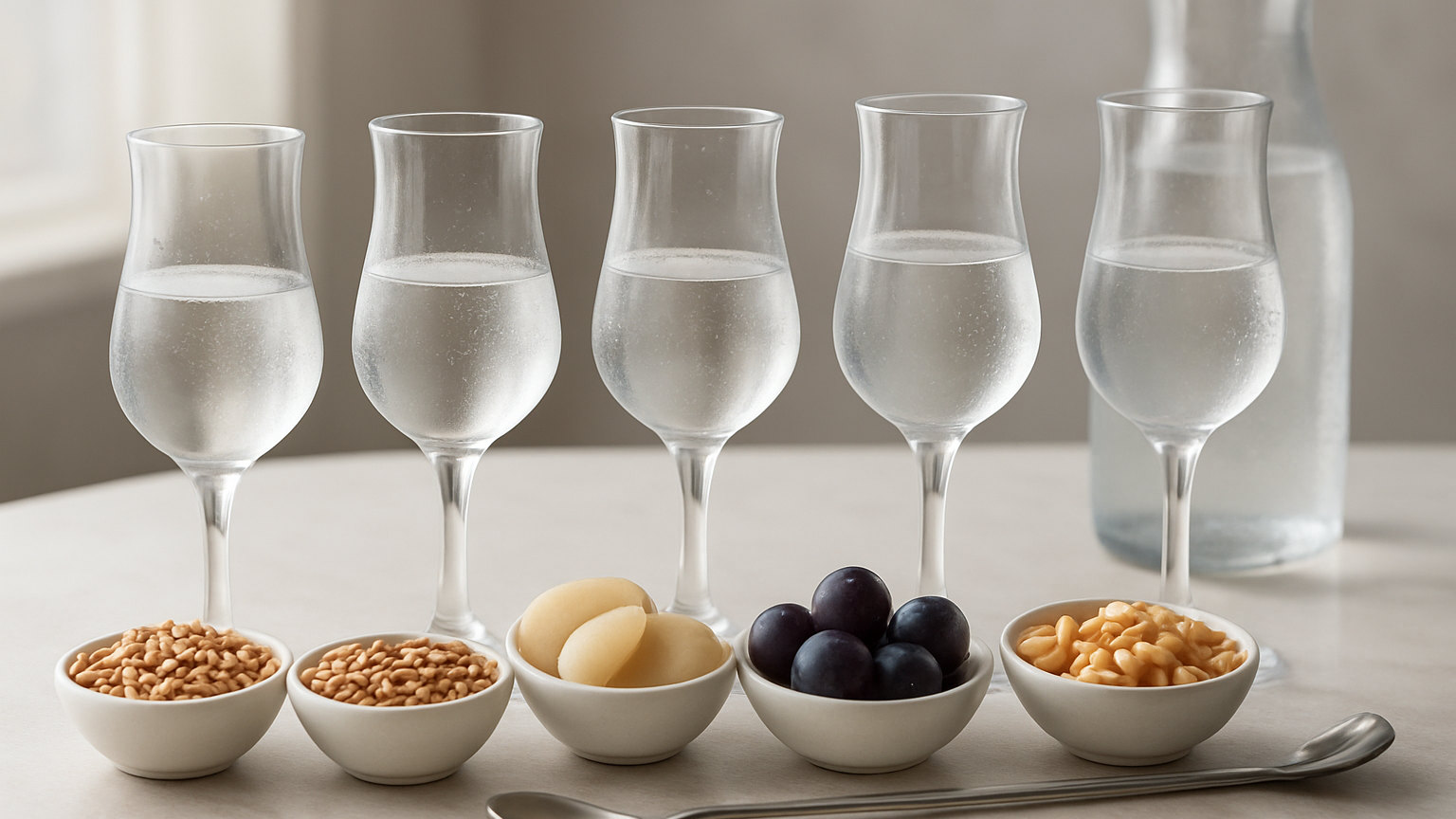
- Wheat. The most common base for premium vodka. Soft, clean and faintly sweet, with a light bread or biscuit note and an easy finish. It is the safe, smooth option.
- Rye. Traditional in Poland. Drier and sharper, with a faint pepper or aniseed edge and a firmer structure. It has more to say than wheat and suits a bloody mary or a drink with strong citrus.
- Potato. Fuller, oilier and creamier in texture, with a mild earthy note. Lower yield per tonne makes it expensive to produce, which is why potato vodka rarely sits at the bottom of the price range.
- Maize. Common in large scale American and international production. Slightly sweet, very clean and generally the most neutral of the grains.
- Grape. Soft and slightly floral with a light fruit lift, made from wine or grape pomace. Often used for gluten free positioning.
- Molasses and sugar beet. Cheap and high yielding, and used widely for inexpensive vodka. Can carry a faint rounded sweetness or, if poorly made, a sulphurous edge.
How much difference does it really make?
Enough to notice neat at room temperature, and rarely enough to notice in a mixed drink. If you drink vodka with cola, tonic, cranberry or an energy drink, the base ingredient is not a sensible thing to spend money on.
If you drink it neat, chilled, with food, or in a martini where the spirit is most of the drink, it becomes one of the few variables that genuinely distinguishes bottles.
Does the label always say?
No. Many producers do not state the base at all, which is legal in most markets and unhelpful. Those using potato, rye or grape almost always say so, since it is a point of difference worth advertising. A premium vodka that stays silent about its base ingredient is most often made from wheat or maize.
What about gluten?
Rectification removes gluten proteins, and health authorities in several countries accept distilled spirits made from wheat, barley or rye as gluten free. People with coeliac disease who prefer to avoid the question entirely usually choose potato, grape or maize based vodka.
The caveat is flavoured vodka, where additives introduced after distillation may contain gluten and the reasoning about rectification no longer applies.
Is one base better than the others?
No, and the hierarchy that marketing implies is not real. Potato vodka carries a premium image partly because it is expensive to make, not because the spirit is inherently superior. Excellent vodka is produced from every base on the list, and poor vodka is too.
The most reliable indicator of quality remains the care taken in production rather than the crop it started as. Base ingredient tells you what style of vodka you are likely to get; it does not tell you how well it was made.
How can you test it yourself?
Buy a wheat vodka and a rye or potato one at similar prices, pour small measures of each at room temperature, and taste them side by side. The difference in weight and finish is usually clear even to someone doing it for the first time, and it is far more convincing than any description. Chill them afterwards and try again, and you will also see how much of that difference the freezer removes.