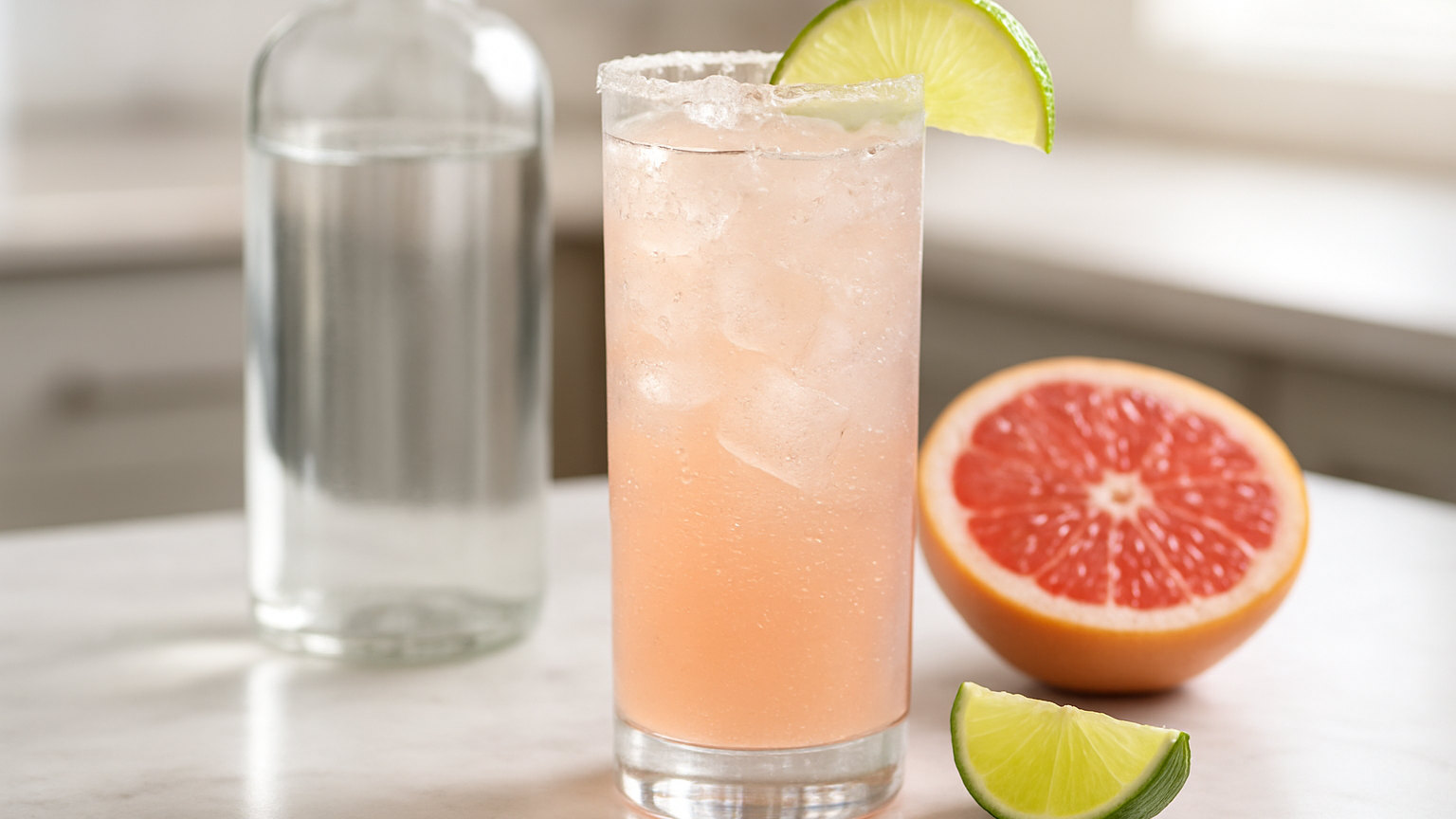
Ask what Mexico drinks and the answer is not the margarita. The paloma, tequila with grapefruit soda and lime over ice, is by a wide margin the more popular drink at home, and it is a better everyday proposition than its famous rival.
What is in it?
In its simplest form: blanco tequila, grapefruit soda, a squeeze of lime, ice, and salt on the rim if you want it. That is the version served across Mexico, and it takes about thirty seconds to build.
The more considered version replaces the soda with fresh grapefruit juice, lime juice, a little sugar or agave syrup and soda water, which gives you control over the sweetness and a fresher result.
What are the proportions?
For the simple version, one part tequila to three parts grapefruit soda, built over ice with a good squeeze of lime. That is 50 millilitres of tequila topped with roughly 150 of soda.
For the fresh version, a workable starting point is 50 millilitres of blanco tequila, 60 of fresh pink grapefruit juice, 15 of lime juice and 10 of agave syrup, shaken briefly and topped with soda water. Adjust the syrup to the grapefruit, which varies enormously in sweetness.
Which tequila should you use?
Blanco, 100 per cent agave. The peppery, citrus-leaning character of an unaged tequila meets grapefruit naturally, and the drink is long enough that a thin spirit disappears entirely.
Reposado works and gives a rounder, slightly sweeter drink. Anejo is generally wasted here, as the oak has nothing useful to do against grapefruit and soda.
Why does it work so well?
Grapefruit brings bitterness as well as sweetness and acidity, and that bitterness is what makes the drink refreshing rather than merely sweet. Agave and grapefruit share a slightly resinous, mineral quality that makes the pairing feel deliberate.
The carbonation and the length also make it a considerably more sessionable drink than a margarita, which is short, strong and sweet by comparison.
Does the salt matter?
It helps more than in a margarita. Salt suppresses bitterness on the palate, so a salted rim makes the grapefruit read as sweeter and rounder. A pinch of salt stirred into the drink does the same thing more evenly.
Salting only half the rim lets each drinker choose from sip to sip, which is the sensible approach when serving several people.
Which grapefruit soda should you use?
Mexican grapefruit sodas are the traditional choice and are widely available in the United Kingdom from larger supermarkets and specialist shops. They tend to be sweeter and more assertively flavoured than European grapefruit drinks.
A dry grapefruit or bitter lemon style mixer produces a sharper drink that suits a good tequila better. Whichever you use, buy small bottles or cans, since carbonation is the first thing lost from a large opened bottle.
What variations are worth making?
- Mezcal paloma, replacing a quarter to a third of the tequila with mezcal for a smoky edge.
- Spicy paloma, with a few slices of jalapeno muddled in or a chilli salt rim.
- Batched for a crowd, mixing tequila, grapefruit juice, lime and syrup in advance and topping each glass with soda to order.
The last is the paloma's practical advantage over the margarita. It scales easily, it can be prepared ahead, and it holds up over a long afternoon in a way that a short shaken drink does not.
How do you keep it from going flat?
Fill the glass properly with ice, use cold soda straight from the fridge, and pour gently down the side rather than stirring hard. A full glass of ice melts more slowly than three cubes, so the drink dilutes less rather than more.
Buy small bottles or cans of whatever carbonated element you use, since a large bottle loses its fizz within a day or two of opening and a flat paloma is a dull drink.
Where does the name come from?
Paloma means dove in Spanish. The origin of the drink is not documented with any certainty, and the various accounts attributing it to a particular bartender or a particular town are folklore rather than history. What is clear is that it grew up alongside the arrival of commercial grapefruit soda in Mexico in the middle of the twentieth century.