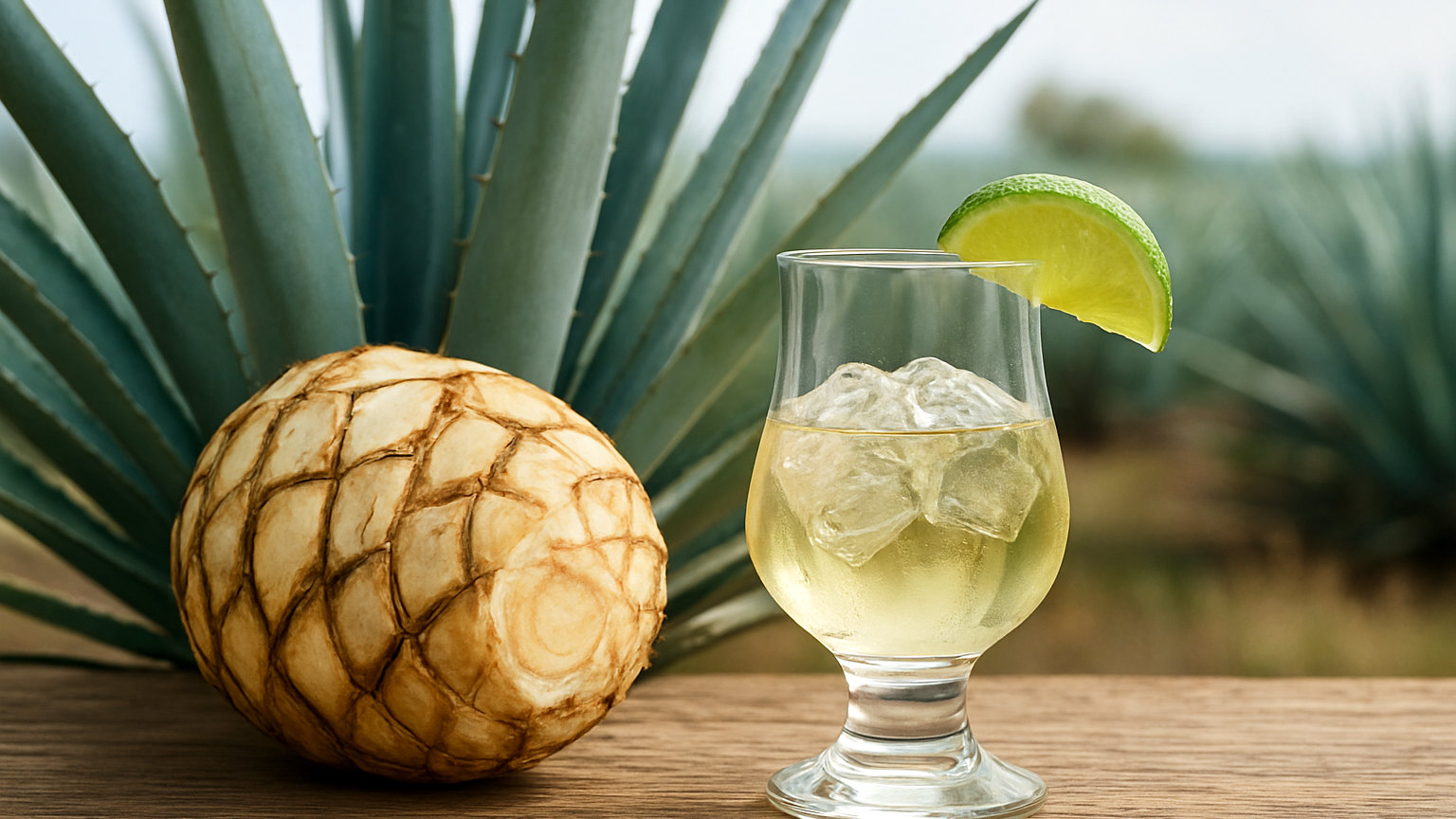
Agave is the slowest raw material in mainstream spirits. A field of blue agave planted today will not be harvested until the early 2030s, and that single fact explains most of the economics of the category.
How long does each type take?
- Blue Weber agave, used for tequila, matures in six to eight years, sometimes longer at higher altitude in the Jalisco highlands.
- Espadin, the main mezcal agave, takes six to eight years and is cultivated commercially.
- Tobala grows wild in shaded highland areas and takes twelve to fifteen years.
- Tepeztate can take twenty to twenty five years, and occasionally more.
- Arroqueno and madrecuixe sit in the twelve to twenty year range.
These timescales are why a mezcal made from a wild species costs several times what an espadin bottling does. The plant in the bottle may be older than the person drinking it.
Why is the plant harvested before it flowers?
Agave spends its whole life storing energy in its heart, then sends up an enormous flower stalk called a quiote, reproduces and dies. Once the quiote grows, the stored sugars are consumed and the plant is worthless for distilling.
So harvest has to happen just before flowering, when sugar content peaks. The jimador judges this by the appearance of the plant, and cutting too early gives lower yield and a thinner, more vegetal spirit.
What does maturity do to flavour?
A fully mature plant has higher sugar concentration and more developed flavour compounds, producing a richer and more complex spirit. An immature one gives less sugar per tonne, requiring more plants for the same volume, and yields a sharper, greener distillate.
This is where shortages cause quality problems. When agave prices spike, there is commercial pressure to harvest early, and the effect shows up in the bottle two or three years later.
Why do prices swing so wildly?
Because supply decisions are made six to eight years before they take effect, and demand moves much faster than that.
The cycle is well documented and repeats. High agave prices encourage mass planting. Those plants all mature at roughly the same time, creating a glut and collapsing prices. Farmers then plant less, and six years later a shortage arrives. Tequila demand has grown strongly in international markets, which has amplified the swings rather than smoothing them.
During shortages, some producers turn to diffusers and to younger agave to stretch supply, and prices rise across the shelf.
What about sustainability?
Two separate issues. For cultivated blue agave, the concern is monoculture. Commercial fields are propagated from clones taken as offshoots, so genetic diversity is extremely narrow, leaving the crop vulnerable to disease.
For wild mezcal agave, the concern is more immediate. Harvesting a plant before it flowers prevents it reproducing, and a species that takes twenty years to mature cannot recover quickly from over-harvesting. Several wild species are now under serious pressure.
Producers addressing this cultivate wild species from seed, leave a proportion of plants to flower, and replant deliberately. Some state this on the label or on their website, and it is worth looking for if you buy wild agave mezcal.
Can agave be grown elsewhere?
It grows perfectly well in similar climates, and agave spirits are produced in South Africa, Australia, India and the United States. They cannot be called tequila or mezcal, since those names are tied to their denominations of origin, and are usually sold as agave spirit.
Quality varies as widely as anywhere, and some are serious products. The categories are protected by origin rather than by any claim that agave will not grow elsewhere.
What does this mean for what you pay?
It means very cheap agave spirit is a signal worth heeding. Somewhere in a chain that begins with a seven year crop and a hand harvest, cost has been removed, and the usual candidates are young plants, diffuser extraction and added sugars.
It also means the category rewards patience from the buyer as well as the grower. Prices track the cycle, and bottles that seemed expensive during a shortage often settle back a few years later when the next wave of plantings matures.