Whisky has protected categories, gin has a legal definition built around juniper, and cognac has an appellation covering grape variety and still design. Rum has almost none of that, and the practical consequence is that many of the words on a rum bottle carry no obligation whatsoever.
Why did it end up this way?
History and geography. Rum developed independently across dozens of colonies belonging to different European powers, each with its own laws, language and market. There was never a single producing nation or trade body in a position to impose a shared standard.
The largest markets then adopted very light regulations. In much of the world, rum simply needs to be distilled from sugar cane products and bottled above a minimum strength. Everything else is optional.
Which terms mean nothing?
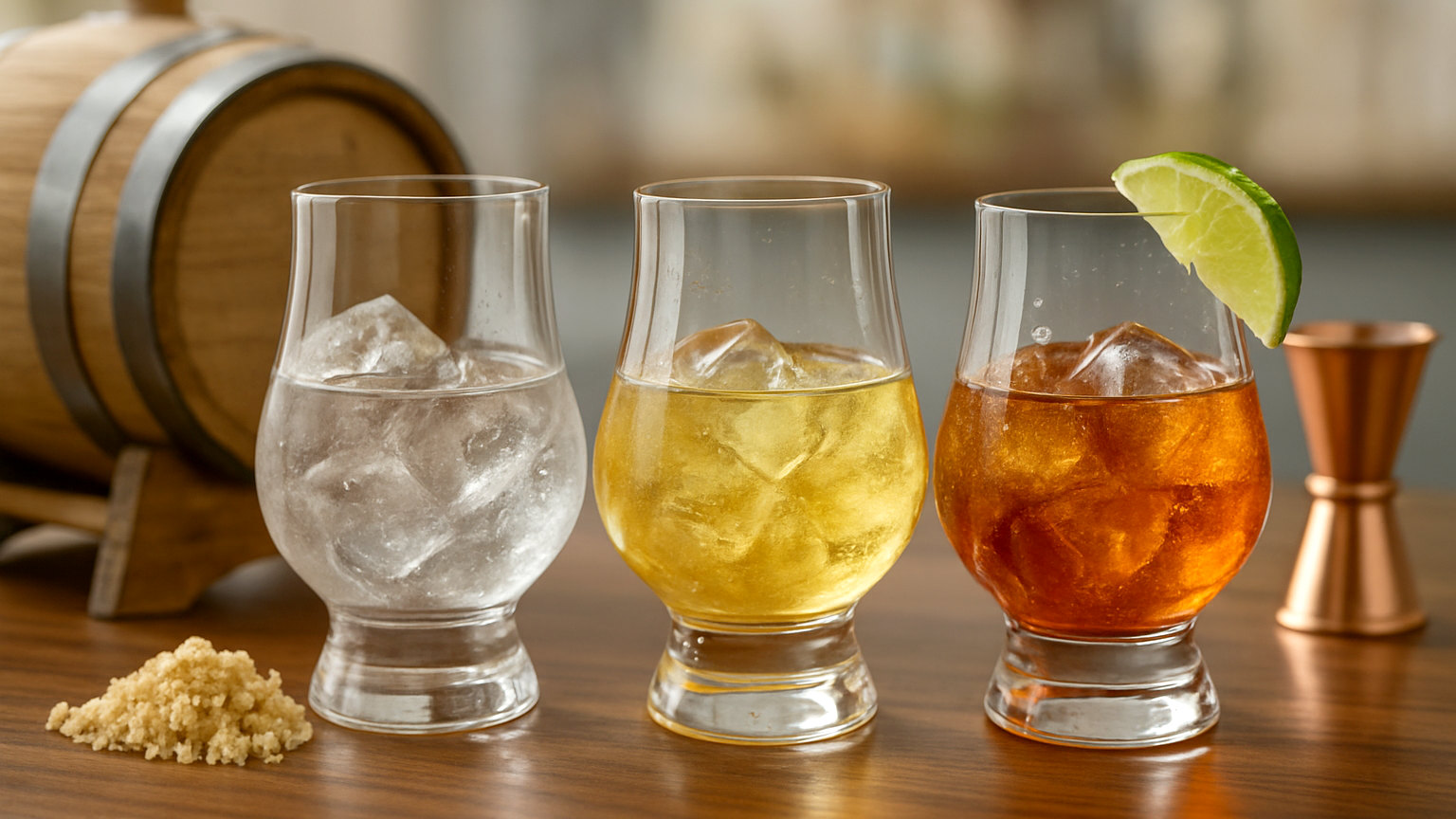
- Dark, gold, amber and white. These describe colour, and colour can be adjusted with caramel or removed by filtration. A dark rum may be young and coloured; a white rum may be aged and filtered clear.
- Premium, reserve, select and finest. Marketing adjectives with no definition anywhere.
- Aged, extra aged and old. Meaningless without a number, and in some markets a number can refer to the oldest component or an average rather than the youngest.
- Small batch and artisanal. Undefined in almost every jurisdiction.
- Spiced and flavoured. Loosely governed, with no requirement to disclose what was added.
What about age statements?
This is the most consequential gap. In Scotch, an age statement legally refers to the youngest spirit in the bottle. In rum, that convention holds in some producing countries and not in others.
Some rums, particularly those using solera style systems, print a number that refers to the oldest component or to the notional age of the system. A bottle showing a large number may contain a great deal of much younger rum. Where the label says the number is the youngest component, that is meaningful and usually stated explicitly.
Are additives disclosed?
Rarely. Sugar, caramel colouring, glycerol and flavourings are permitted in many markets and generally need not appear on the label. Independent testing over the years has found substantial added sugar in a number of well known rums, sometimes tens of grams per litre.
This is legal, and some drinkers prefer the softer result. What makes it a labelling problem is that a buyer comparing two bottles has no way of telling which has been sweetened and which developed its character in a cask.
Is anything on the label reliable?
Yes, and these are the markers worth looking for.
- Country and distillery of origin. A named distillery is far more informative than a brand name, and some countries do regulate their own rum meaningfully.
- Protected designations, such as the Martinique appellation for rhum agricole, Rhum de la Guadeloupe or Ron de Guatemala, which carry real production rules.
- Still type, where stated. Pot still, column still or a blend tells you a great deal about the body of the spirit.
- Strength. A hard number, and higher strengths generally indicate less dilution and more character.
- Explicit statements that no sugar has been added and that the age refers to the youngest rum. Producers who can say this usually do.
Are things improving?
Slowly. Several producing countries have introduced or tightened their own geographical indications, and a number of independent bottlers and enthusiast led classification systems have emerged to fill the gap by describing rums according to still type and production method.
Consumer pressure has also pushed some producers to publish sugar content voluntarily. Until standards are harmonised, though, the practical approach is to buy on distillery, origin and disclosure rather than on the adjectives, and to treat an unexplained number on a bottle with caution.
There is one advantage to all this for the buyer willing to learn the markers. Because the label does so little work, price and reputation track quality less tightly in rum than in other categories, and excellent bottles regularly sit at modest prices simply because they are not marketed aggressively.