Rum is a spirit distilled from sugar cane or its byproducts. That is the whole definition in most of the world, and it is remarkably permissive. There is no required grain, no mandatory still type, no minimum ageing in many jurisdictions and no agreed standard for what the words on the label mean.
What is rum made from?
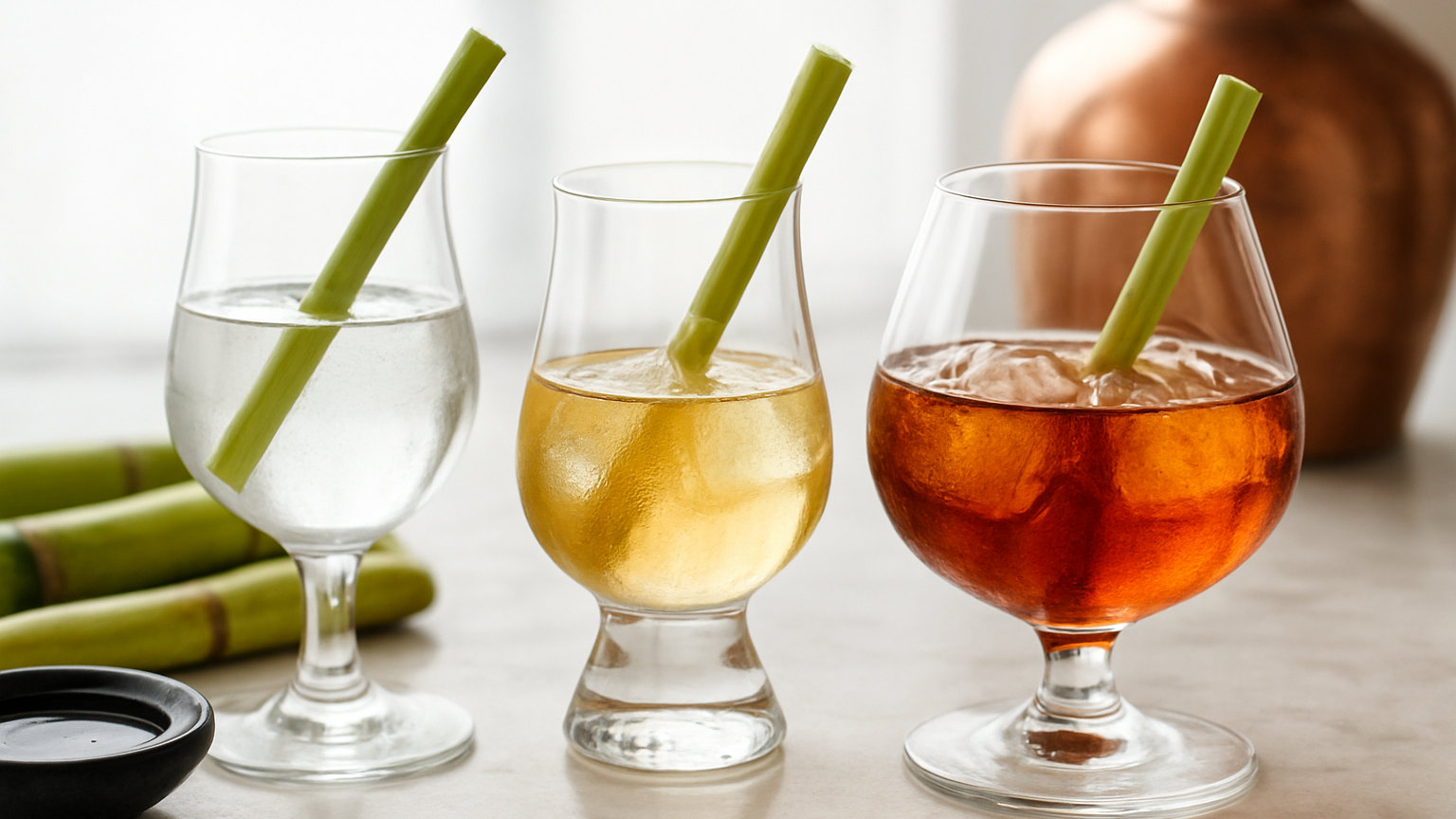
Two starting materials dominate. Molasses is the thick dark syrup left after sugar has been crystallised out of cane juice, and it accounts for the overwhelming majority of rum worldwide. Fresh pressed cane juice is used mainly in the French Caribbean and in Brazil, producing a distinctly grassier spirit.
A few producers use cane syrup or honey, an intermediate product concentrated but not crystallised. Each of these carries a different sugar profile and a different set of compounds into the ferment, which is where much of the eventual character is decided.
How does fermentation shape the spirit?
More than in almost any other category. Rum fermentation ranges from around 24 hours to several weeks, and the difference between those extremes is enormous.
Short, clean fermentations with cultured yeast produce light, mild spirit suited to column distillation and blending. Long fermentations, often using wild yeast and sometimes deliberately encouraging bacteria, generate large quantities of esters and other aromatic compounds. That is the origin of the pungent fruit and solvent notes people describe as funk in Jamaican rum.
Some Jamaican distilleries add dunder, the residue left in the still after a previous distillation, and in a few cases muck, a deliberately cultivated bacterial pit. These practices sound alarming and are the reason certain rums smell like overripe banana and pineapple from across a room.
Pot still or column still?
- Pot stills work in batches, carry heavy aromatic compounds through, and produce full bodied, characterful rum. Jamaica and parts of Barbados and Guyana are known for them.
- Column stills run continuously and produce lighter, cleaner spirit at higher strength. Most Spanish speaking Caribbean rum is made this way, and so is the bulk of inexpensive rum worldwide.
- Blends of both are extremely common, and many of the most respected rums combine pot and column distillate to get body and cleanliness together.
Guyana is unusual in operating historic wooden stills, including a wooden coffey still and pot stills built from greenheart wood, which produce flavours no metal still reproduces.
How is rum aged?
Usually in ex bourbon barrels, since they are cheap and plentiful, though sherry, cognac, port and new oak all appear. Some rum is not aged at all, and some is aged and then filtered back to clear, which is how much white rum is produced.
The critical difference from Scotch is climate. Tropical ageing is fast and aggressive, with evaporation losses that can reach ten per cent a year against roughly two per cent in Scotland. A tropically aged rum of eight years has had a far more intense maturation than a Scotch of the same age, which is why direct age comparisons between the two mislead.
What happens before bottling?
Blending, dilution and, in many cases, additions. Caramel colouring is widely used to adjust appearance. Sugar, glycerol and other softening agents are added by a significant number of producers, legally in most markets and usually without disclosure.
This is the most contested practice in rum and the main reason enthusiasts pay attention to producer transparency. A rum that tastes noticeably sweet on the finish has often had sugar added after distillation rather than developed that impression from the cask.
Why is there so much variation?
Because rum grew up across dozens of colonies with different languages, laws, equipment and markets, and no single authority ever imposed a shared standard. The result is a category where two bottles labelled identically can be entirely different spirits.
That makes rum frustrating to navigate and unusually rewarding once you learn the production markers. Country of origin, still type and whether the producer discloses additives will tell you more about a bottle than any word on the front label.