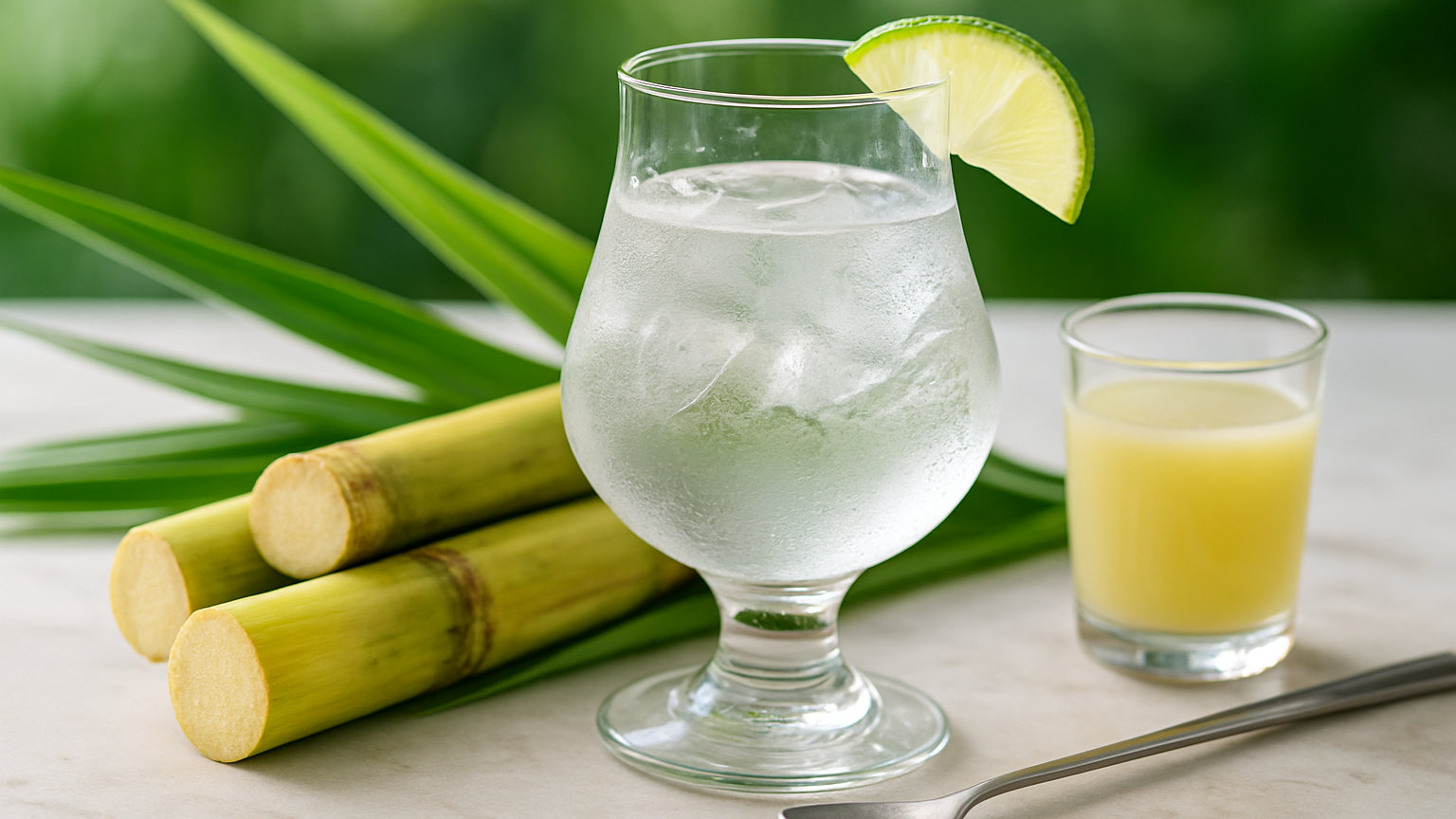
Rhum agricole is rum made from fresh pressed sugar cane juice rather than molasses, produced principally in the French Caribbean. The term translates roughly as agricultural rum, distinguishing it from industrial rum made from a sugar refining byproduct.
What makes it different?
The juice is pressed from cane and fermented within hours, because it begins to degrade almost immediately. Nothing is boiled, crystallised or stored, so compounds that would be lost during sugar production survive into the ferment.
The result is a spirit with a pronounced grassy, vegetal, olive-like character. Fresh agricole blanc smells of cut grass, green pepper and brine, with sweetness present but never leading. It divides opinion sharply on first encounter and tends to convert people slowly.
Is it a protected category?
In Martinique, yes, and unusually strictly. The island holds an appellation d'origine controlee, the same class of protection that governs French wine regions, granted in 1996.
The rules cover a great deal more than most spirits regulations.
- Permitted cane varieties and the areas they may be grown in.
- Maximum agricultural yields per hectare.
- A defined harvest window, roughly January to July.
- Fermentation limited to a short period using cane juice only, with no added sugar.
- Distillation in single column creole stills within a specified strength range.
- Minimum resting periods before bottling and defined ageing terms.
Guadeloupe, Marie-Galante and other French islands produce agricole under lighter regulation, and cane juice rum from elsewhere may use the term agricole in some markets without meeting the Martinique standard.
What do blanc, eleve sous bois and vieux mean?
These are the age designations and they are worth learning, since they are precise in a way most rum labelling is not.
- Blanc. Unaged, rested in stainless steel for a minimum period before bottling. Usually 50 to 55 per cent and the purest expression of the cane.
- Eleve sous bois. Rested in wood for at least twelve months, giving a pale gold colour and a little softening without much oak flavour.
- Vieux. Aged at least three years in oak casks of limited size. Complexity increases substantially while the grassy character remains detectable underneath.
- VSOP and XO follow the cognac convention, indicating four years and six years or more respectively.
How should you drink it?
The traditional serve is a ti punch, which is agricole blanc, a squeeze and disc of lime, and a small amount of cane syrup, stirred in a small glass with little or no ice. It is customary for each drinker to build their own, and the proportions are a matter of personal preference rather than recipe.
Aged agricole is excellent neat and stands comparison with good cognac, which is unsurprising given the shared French distilling heritage and the similar ageing conventions.
Does it work in ordinary rum cocktails?
Sometimes, with adjustment. A daiquiri made with agricole blanc is sharp and herbaceous and generally needs a little more sugar than the molasses version. A mojito works well, since mint and lime meet the grassy notes naturally.
Drinks built on caramel sweetness, such as a dark and stormy or many tiki recipes, are less successful with agricole alone, though tiki bartenders frequently use it as one component in a blend precisely because it adds a dimension molasses rum lacks.
Where should you start?
With a Martinique blanc at around 50 per cent and a lime, made into a ti punch. It is the cheapest way into the style and the serve the spirit was designed around.
If the grassy character appeals but the intensity does not, an eleve sous bois or a young vieux softens it considerably while keeping the identity intact. Buying an expensive XO first is a common mistake, since the oak conceals exactly the qualities that make the category distinctive.
It also helps to taste it against a molasses rum rather than on its own. Poured side by side, the difference between the two families is unmistakable, and the vegetal notes that seem strange in isolation start to read as a deliberate style rather than a fault.