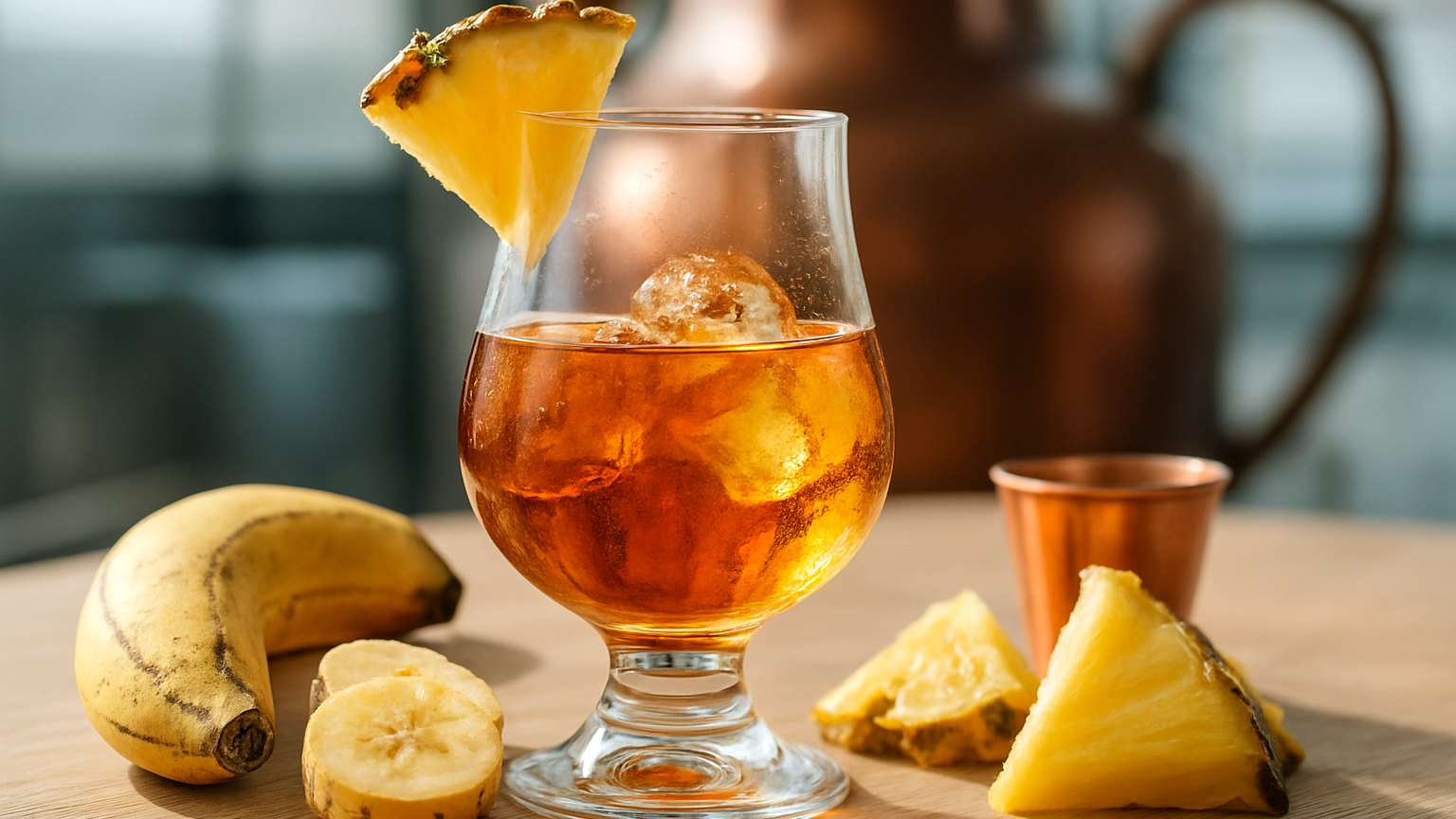
Pour a high ester Jamaican rum and the room knows about it. The aroma is overripe banana, pineapple, varnish, glue and tropical fruit taken several days past ripeness. Enthusiasts call it funk, or by the older term hogo, and it is produced on purpose.
What are esters?
Esters are aromatic compounds formed when acids react with alcohols. They are responsible for most fruity smells in nature and in fermented drinks, and ethyl acetate, ethyl butyrate and others produce the specific notes associated with Jamaican rum.
Every spirit contains some. What distinguishes Jamaican rum is quantity. Ester content is measured in grams per hectolitre of pure alcohol, and where a light column rum might sit in single figures, a heavy Jamaican pot still rum can reach several hundred or, in extreme cases, well over a thousand.
How are they created?
By fermentation that would be considered a failure anywhere else.
- Long fermentation. Weeks rather than days, allowing acids to accumulate and react.
- Wild and mixed cultures. Rather than a single clean yeast strain, the ferment includes bacteria that generate the acids esters are built from.
- Dunder. The acidic residue left in the still after distillation, added back to the next fermentation to supply acidity and microbial life.
- Muck. A cultivated pit of organic matter and bacteria, maintained over years, added in small quantities to drive ester formation further.
Pot distillation then carries these heavy compounds into the spirit, where a column still would strip most of them out.
What do the marks on a bottle mean?
Jamaican distilleries traditionally identify each production style by a mark, a short code such as a two or three letter abbreviation. Each mark corresponds to a defined ester range and production recipe.
Independent bottlers frequently print these marks, and enthusiasts use them to predict intensity fairly accurately. Historic trade classifications also survive as style names, with common rum at the lighter end and continental flavoured at the heaviest, used for blending and for flavouring rather than for drinking neat.
Is all Jamaican rum funky?
No. Jamaica produces a full range, from light column still rum used in blends to the extreme high ester styles. Some of the best known Jamaican bottlings are moderate, with just enough ester character to be recognisable.
The island's protected geographical indication sets rules on production and prohibits added sugar and flavouring, which is why Jamaican rum tends to be well regarded by drinkers who care about transparency.
How should you drink it?
Neat is rewarding if you like the style, and a few drops of water opens it considerably. In cocktails it is transformative, because a small quantity carries an enormous amount of aroma.
Tiki drinks are built on this principle. Many classic recipes blend a light rum for body with a small measure of heavy Jamaican rum for aroma, and the result is more interesting than either alone. A teaspoon of high ester rum floated on a daiquiri or a punch changes the drink entirely.
Where should a newcomer start?
With a mid range Jamaican pot still rum at around 40 to 46 per cent rather than a very high ester independent bottling. The character is clearly present without being overwhelming, and it makes an excellent daiquiri.
If the style appeals, move up to a higher ester bottling and try it alongside the first one. The comparison makes the effect of ester content obvious in a way that reading about it does not, and it is the quickest route to understanding why this corner of rum has such a devoted following.
Does ageing reduce the funk?
It softens and integrates it rather than removing it. Oak adds vanilla, spice and tannin that give the esters something to sit against, and long ageing turns aggressive solvent notes into ripe tropical fruit.
This is why aged Jamaican rum is often the easiest introduction to the style. The character is unmistakably present, but it arrives as fruit rather than as varnish, which is a considerably gentler first encounter.