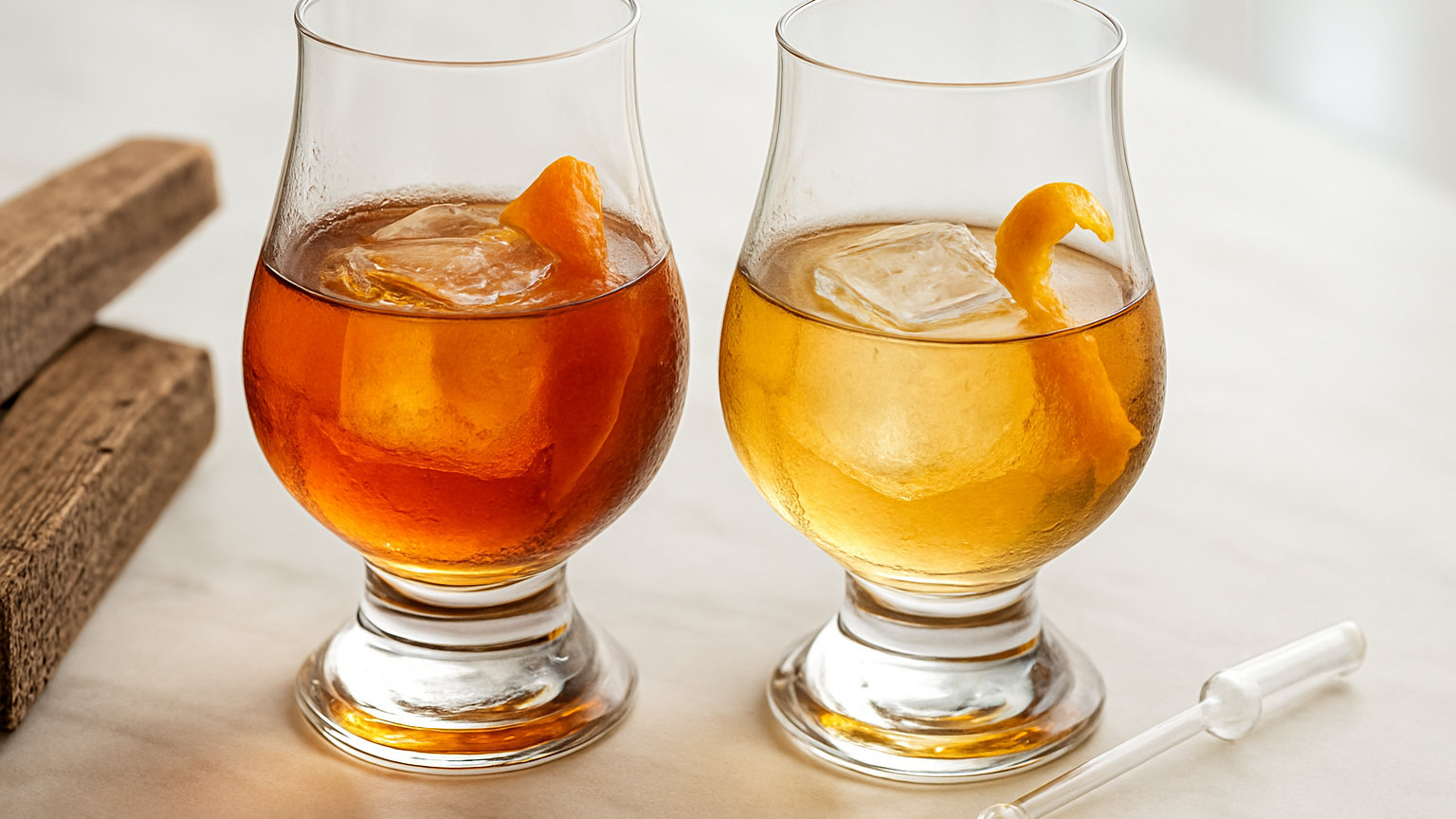
Two casks filled from the same still on the same day will produce noticeably different rum if one stays in Barbados and the other is shipped to Scotland. Temperature drives almost everything that happens inside a barrel, and the gap between the tropics and northern Europe is large.
What does heat actually do?
Three things at once.
- Extraction speeds up. Warm spirit penetrates the wood more deeply and pulls out vanillin, tannin and wood sugars faster.
- Expansion and contraction increase. Larger daily and seasonal temperature swings push liquid in and out of the staves repeatedly, which is the main mechanism of maturation.
- Evaporation rises sharply. More liquid escapes through the wood, and the balance of what escapes changes with humidity.
How big is the angels share difference?
Substantial. A cask in a cool Scottish warehouse typically loses around two per cent of its volume a year. A cask in a Caribbean warehouse can lose six to ten per cent.
Compounded over a decade, that is the difference between a cask still comfortably full and one that has lost more than half its contents. This is the single largest reason old tropically aged rum is expensive and scarce.
Humidity also decides what is lost. In humid conditions alcohol evaporates faster than water and the strength in the cask falls. In dry conditions water goes first and the strength rises, which is why some warehouses produce casks that gain in proof over time.
What is continental ageing?
Rum distilled in the Caribbean, shipped young in bulk, and matured in Europe. It is a long established practice, particularly among independent bottlers in Britain, the Netherlands, France and Italy.
Cool conditions mean slow extraction, minimal losses and a long slow oxidative development. The resulting rum has less oak intensity for its age and more of the delicate esters and secondary complexity that heat tends to blow off.
Which produces better rum?
Neither, and the comparison is a matter of preference. Tropical ageing gives concentration, deep oak influence and richness relatively quickly. Continental ageing gives finesse, transparency of distillery character and the possibility of very high ages without over-oaking.
Enthusiasts frequently prefer continental bottlings of high ester Jamaican rum, because the funk survives better in cool conditions, while favouring tropical ageing for rums where richness is the point.
Is there an equivalence ratio?
A rough one is often quoted, treating one tropical year as roughly comparable to three in a cool climate. It is useful as a mental adjustment and should not be taken as precise, since warehouse design, cask position, humidity and cask history all shift the figure considerably.
What the ratio does usefully convey is that comparing a rum and a Scotch by age alone is close to meaningless, and that a six year old tropical rum may be a fully mature spirit rather than a young one.
How do you tell which a bottle has had?
Producers and independent bottlers increasingly state it, sometimes splitting the years between the two. Look for phrases indicating full tropical ageing, or a stated period in the Caribbean followed by a period in Europe.
Where nothing is stated, price relative to age is a clue. A twenty year old rum at a modest price has usually been aged in Europe, because the evaporation losses of twenty tropical years would make that price impossible.
Does warehouse position matter?
Yes, particularly in the tropics where the range between floors is wide. Casks near the roof experience higher temperatures and mature faster; those at ground level sit cooler and develop more slowly. Blenders use this deliberately, marrying casks from different positions to build a consistent profile rather than treating the warehouse as uniform.
Warehouse construction matters too. Traditional wooden buildings with earth floors hold humidity and moderate temperature swings, while metal clad warehouses heat up quickly and drive faster, more aggressive maturation. Producers who talk about their warehouses are usually telling you something real about the style of rum inside.