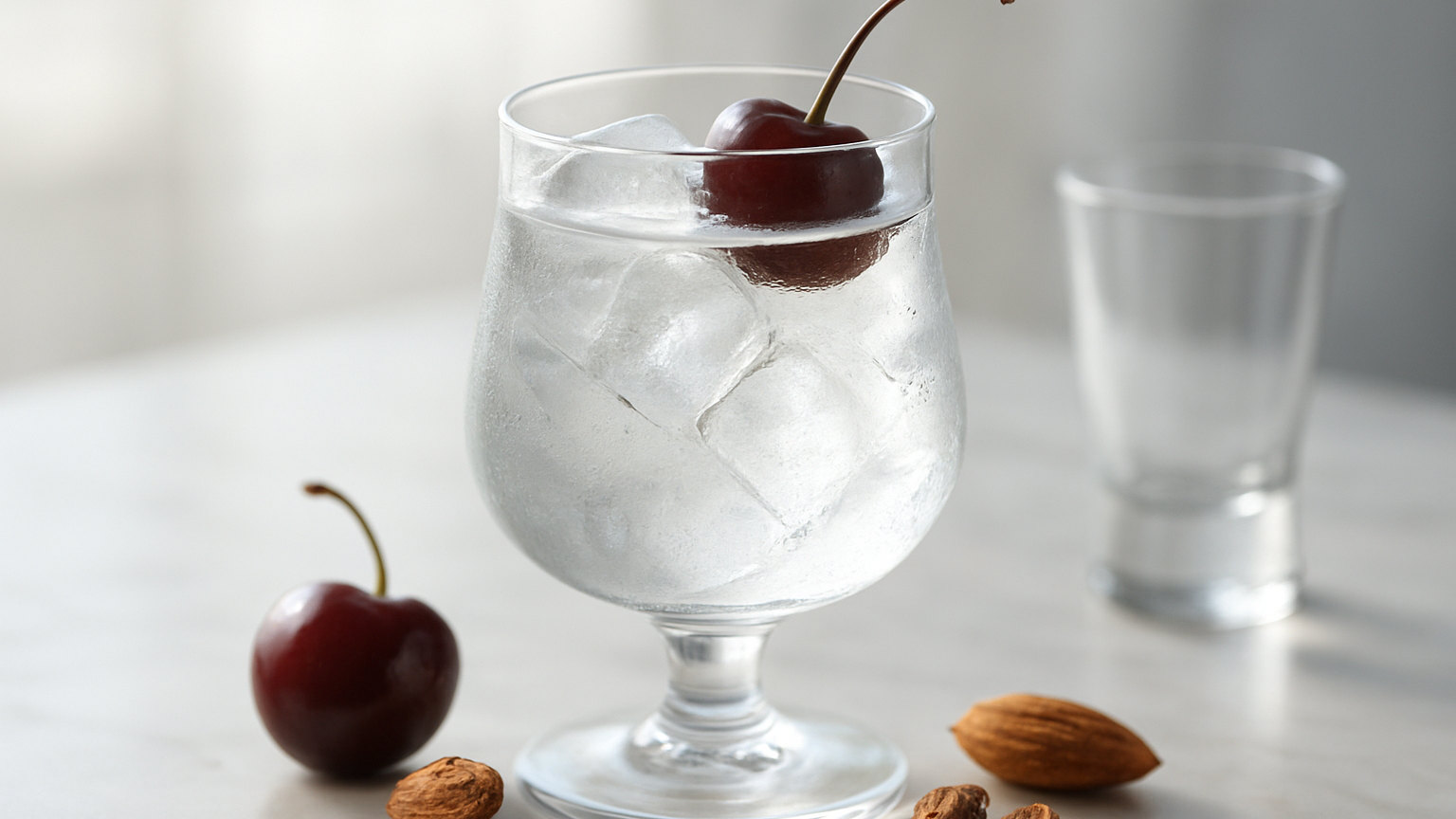
Maraschino is a clear liqueur made from marasca cherries, and it confounds expectations twice over. It is not red, and it does not taste much like cherries. What it does taste of is almond, marzipan, a faint funk and a dry nutty finish, which makes it one of the more distinctive bottles behind a bar.
How is it made?
From marasca cherries, a small sour variety grown along the Dalmatian coast. The whole fruit is used, including the stones and often the leaves and stems, crushed and fermented before distillation.
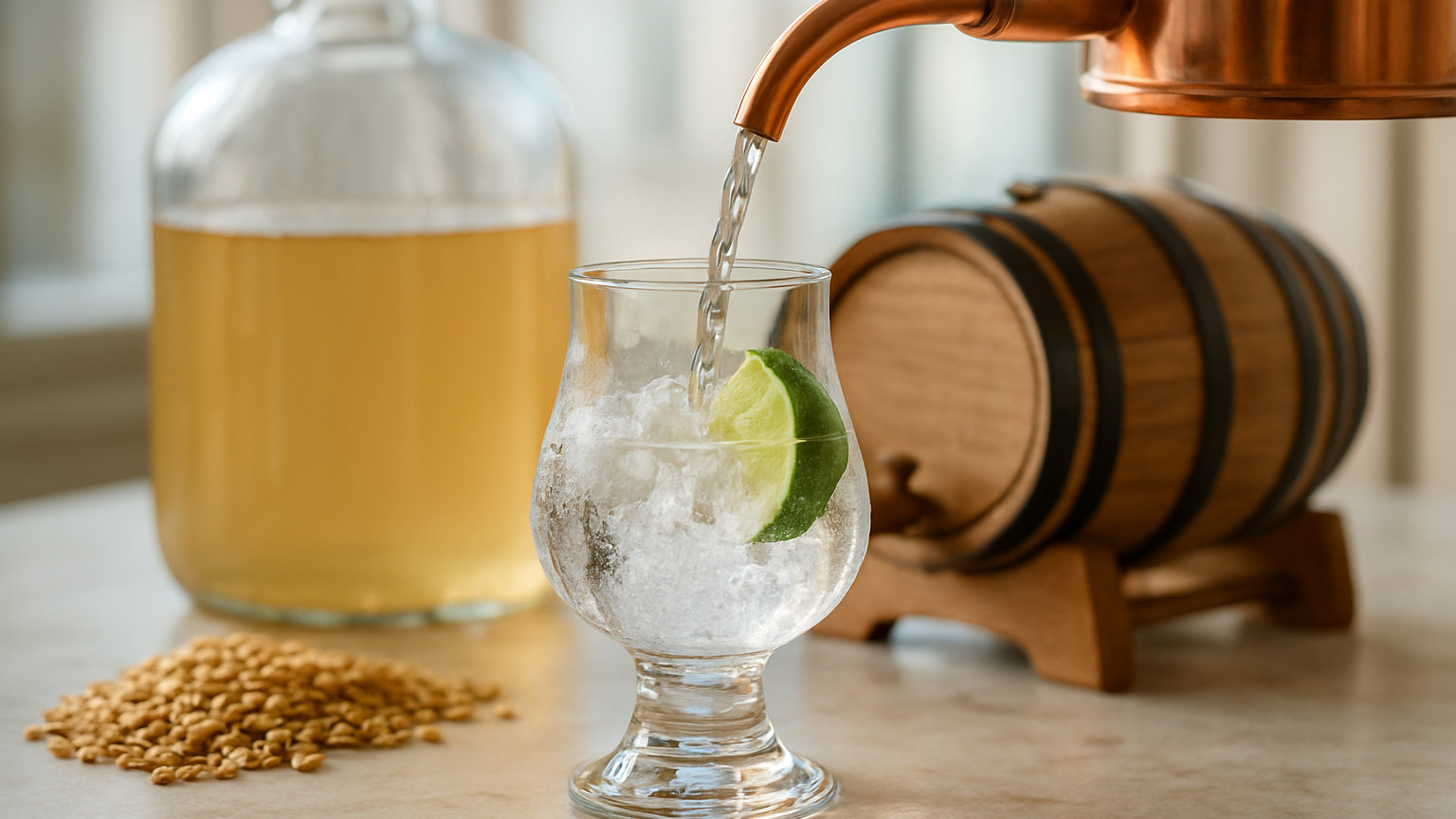
Crucially the spirit is distilled rather than merely infused, which is why it emerges clear rather than red. It is then sweetened and rested, traditionally in ash wood vats that impart little colour, for a period before bottling.
Where does the almond flavour come from?
The stones. Cherry pits contain compounds that produce a marzipan or almond note when processed, the same chemistry responsible for the almond character in kirsch and in amaretto.
That is why maraschino tastes so unlike a fruit liqueur. The cherry is present, but it sits underneath a nutty, slightly bitter, faintly funky character that people either find fascinating or thoroughly strange on first encounter.
Is it the same as maraschino cherries?
Not remotely, though the names share an origin. Originally, cocktail cherries were marasca cherries preserved in maraschino liqueur, which is a genuinely good product.
The bright red cherries found in most jars are something else entirely: cherries bleached, then dyed and sweetened, usually with almond flavouring added. They are a confectionery product rather than a preserved fruit.
Good cocktail cherries, preserved in syrup and liqueur, are widely available and transform an old fashioned or a manhattan. They cost considerably more and last a long time in the fridge.
Which cocktails need it?
- Aviation. Gin, lemon, maraschino and creme de violette. The maraschino is essential and the drink does not work without it.
- Last word. Equal parts gin, green chartreuse, maraschino and lime. One of the great equal parts cocktails.
- Hemingway daiquiri. Rum, lime, grapefruit and maraschino, with no added sugar.
- Martinez. An ancestor of the martini, using Old Tom gin, sweet vermouth and maraschino.
- Brandy crusta. A nineteenth century drink where maraschino is one of the defining elements.
How much should you use?
Less than you expect. Maraschino is assertive, and a quarter measure will make itself known in a drink. Recipes calling for equal parts, such as the last word, work because the other ingredients are equally forceful.
A common mistake is treating it as an ordinary sweet fruit liqueur and using a full measure, which produces a drink dominated by almond and funk.
Can you substitute anything?
Not convincingly. Kirsch shares the almond character but is unsweetened and lacks the texture. Cherry brandy liqueurs are sweet, red and taste of cherry rather than of stone, which is a different flavour altogether.
If a recipe calls for maraschino, it generally needs maraschino. The good news is that a bottle keeps for years and appears in enough classic recipes to justify itself.
Is it worth buying?
If you make classic cocktails, yes. It sits alongside orange liqueur and vermouth as one of the modifiers that unlocks a whole set of recipes, and there is no workaround.
Try it neat in a small measure first, before putting it in anything. Understanding what it tastes like on its own makes it far easier to judge how much a drink needs, and it is the sort of flavour that takes a couple of encounters to make sense.
How should you store it?
Upright in a cupboard away from light, like any high sugar liqueur. At around 30 per cent with substantial sweetening it is stable for years after opening, and the flavour changes very little.
That longevity is worth knowing, because it means a bottle bought for one cocktail will still be good when you come back to it, which is not true of everything on the shelf.