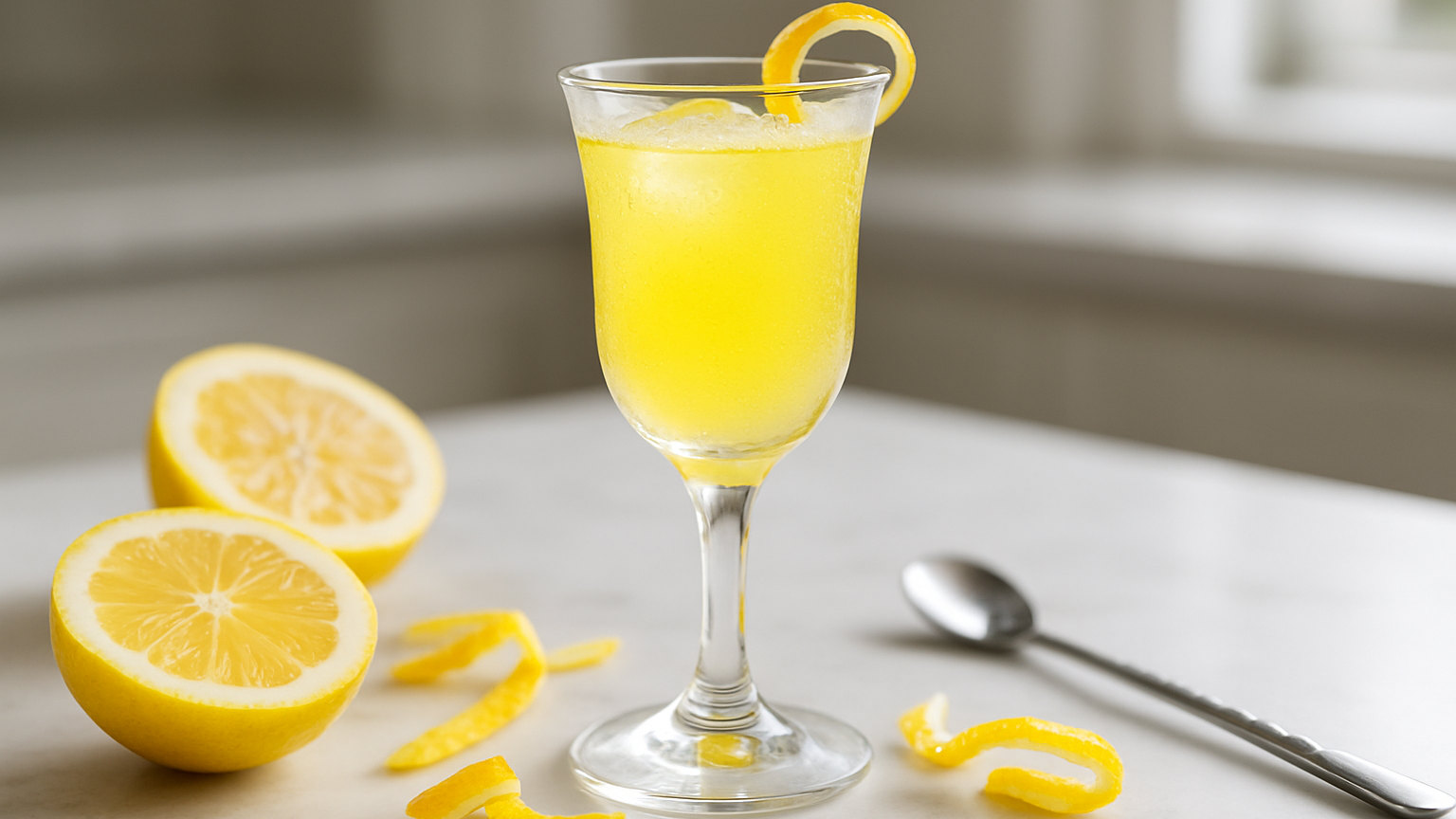
Limoncello is a lemon liqueur from southern Italy, made by steeping lemon peel in neutral spirit and sweetening the result with sugar syrup. It contains no lemon juice, which surprises people and explains a great deal about how it tastes.
Why peel rather than juice?
Because the aromatic oils are in the zest, not the flesh. Lemon juice contributes acidity and would make the liqueur sour and prone to spoiling; the peel contributes the intense citrus perfume that gives limoncello its character.
The white pith beneath the zest is deliberately avoided, since it is bitter and turns the liqueur unpleasant within days. Peeling carefully so that only the yellow layer is taken is the single most important step in making it.
Where does it come from?
The Sorrento peninsula, the Amalfi coast and the island of Capri all claim it, and lemons from those areas hold protected status. Sorrento lemons in particular are large, thick skinned and unusually aromatic, which suits the purpose exactly.
Production spread across southern Italy and is now widespread, but the association with the Bay of Naples remains strong.
How is it made?
- Lemon zest is pared thinly from unwaxed fruit, avoiding the pith.
- The zest steeps in high strength neutral spirit for anywhere from a few days to several weeks, until the spirit is deep yellow and the peel has turned pale.
- The peel is strained out.
- Sugar syrup is added, which both sweetens and reduces the strength.
- The liqueur rests before bottling, ideally for a few weeks.
Bottling strength is typically 25 to 32 per cent, and the sugar content is high enough to place it firmly in the liqueur category.
How should it be served?
Very cold, from the freezer, in small chilled glasses, after a meal. That is the standard Italian serve and it is not merely tradition: the cold thickens the texture and tames the sweetness, both of which improve it considerably.
It will not freeze solid at typical domestic freezer temperatures given its alcohol content, though very low strength versions can become slushy.
Served at room temperature, limoncello tastes noticeably sweeter and more syrupy, which is why a warm glass at the end of a meal is often disappointing.
What else can you do with it?
- With prosecco, a small measure topped with sparkling wine, which makes an excellent aperitif.
- With soda water and ice, long and refreshing on a warm day.
- In a spritz, alongside a bitter aperitivo liqueur for balance.
- Over ice cream or with fresh berries, which is arguably its best use of all.
- In baking, particularly in lemon cakes and syrups.
In cocktails it needs the sugar accounting for, so reduce or remove other sweeteners in the recipe.
Why is homemade often better?
Because commercial versions are frequently oversweetened and some use lemon flavouring rather than real peel. A homemade version made with good unwaxed lemons and less sugar tastes far more of lemon and considerably less of syrup.
It is also one of the easiest liqueurs to make at home, requiring only peel, spirit, sugar and patience.
How long does it keep?
Around a year with good flavour, and longer without spoiling. The bright citrus aromatics are volatile and fade over time, so it is at its best in the first six months.
Keep it in the freezer or a cold cupboard and away from light, since light degrades both the colour and the aroma. A homemade batch should be treated the same way, and made in quantities you will actually drink within a year.
What lemons should you use?
Unwaxed, unsprayed and as aromatic as you can find, since the peel is the entire flavour. Waxed supermarket lemons can be scrubbed in hot water first, though the result is never quite as clean.
Thick skinned varieties are easier to peel without catching the pith, which is the main practical difficulty. If the peel you have pared shows white on the underside, scrape it away before it goes into the jar.