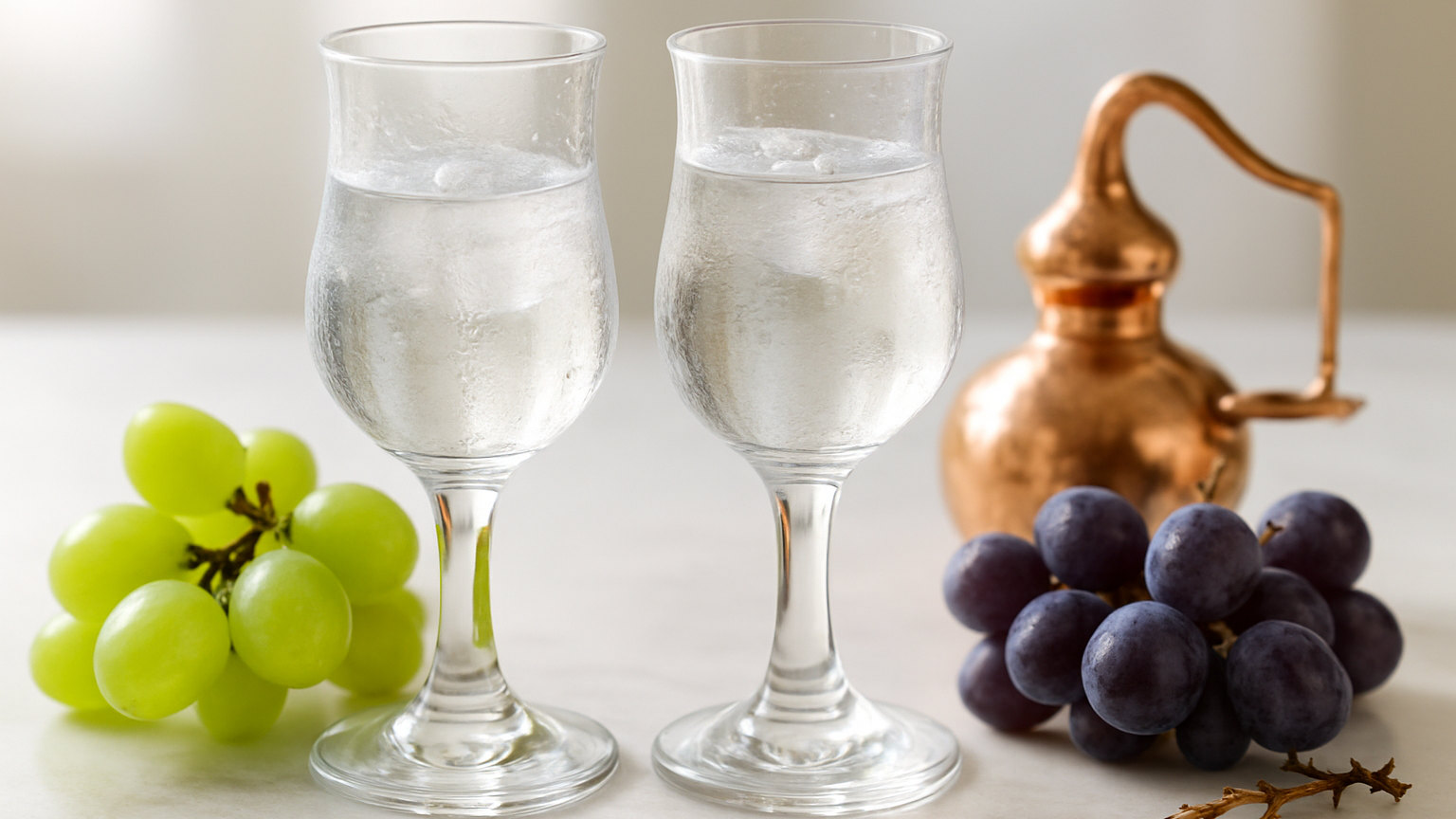
Pisco is a grape brandy produced in Peru and Chile. Both countries have protected designations, both regard it as a national spirit, and the two products are made under genuinely different rules. The dispute over the name is longstanding and unlikely to be resolved.
What makes Peruvian pisco distinctive?
The regulations are unusually strict, and their central principle is that nothing may be added or removed after distillation.
- It must be distilled to its final bottling strength, with no water added afterwards. The distiller therefore has to hit the target strength on the still itself.
- No additives of any kind are permitted, including colouring, sweetening or flavouring.
- It may not be aged in wood or any vessel that imparts flavour. It rests in glass, stainless steel or other neutral containers for at least three months.
- Only eight permitted grape varieties may be used, grown in five defined coastal regions.
The result is a clear spirit that shows the grape with almost nothing between it and the drinker, which is why the grape variety is central to Peruvian pisco labelling.
What are the Peruvian styles?
Three, defined by grape composition and fermentation.
- Puro, made from a single grape variety.
- Acholado, a blend of varieties, either blended as wine before distillation or as finished pisco.
- Mosto verde, distilled from partially fermented must, so residual sugar remains in the wine. It requires far more grapes per bottle and produces a notably richer, silkier spirit.
The grapes divide into aromatic varieties such as italia, torontel, moscatel and albilla, and non aromatic ones led by quebranta, which is the most widely planted and the classic base for a pisco sour.
How is Chilean pisco different?
The rules are considerably more permissive. Water may be added after distillation to reach bottling strength, ageing in wood is allowed, and a wider range of production choices is available.
Chilean pisco is made mostly from muscat varieties, grown in the Atacama and Coquimbo regions, and is often lighter and more floral. Aged versions take on colour and vanilla from the wood, which would be prohibited in Peru.
Chile produces considerably more pisco by volume, much of it consumed domestically, and the piscola, pisco with cola, is a national staple.
What does it taste like?
Peruvian pisco is intense and grape driven, with floral and fruit notes from the aromatic varieties and a firmer, more mineral character from quebranta. Strength is typically 38 to 48 per cent, and because no water was added, the texture is fuller than the number suggests.
Chilean pisco is generally softer and lighter, with the wood aged versions resembling a young brandy.
How do you make a pisco sour?
The classic Peruvian recipe uses pisco, fresh lime juice, simple syrup, egg white and a few drops of Angostura bitters on the foam.
- Combine 60 millilitres of pisco, 30 of fresh lime juice, 20 of simple syrup and one egg white in a shaker.
- Shake without ice first to build the foam, then shake again hard with ice.
- Strain into a chilled glass and let the foam settle.
- Add three drops of Angostura bitters on top.
Chilean versions typically omit the egg white and bitters and use lemon rather than lime, which is a smaller and simpler drink.
If raw egg is a concern, pasteurised egg white works identically, and aquafaba, the liquid from a tin of chickpeas, produces a comparable foam without any egg at all.
What else can you do with it?
A chilcano is pisco, ginger ale, lime and bitters over ice, and it is the easiest way to drink pisco at home. It is long, refreshing and shows the grape character well, and it is the everyday serve in Peru in a way the pisco sour is not.
Pisco also substitutes interestingly in gin or vodka cocktails where you want fruit and floral character. Because it is unaged, it behaves more like a white spirit than like brandy in a recipe.