Somewhere in most houses is a bottle being saved for an occasion. It has usually been there longer than the person saving it realises, and in the great majority of cases it would have been better opened two years ago.
The assumption behind the saving is that wine improves with time. For a small minority of bottles that is true. For everything else, time is a slow decline.
What most wine is designed to do
The overwhelming majority of wine made in the world is intended to be drunk within a year or two of release, and is sold ready to drink. Nothing about it has been built to develop: the fruit is the point, the structure is soft, and the winemaking was designed for immediate pleasure.
Left for five years, such a wine does not become a fine wine. It becomes a tired version of itself, with the fruit faded and nothing having arrived to replace it.
As rough guidance, inexpensive whites and rosé are best within one to two years of their vintage. Inexpensive reds within two to three. Mid-priced wines from good producers within three to five, though many will hold longer without improving.
What actually ages
Wines that improve share three characteristics: structure from tannin or acidity, concentration of flavour, and the balance to carry both. These cost money to produce, which is why ageing potential correlates with price, though not reliably enough to use as a shortcut.
On the red side, cabernet sauvignon and Bordeaux blends, nebbiolo, syrah, tempranillo, sangiovese and Douro reds have the structure. On the white side, riesling, good Chablis and white burgundy, Loire chenin blanc and Hunter Valley sémillon all reward keeping, and whites frequently outlive the reds from the same regions.
Sweet wines and fortified wines last longest of all, with sugar acting as a preservative.
How to tell whether a bottle has gone
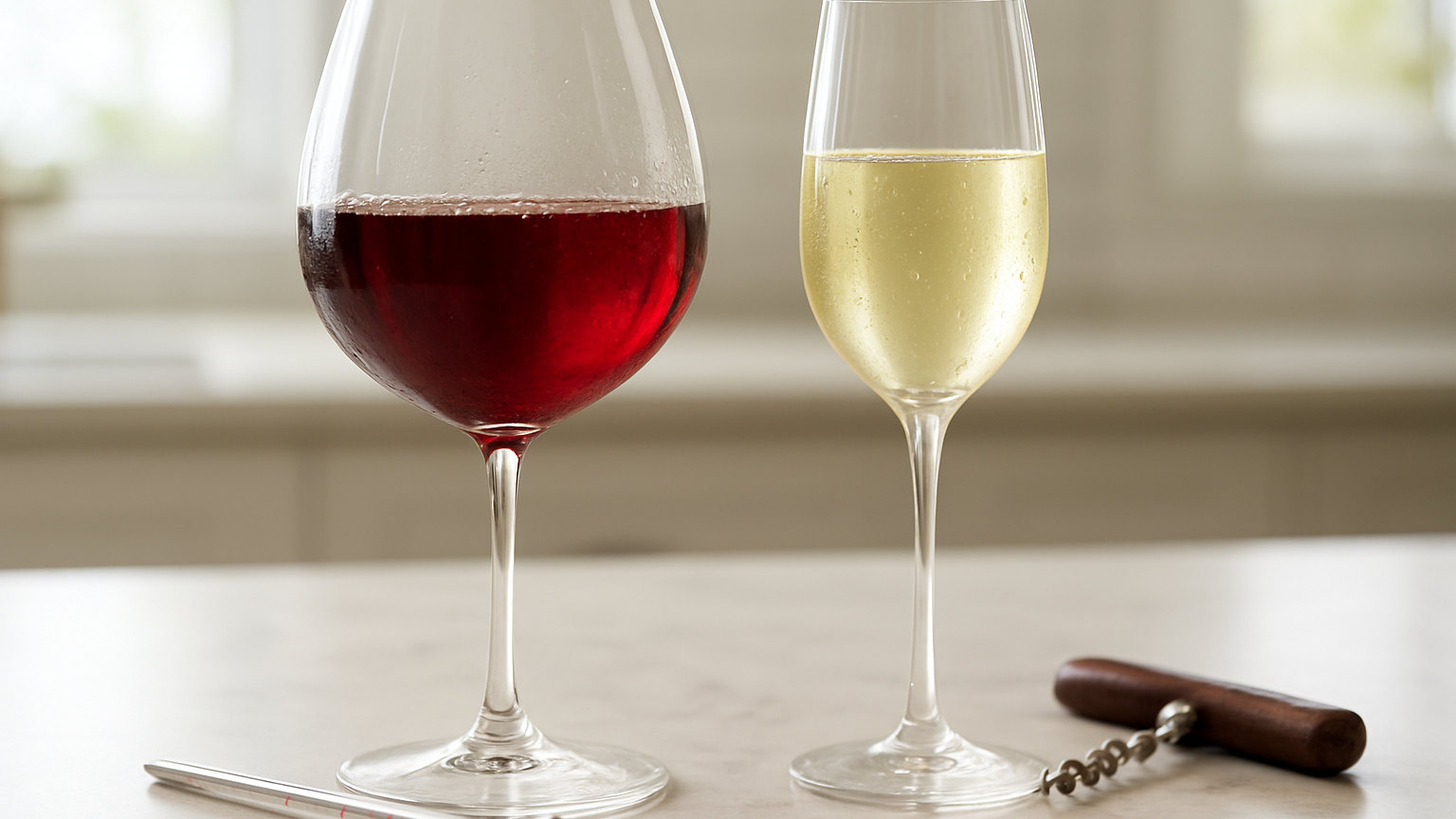
Colour is the first clue, and it works in opposite directions for red and white. Red wine loses colour with age, fading from purple through ruby to brick and eventually brown at the rim. White wine gains colour, deepening from pale straw towards gold and then amber.
A cheap white that has turned deep gold and a cheap red that has gone brown at the edges are both past their best.
Check the fill level as well. A bottle where the wine has dropped well below the neck has lost liquid past the cork, which means air has been getting in.
On the palate, a wine past its prime tastes flat and short, with the fruit gone and often a slightly sour or stewed edge.
The practical approach
Keep a modest stock and turn it over. Note the vintage on anything aromatic and drink those first. If a bottle has been in the house for more than three years and cost less than fifteen pounds, open it this month rather than saving it further.
If you want to keep wine deliberately, buy multiples so you can track how it develops, and store it somewhere cool, dark and stable rather than in a kitchen.
And if you are holding a single bottle bought years ago for a special occasion that has not arrived, the honest advice is to invent an occasion. A wine drunk slightly too young is a minor loss; one drunk a decade too late is a bottle of nothing, and the occasion it was saved for gets a disappointing wine as well.
The gift bottle problem
Wine received as a gift is the most common casualty of this, because it carries an obligation that discourages opening it. A bottle given at Christmas and saved out of respect for the giver is frequently opened three years later in worse condition than it arrived.
Unless the label clearly indicates something built to age, treat a gifted bottle as a wine to drink within a year. That honours the gift considerably better than storing it until it fades, and the person who gave it almost certainly intended it to be enjoyed rather than archived.