Every discussion of white wine returns to acidity within a few sentences, usually without pausing to say what it is or why it should concern anyone. It deserves the attention. Acidity is the single most important structural component of white wine, and it determines almost everything about how a bottle behaves.
The sensation is easy to identify once you know what to look for: acidity makes you salivate. Take a sip, swallow, and notice whether your mouth waters. That reflex is the body responding to acid, and its strength is a direct measure of how much the wine contains. It is the opposite of the drying sensation tannin produces, which is why the two are easy to tell apart once you have felt both deliberately.
Where it comes from
Grapes contain two principal acids. Tartaric acid is stable and remains fairly constant through ripening. Malic acid, the sharp acid found in green apples, is consumed by the vine as the fruit ripens in warm conditions.
This is why climate governs acidity so strongly. In a cool region the grapes ripen slowly and retain a great deal of malic acid, producing a fresh, sometimes bracing wine. In a warm region much of it is respired away, leaving a softer, rounder wine that can taste heavy without the acid to lift it.
Winemakers have some influence afterwards. They can block or encourage malolactic conversion, which turns malic acid into softer lactic acid, and in warm countries they are frequently permitted to add tartaric acid to compensate for what the climate took away. In cool countries the opposite intervention, deacidification, is sometimes permitted instead.
What it does in the glass
Acidity provides freshness and length. A wine with good acidity finishes clean and the flavour persists; a wine without it feels short and slightly cloying even when it is dry. The trade description for the latter is flabby, and once you have identified it in one wine you will notice it constantly.
Acidity also balances sweetness, which is why a wine with substantial residual sugar can taste refreshing rather than sickly. German riesling is the standard demonstration: the sugar is obvious on paper and barely registers in the mouth because there is enough acid to carry it.
It contributes to ageing potential too. Along with tannin in reds and concentration generally, acidity is what keeps a wine from collapsing over years in a bottle, and it is the main reason certain whites outlive most reds.
Why it matters at the table
Acidity is the reason white wine is more versatile with food than red. It cuts through fat and richness in the way a squeeze of lemon does, resetting the palate between mouthfuls. It also matches acidity in the dish itself, which is essential, because a wine less acidic than the food will taste dull and washed out beside it.
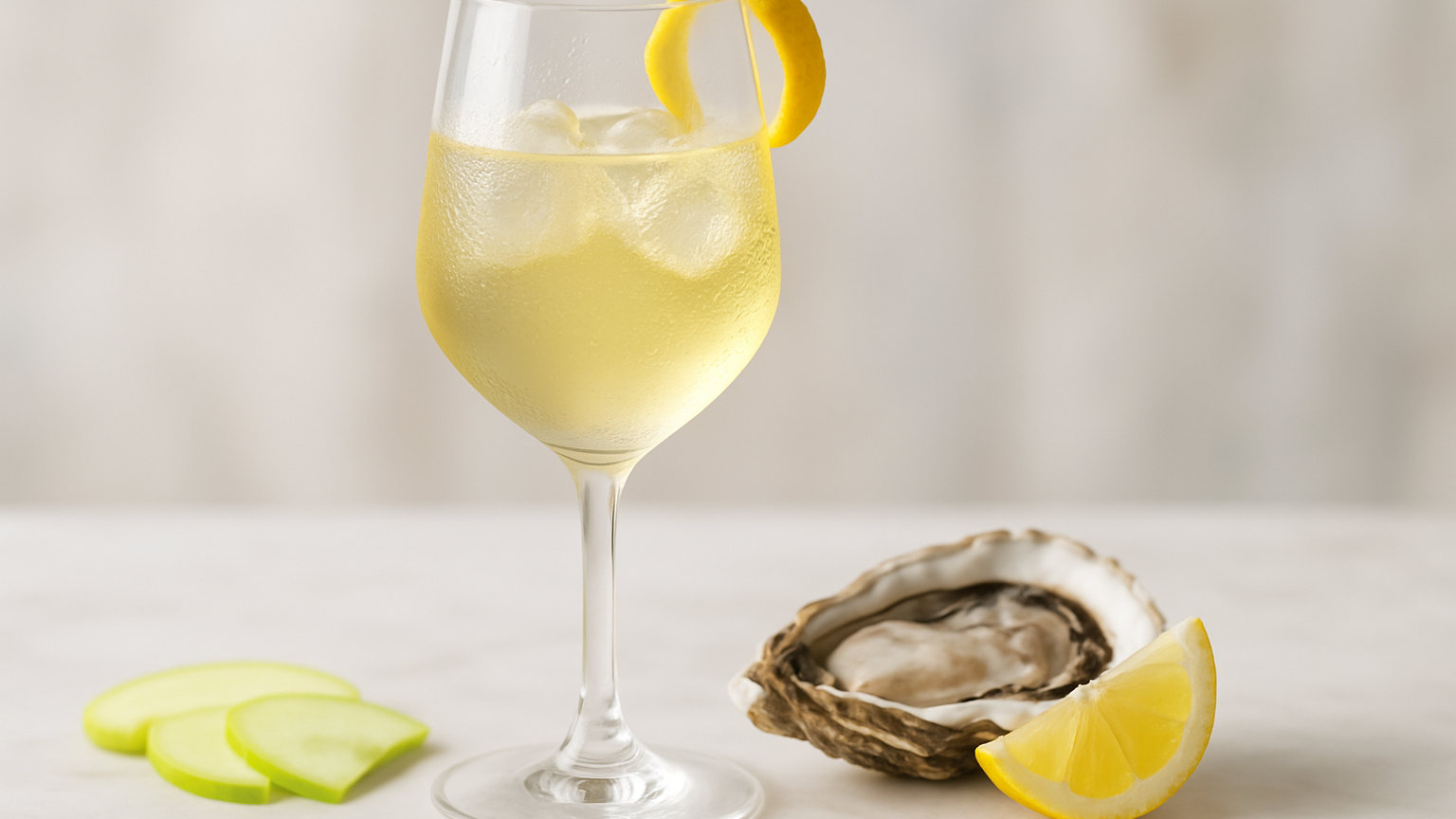
This explains several classic pairings without any need to memorise them. Fish with lemon wants a sharp white. A cream sauce wants acidity to cut it. A salad with vinaigrette needs a wine acidic enough to survive the dressing. The principle covers more ground than any list.
Judging it before you buy
Climate is the strongest clue, so cool regions such as the Loire, Chablis, Germany, Austria, northern Italy, New Zealand and England will generally give high acidity. Warm regions such as southern Spain, southern Italy, inland Australia and much of California will generally give less.
Alcohol offers a secondary signal, since it rises with ripeness as acid falls. A white at eleven or twelve per cent is likely to be fresher than one at fourteen.
Whether high acidity is what you want depends entirely on the occasion. For drinking alone on a warm evening, or with anything rich or fried, more is better. For sipping without food in cold weather, a softer wine may be more comfortable. The mistake is treating one as objectively superior, when the useful question is what the bottle has to do tonight.