White wine is the more useful half of the cellar when it comes to food, and this is not a matter of taste. Acidity, which is white wine's principal structural component, does more useful work at the table than tannin does, and it clashes with far fewer things.
The old instruction about white with fish is a crude summary of a real principle, but it is too narrow to be much help when you are looking at a plate of roast pork or a bowl of noodles. Three ideas do the job better.
Acidity cuts richness and matches sharpness
The first and most productive principle is that acidity behaves like a squeeze of lemon. It cuts through fat, resets the palate and stops a rich dish becoming wearing halfway through.
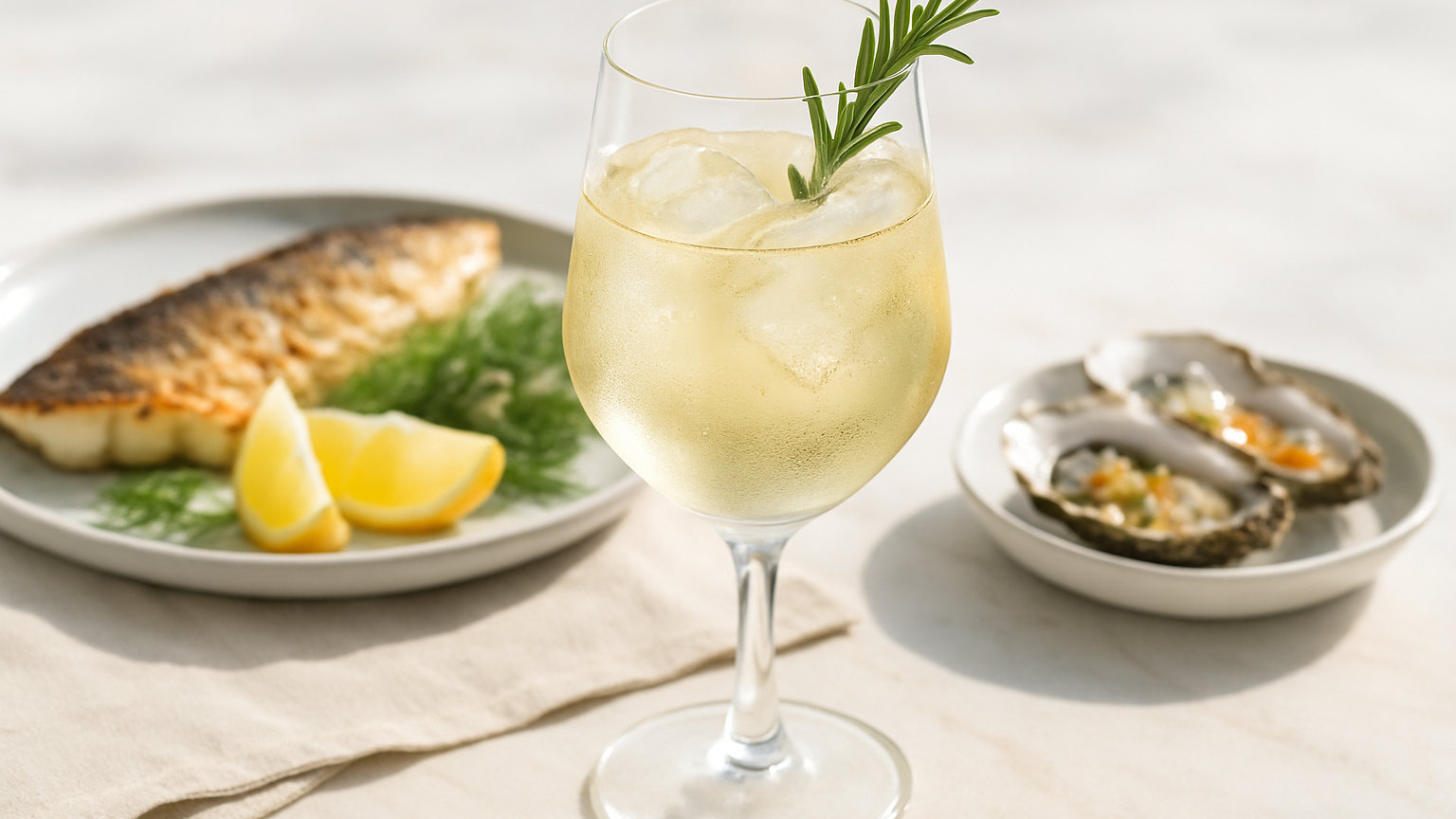
This explains why a sharp white works with fried food, with cream sauces, with oily fish and with soft cheese, and why the classic pairing of Chablis with oysters is not merely tradition. It also explains the failures. A wine less acidic than the food will taste flat and dull beside it, so anything with lemon, vinegar or tomato in it demands a wine with genuine freshness rather than a soft, low-acid one.
Weight has to match
The second principle is that a delicate wine is flattened by a heavy dish and a powerful wine overwhelms a delicate one. This is where a great deal of white wine advice goes wrong, because it treats all whites as light.
An oaked chardonnay is a full-bodied wine and belongs with roast chicken, salmon, creamy sauces and anything substantial. Serving it with a plate of steamed white fish wastes both. Conversely, a light picpoul alongside a rich pork belly disappears entirely. Matching by weight rather than by colour resolves most of these situations, and it is why a rich white often beats a light red with roast meat.
Sweetness is the answer to heat and to salt
The third principle is the one people find counterintuitive. Chilli heat is amplified by alcohol and tannin and calmed by sweetness, which makes an off-dry white the best partner for spicy food by a considerable margin.
A riesling with a little residual sugar handles Thai, Indian and Sichuan cooking better than any dry wine, because the sweetness tempers the heat while the acidity keeps the wine from tasting sugary. Gewürztraminer does the same job with more perfume. The instinct to reach for something bone dry with spice is almost always the wrong one.
Sweetness also handles salt, which is the reasoning behind sweet wine with blue cheese, and it must exceed the sweetness of any dessert it accompanies or the wine will taste sour.
The dishes that fight back
A few ingredients are genuinely difficult. Asparagus and artichoke both contain compounds that distort wine, making it taste metallic or oddly sweet, and the usual solution is a herbaceous sauvignon blanc that meets the vegetal character head on rather than trying to contrast with it.
Eggs are awkward because of their texture, and vinegar-heavy dressings will beat almost any wine, so the practical move with a sharply dressed salad is to reduce the vinegar rather than search for a heroic bottle.
Cheese, contrary to the standard assumption, is generally better with white than with red. The acidity handles fat, and there is no tannin to clash with salt and ammonia in the soft and blue styles.
The one habit worth adopting
Match the wine to the sauce and the cooking method rather than to the main ingredient. Grilled chicken with lemon and herbs wants a crisp white; the same chicken in a creamy sauce wants a rounder one; the same bird in a rich mushroom stew may well want a red.
Working from what dominates the plate rather than from what the animal was is the shift that makes pairing feel like judgement rather than recall.
It is also worth keeping the stakes in proportion. A mismatched pairing produces a slightly less enjoyable meal, not a ruined one, and the anxiety surrounding the subject does more harm than any wrong bottle. If you have one white you like and no idea what to serve, a dry, high-acid wine of moderate weight will do a competent job with the overwhelming majority of dishes, which is precisely why it is the default in restaurants across the world.