
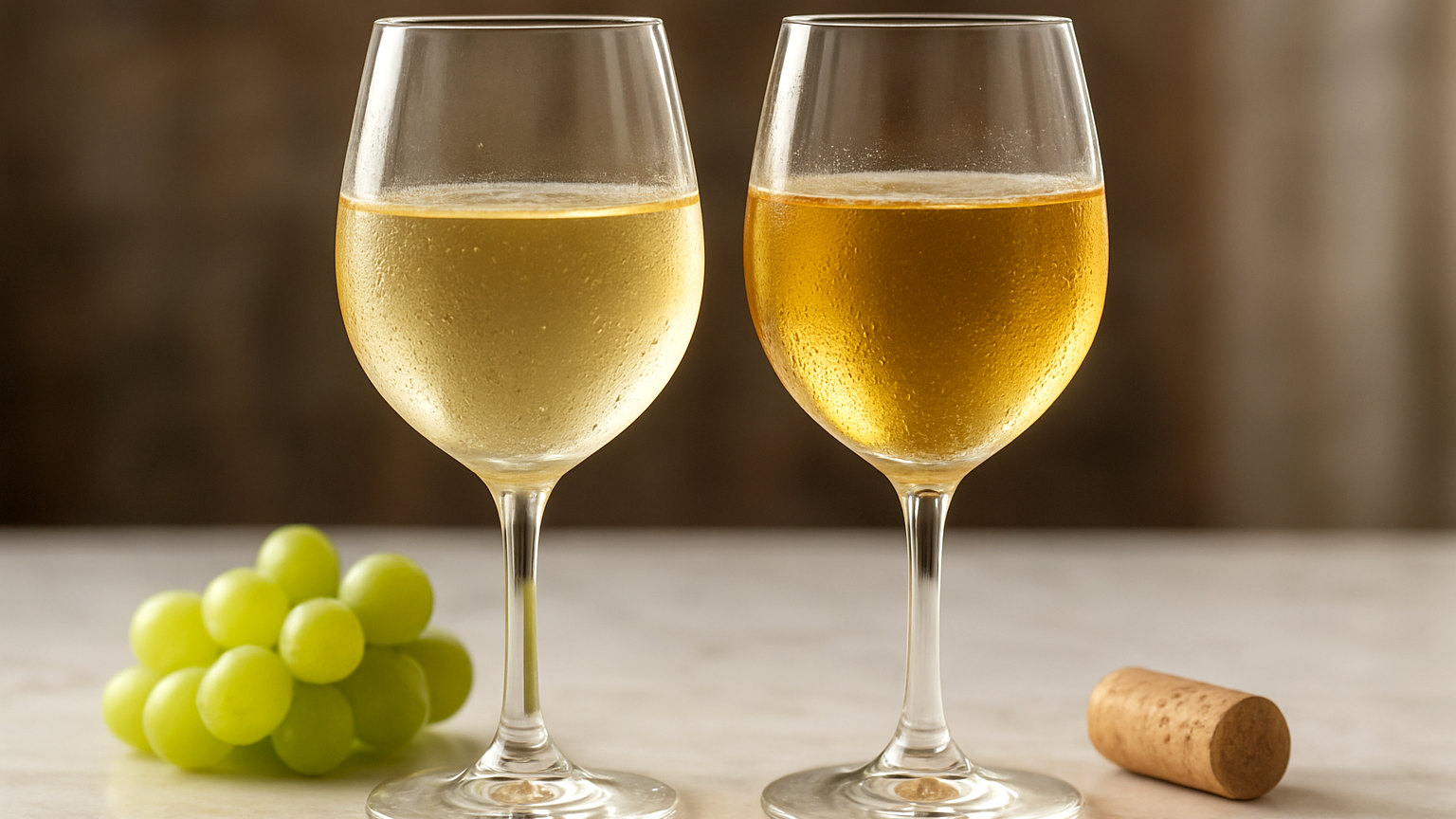
The received view is that red wine ages and white wine does not, and as a rough guide to what is on a supermarket shelf it is fair enough. Most white wine is made for drinking within a year or two, and holding a nine pound sauvignon blanc for a decade will produce nothing but a tired bottle.
What the generalisation misses is that the finest white wines age extremely well, in several cases outliving reds from the same regions and vintages. The mechanism is different, which is why the assumption took hold in the first place.
Acidity does the work tannin does in red
Red wine's longevity comes largely from tannin, which acts as a preservative and antioxidant and slowly transforms over years. White wine has almost none, since the skins are removed before fermentation, so it needs another source of structure.
That source is acidity, supported by concentration of flavour and, in sweet wines, by residual sugar. A wine with high natural acidity resists oxidation and retains freshness for far longer than a soft, low-acid one, which is why the ageworthy whites come almost entirely from cool climates.
Sugar is an even more powerful preservative, and the longest-lived wines in the world are sweet ones. Great Sauternes and German Trockenbeerenauslese can last a century, which is beyond almost any dry red.
What changes in the bottle
The colour deepens, moving from pale straw through gold towards amber. This is the opposite of red wine, which loses colour with age, and it catches people out: a golden white is not necessarily oxidised, it may simply be mature.
The flavours shift from primary fruit towards honey, beeswax, nuts, dried apricot, marmalade and toast. Riesling develops a distinctive petrol or kerosene note that enthusiasts specifically look for. Texture broadens and softens, and the acidity that seemed austere in youth becomes the frame holding everything together.
There is often an awkward middle period, sometimes called a dumb phase, when the primary fruit has faded and the mature character has not yet arrived. A wine tasted then can seem disappointing and will usually recover with more time.
Which whites are worth keeping
Riesling is the outstanding candidate, capable of twenty or thirty years from good producers and available at prices that make the exercise affordable. German, Alsace and Austrian examples all age, and dry Australian riesling from the Clare Valley develops beautifully.
White burgundy and top Chablis age well, though the category has had problems with premature oxidation and the safest approach is to buy from producers with a reliable record. Loire chenin blanc from Vouvray and Savennières is remarkably long-lived and undervalued. Hunter Valley sémillon from Australia starts life lean and almost neutral and transforms over a decade into something toasty and complex, which is one of the more spectacular tricks in wine.
Beyond those, the sweet wines of Sauternes, Tokaj and the German Prädikat scale, along with vintage champagne and good Rioja blanco, all reward patience.
How to do it without wasting money
Buy several bottles rather than one, and open them at intervals. A single bottle held for fifteen years is a guess; six bottles opened every couple of years is an education, and you catch the wine when it suits you rather than when a chart says you should.
Storage matters as much as selection. Constant cool temperature between about ten and fifteen degrees, darkness and stillness are what a wine needs, and fluctuation is worse than a slightly warm cellar held steady. Corked bottles should lie down; screwcapped ones can stand.
The economic argument is worth stating plainly. Mature white wine of real quality can be bought for a fraction of what equivalent red costs, because so few people look for it. If you want to drink something genuinely old without spending a fortune, aged riesling is the most reliable route in the entire wine trade.
Merchants specialising in older bottles often hold white wine that has sat unsold precisely because the market assumes it should have been drunk years ago. Those bottles are frequently in good condition and priced as though they were not, which is one of the few genuine bargains left in fine wine.


