
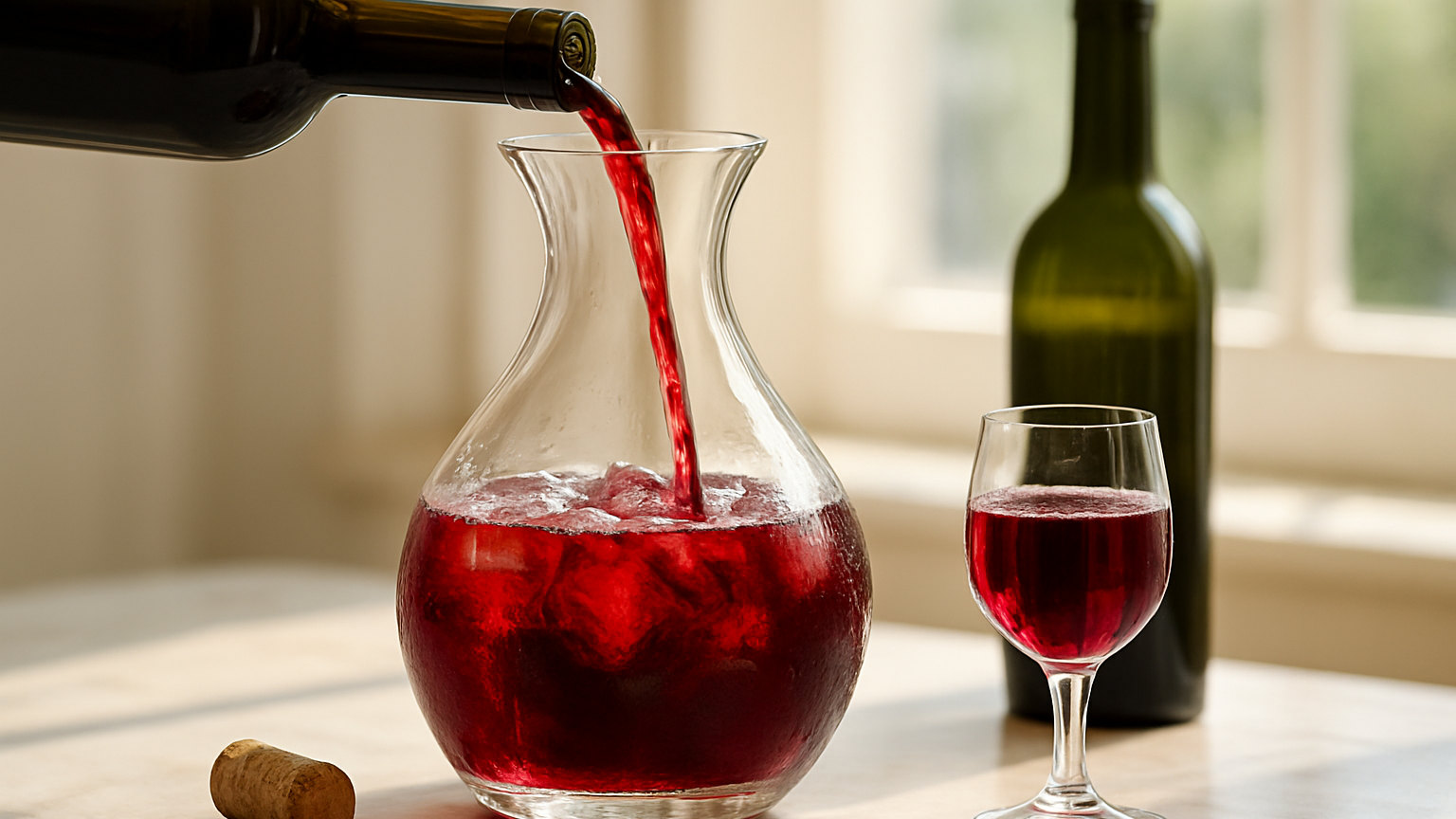
Letting a wine breathe is one of those instructions passed down without explanation, and the usual execution of it is close to useless. Pulling the cork and standing the bottle on a worktop for an hour exposes a circle of wine roughly the size of a two pence piece to the air. Almost nothing happens.
The underlying idea is sound. Some wines genuinely improve with oxygen. The method simply has to involve moving the wine rather than merely uncorking it.
What air actually does
Two processes run at once. Volatile compounds that were trapped in the bottle disperse, which is why a wine can smell muted on opening and considerably more expressive twenty minutes later. Sulphur compounds from reductive winemaking blow off in the same way.
Meanwhile oxygen begins reacting with tannins and other phenolics, softening the perception of astringency very slightly. This effect is real but smaller than people assume over the timescale of an evening; the dramatic softening of tannin happens over years in a bottle, not over an hour in a decanter.
The larger part of what people notice as a wine opening up is the aromatic change rather than the textural one.
Which wines benefit
Young, tannic, concentrated reds are the clearest case. Cabernet sauvignon and Bordeaux blends, syrah, nebbiolo, tempranillo and Douro reds under about five years old frequently arrive tight and give considerably more after an hour of air.
Wines showing reduction, with struck-match, rubbery or eggy notes on opening, often clear entirely with vigorous aeration. This is worth knowing because such a wine can easily be written off as faulty when it is merely closed.
Some full-bodied whites, particularly serious white burgundy and oaked chardonnay, also open up with air, which is an argument against serving them straight from the fridge in a small glass.
Which wines do not
Light, low-tannin reds gain little and can lose their delicate aromatics. Beaujolais, simple pinot noir and everyday fruity reds are made to be drunk on opening.
Most inexpensive wine of any colour is designed to taste good immediately, since nobody buying it is going to decant it.
Old wine is the important exception, and the risk runs the other way. A mature bottle that has been protected from oxygen for decades can fade dramatically once exposed, and a wine that is lovely on opening may be tired within half an hour. Old wines should be opened and poured, with any decanting done immediately before serving rather than hours ahead.
How to do it properly
Pour the wine into a decanter, a jug or any clean vessel with a wide base. Surface area is what matters, so a broad container does in an hour what an open bottle does in a day.
Failing that, pour a glass and swirl it energetically for thirty seconds, which achieves a surprising amount. Pouring the bottle into a jug and back again does more still, and is the quickest available method.
An hour is generally sufficient for a young structured red. Two is generous. Beyond that you are into diminishing returns and, for anything delicate, into actual loss.
The test worth running
Pour a glass immediately on opening, decant the rest, and compare the two an hour later. It costs nothing and answers the question for that specific bottle far better than any general rule.
Most people find the difference substantial in young structured reds and negligible in everyday wine, which is roughly what the theory predicts. It also demonstrates why the ritual survives despite being so often performed in a way that cannot possibly work: the underlying observation was correct, and only the mechanism was misunderstood.


