
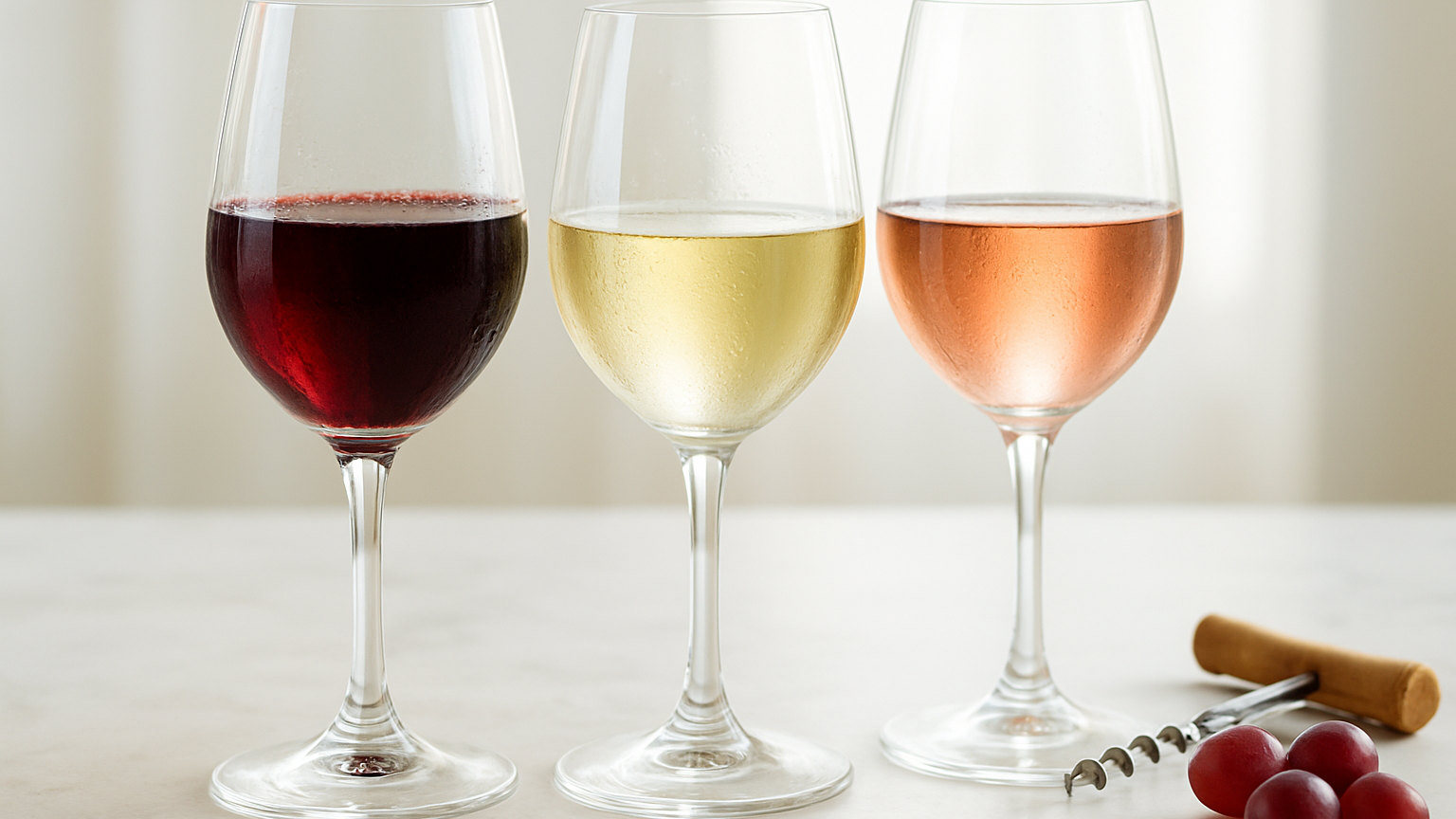
Glassware is one of the easier places to spend money in wine and one of the harder places to justify it. Manufacturers offer glasses tuned to individual grape varieties, and a full collection can cost more than a case of decent wine.
The honest answer for most households is that one good set does nearly everything, and the second set is a refinement rather than a necessity.
The one set that matters
A universal glass with a tulip shape, a bowl of roughly four hundred to five hundred millilitres, a thin rim and a stem will serve red, white, rosé, fortified wine and even sparkling perfectly well.
Buy six or eight rather than four, so that breaking one does not leave you short and so that a small gathering does not require washing up mid-evening. Buy at a price you can afford to replace, because they will break, and a set you are frightened of using is not doing its job.
Machine-blown glasses are considerably cheaper than hand-blown ones and perfectly good. The features that matter, shape and rim thinness, are available well below the premium end of the market.
The sensible second purchase
If you want to go further, a smaller glass of around three hundred and fifty millilitres for white and sparkling wine is the logical addition. It suits crisper, lighter wines that can seem lost in a large bowl, and it works better for sherry and other fortified wines than either a large glass or the traditional small schooner.
Note that this glass is a better vessel for champagne than a flute. Flutes preserve bubbles at the cost of aroma, which is a poor trade for anything with complexity, and a smaller white wine glass is what a good many producers now use themselves.
Beyond those two, a larger balloon for aromatic reds such as pinot noir and nebbiolo is a genuine improvement rather than an affectation, but it is a third purchase rather than a first.
What about stemless and unbreakable
Stemless glasses are practical for outdoor eating, for households with limited storage and for anyone tired of stems snapping in a dishwasher. The cost is that hands warm the wine and the glass, which matters over a long meal and matters less over a quick one.
Plastic and polycarbonate glasses have improved substantially and are the right answer for picnics, boats and gardens with hard surfaces. They are not as good, and worrying about that at a barbecue is a poor use of attention.
Washing and storing them
This matters more than most people expect and costs nothing. Detergent residue inside a glass suppresses aroma and, in sparkling wine, kills the mousse outright. Rinse thoroughly with hot water, and if a glass has been sitting in a cupboard, rinse it again before use.
Dry with a clean linen cloth rather than a tea towel that has been through fabric conditioner, and hold the base rather than twisting the bowl against the stem, which is how most glasses break during drying.
Store them upright. A glass stored rim-down traps stale cupboard air, and hanging racks expose the rim to kitchen smells and grease. Upright storage on a shelf is better in both respects, despite looking less tidy.
Dishwashers are fine for robust glasses provided they are not crowded against each other, though very fine crystal is better washed by hand.
Where the money is better spent
A reasonable glass improves a wine noticeably compared with a tumbler. An expensive glass improves it marginally compared with a reasonable one.
Given a fixed budget, buying eight decent universal glasses and spending the remainder on better bottles will produce more pleasure than assembling a collection of variety-specific stemware. The wine, after all, is the part you actually drink.


