
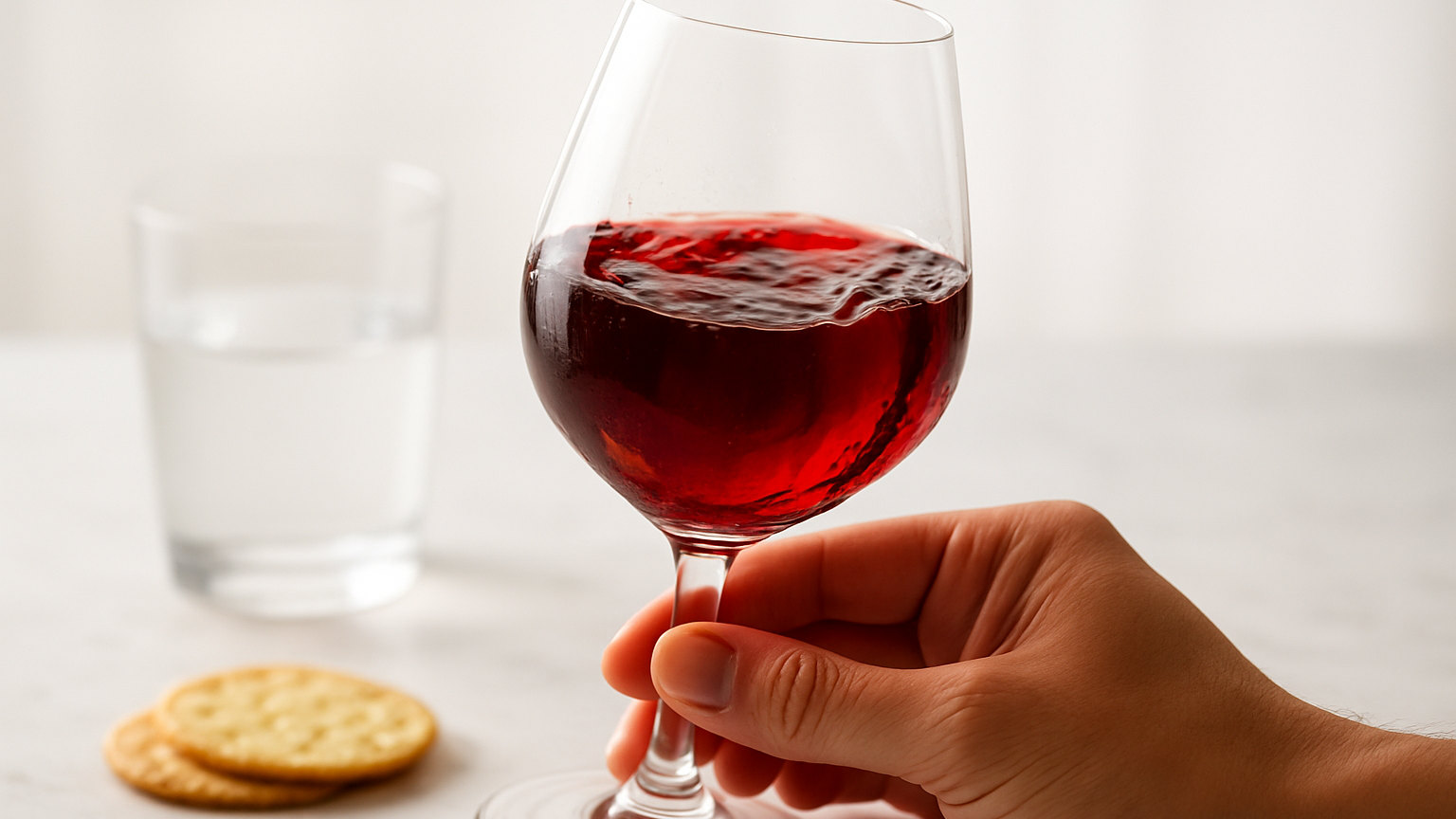
Wine tasting has acquired a reputation for pretension that keeps a lot of people from doing it, which is unfortunate, because the technique is simple and the benefit is immediate. The purpose is not to produce elaborate descriptions. It is to notice more of what is in the glass than you otherwise would.
The conventional sequence of looking, swirling, smelling and sipping is a genuine method rather than theatre, and each step does a specific job.
Smell is doing most of the work
The tongue detects five basic tastes: sweet, sour, salty, bitter and umami. Everything else you think you are tasting in wine is actually being smelled. Blackcurrant, vanilla, smoke and pepper are all aromas, detected by the olfactory receptors rather than the mouth.
This happens twice. Once through the nose directly, and again from inside the mouth, where warmed vapours travel up the back of the throat to the same receptors. That second route is called retronasal olfaction, and it is why food and wine both seem tasteless when you have a cold.
The practical consequence is that most of tasting is smelling. Spend more time with the glass under your nose than you do with wine in your mouth, and take short sniffs rather than one long inhalation, since the receptors fatigue quickly.
The mechanics
Pour a modest measure, around a third of the glass, leaving room above the wine for aromas to gather. Hold the glass by the stem to avoid warming it.
Look at it against something white. Colour tells you a little about age and grape: reds fade from purple towards brick with time, whites deepen from pale straw towards gold.
Swirl gently to increase the surface area and release volatile compounds, then smell. Note whatever you get, even if it is only pleasant or unpleasant.
Take a small sip and let it move across the whole mouth. Some people draw air through the wine, which aerates it and pushes more vapour towards the retronasal route. It makes a genuine difference and looks ridiculous, which is a fair trade in private.
What to actually assess
Rather than hunting for specific fruits, which is the part beginners find intimidating and which matters least, pay attention to structure.
Does your mouth water afterwards? That is acidity. Does it feel dry and grippy? That is tannin. Does the wine feel light or heavy in the mouth, like skimmed milk or cream? That is body. Is there any sweetness, and does the alcohol feel warm or hot at the back of the throat?
Then note the finish: how long the flavour lasts after swallowing. Length is one of the more reliable indicators of quality, and it costs nothing to observe. A wine that disappears immediately and one that lingers for twenty seconds are doing different things regardless of price.
Finally, balance. No single element should dominate, and a wine where the alcohol, acid, tannin and fruit are all audible without any one shouting is a well made one.
Practical points that matter
Temperature affects everything, and most red wine in Britain is served too warm while most white is served too cold. If a wine seems flat or alcoholic, temperature is the first thing to check.
Palate fatigue is real. After five or six wines, particularly tannic or high-alcohol ones, your ability to discriminate drops sharply. Water and plain bread help, and so does taking a break.
Avoid strong smells nearby. Perfume, scented candles, cooking and a freshly cleaned glass with detergent residue will all interfere more than you expect.
And write something down, even one line. Memory for smell is poor and unreliable, and a note saying too sharp or liked the softness with roast lamb is worth more six months later than any amount of remembered impressions. After a dozen bottles a pattern emerges, and that pattern is what turns tasting from a exercise into a useful skill.


