
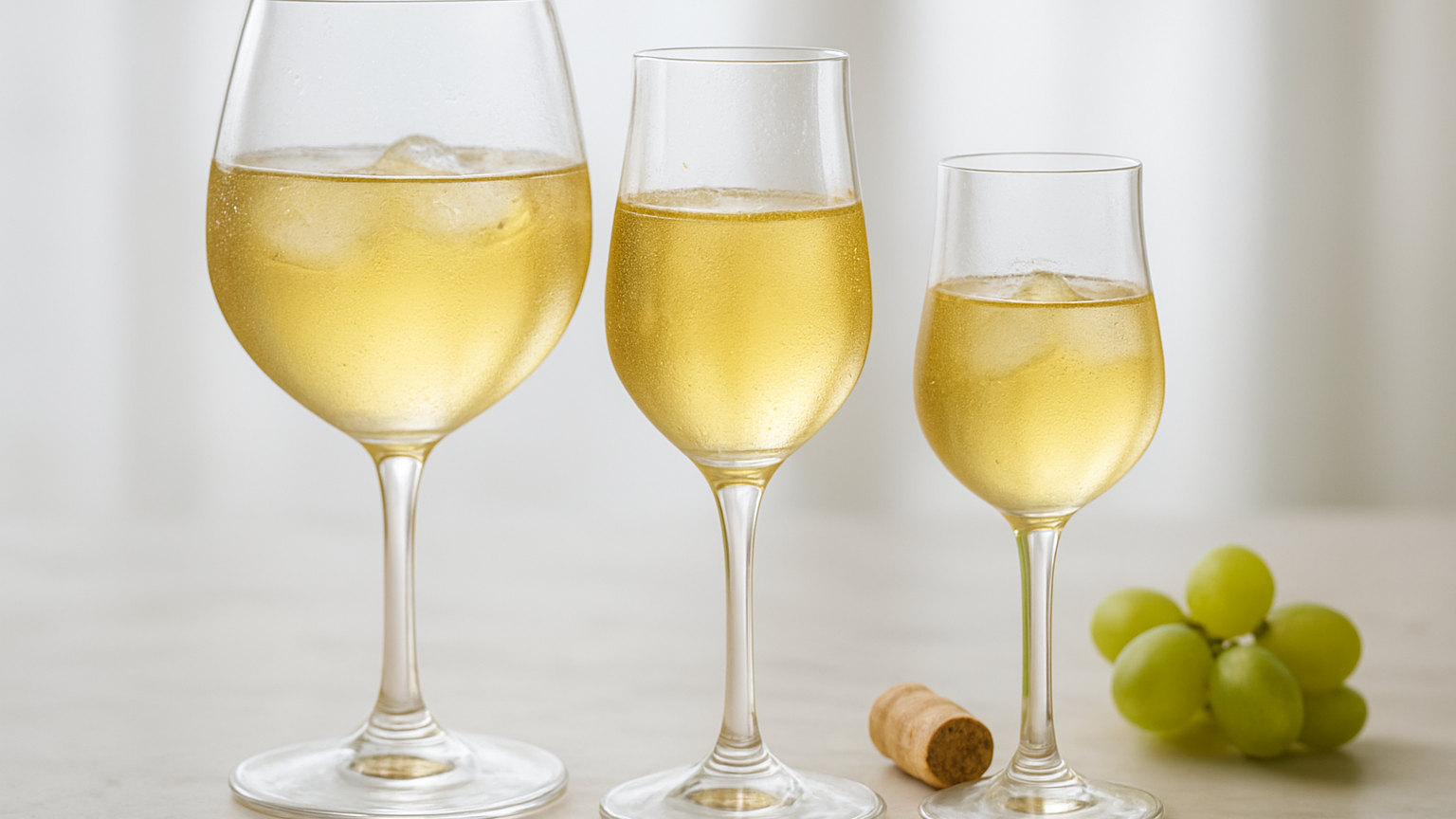
Glassware is where wine's reasonable practices shade into its least reasonable ones. At one end, the shape of a glass genuinely changes what you smell and taste. At the other, a collection of grape-specific glasses at forty pounds each represents a marketing achievement rather than a scientific one.
Three features do measurable work, and they are worth understanding before spending anything.
The bowl and the rim
A glass that is wider at the bowl than at the rim does two jobs at once. The wide part gives surface area for the wine to evaporate from, particularly once swirled. The narrowing at the top concentrates those vapours and funnels them towards your nose rather than letting them disperse.
This tulip shape is why almost every serious wine glass, from a sherry copita to a Burgundy balloon to a champagne tulip, shares the same basic profile despite the differences in size. A straight-sided tumbler has no such focusing effect, and a glass that flares outwards at the rim actively works against you, which is the fundamental problem with the champagne coupe.
Size follows the same logic. Aromatic, complex wines benefit from a larger bowl with more room to develop; simple, fresh whites do not need it and can seem lost in a very large glass.
The rim thickness and the stem
A thin rim delivers wine to the mouth cleanly. A thick, rolled rim creates a physical barrier that alters how the liquid arrives and is noticeable once you have compared the two. Cut crystal versus a heavy tumbler is not a subtle difference.
The stem exists for temperature and for clarity. Holding the bowl warms the wine measurably, particularly over a long meal, and leaves fingerprints on the part you are looking through. Stemless glasses are practical, dishwasher-friendly and slightly worse at both jobs, which is a reasonable trade for everyday use.
Do grape-specific glasses work?
The claim is that a particular shape directs wine to a specific part of the tongue where the relevant flavours are best perceived. That reasoning rests on the idea of a tongue map with distinct zones for sweet, sour, salty and bitter, which has been discredited for decades. All five basic tastes are detectable across the whole tongue.
What is true is that glass shape affects aroma delivery and the perception of alcohol, and controlled comparisons do find that people report differences between shapes. Whether those differences justify owning six sets is a separate question, and for most households the answer is plainly no.
The more defensible version of the argument is broad rather than specific: a larger, rounder bowl suits aromatic reds such as pinot noir, a slightly narrower one suits firmer reds, and a smaller glass suits crisp whites. Three shapes covers everything that matters.
What to buy
A single set of good universal glasses does almost everything. Look for a tulip shape, a bowl of around four hundred to five hundred millilitres, a thin rim and a stem, and buy enough that breaking one is not a crisis.
If you want a second set, make it smaller glasses for white and sparkling wine. The white wine glass, incidentally, is a better vessel for champagne than a flute, which sacrifices aroma entirely to preserve bubbles.
Two habits matter more than the glass itself. Rinse thoroughly, since detergent residue kills both aroma and mousse, and store glasses upright rather than inverted, which traps stale air the wine will pick up immediately. A clean, correctly stored ordinary glass beats a dirty expensive one every time.


