
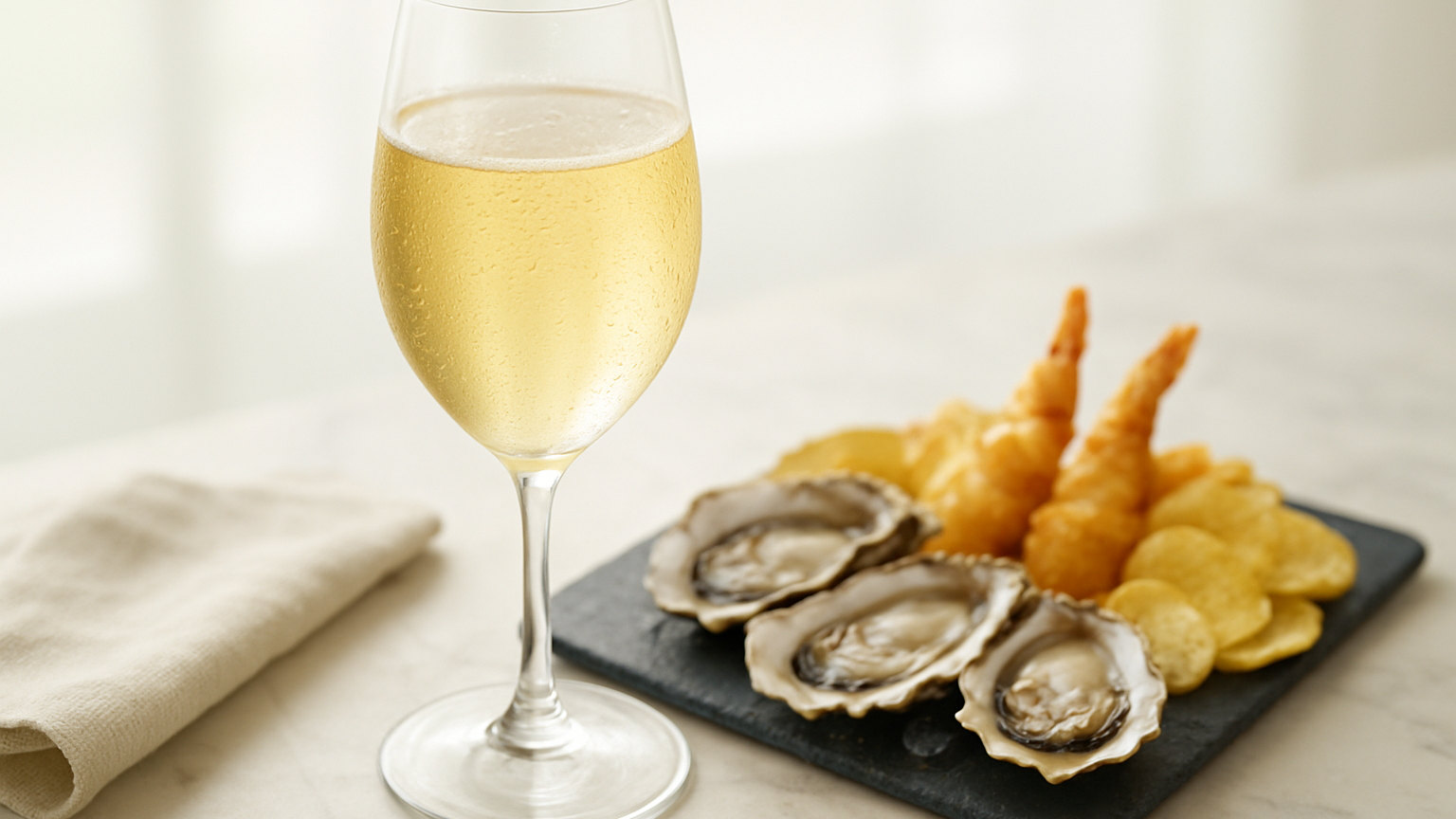
Sparkling wine is served with canapés at the start of an evening and then replaced by something still, which wastes one of the most useful food wines available. Champagne in particular has a combination of properties that very few wines possess, and it handles dishes that defeat most of the cellar.
Why the bubbles help
Three things are working. High acidity cuts through fat in the way a squeeze of lemon does, refreshing the palate between mouthfuls. Carbonation adds a physical scrubbing effect, lifting oil and richness off the tongue. And in traditional method wines, the savoury, bready lees character gives the wine enough weight to stand up to serious food rather than being flattened by it.
Salt is the other half of the equation. Salt suppresses the perception of acidity and bitterness while enhancing fruit, so a salty dish makes a high-acid sparkling wine taste rounder and more generous. This is why the pairing works so consistently across so many cuisines.
The pairings that surprise people
Fried food is the outstanding match, and champagne with fish and chips is not a joke. The acidity and bubbles cut through the batter and the oil, and the salt does the rest. The same logic covers tempura, fried chicken, croquettes and crisps, which is why the last of those is such a satisfying accompaniment to a glass.
Cheese works far better with sparkling wine than the red wine convention suggests. Hard aged cheeses meet the acidity well, and a blanc de noirs handles a washed-rind cheese that would destroy most whites.
Sushi and sashimi are excellent with a crisp blanc de blancs, since there is no tannin to clash with fish and the acidity handles soy and pickled ginger. Eggs, notoriously awkward with wine, are handled comfortably.
Matching style to dish
The categories behave differently and should be used differently. A light, fresh prosecco or a young cava suits antipasti, cured ham, olives, light seafood and anything eaten standing up.
A blanc de blancs, with its precision and citrus, is the wine for oysters, shellfish, white fish and delicate starters. A blanc de noirs or a vintage champagne has the weight for roast chicken, pork, mushroom dishes, charcuterie and even certain lighter game.
Rosé sparkling wine is unusually versatile with food, since it typically has a little more body and fruit, and it handles salmon, duck and tomato-based dishes that trouble other whites.
Where it goes wrong
Dessert is the most common failure. A brut sparkling wine served with a sweet pudding will taste sour and thin, because the wine must be at least as sweet as the food. This is precisely what demi-sec exists for, and it is the one occasion where the sweeter categories earn their place.
Very hot, chilli-heavy dishes are difficult too, since alcohol and carbonation both amplify capsaicin heat. An off-dry sparkling wine handles moderate spice well, but a fiery curry will beat it.
Artichokes and asparagus distort wine generally, and heavily vinegared dressings will overwhelm even a high-acid sparkling wine.
The practical conclusion
Treat sparkling wine as a wine for the whole meal rather than the first ten minutes of the evening. A bottle of good champagne through a dinner is not extravagance in any sense other than cost; it is a more flexible choice than most still wines and will handle a wider range of courses.
And if the occasion does not justify champagne, a gran reserva cava or a decent crémant does much the same job at a fraction of the price, since the properties that make the pairing work come from the method rather than the postcode.
Serving temperature is worth a final word, because it affects pairing more than people expect. A wine served very cold shows less aroma and reads as more acidic, which suits salty and fried food well. For a wine accompanying a main course, letting it warm a couple of degrees gives it the weight to stand alongside the dish rather than merely cutting through it.


