
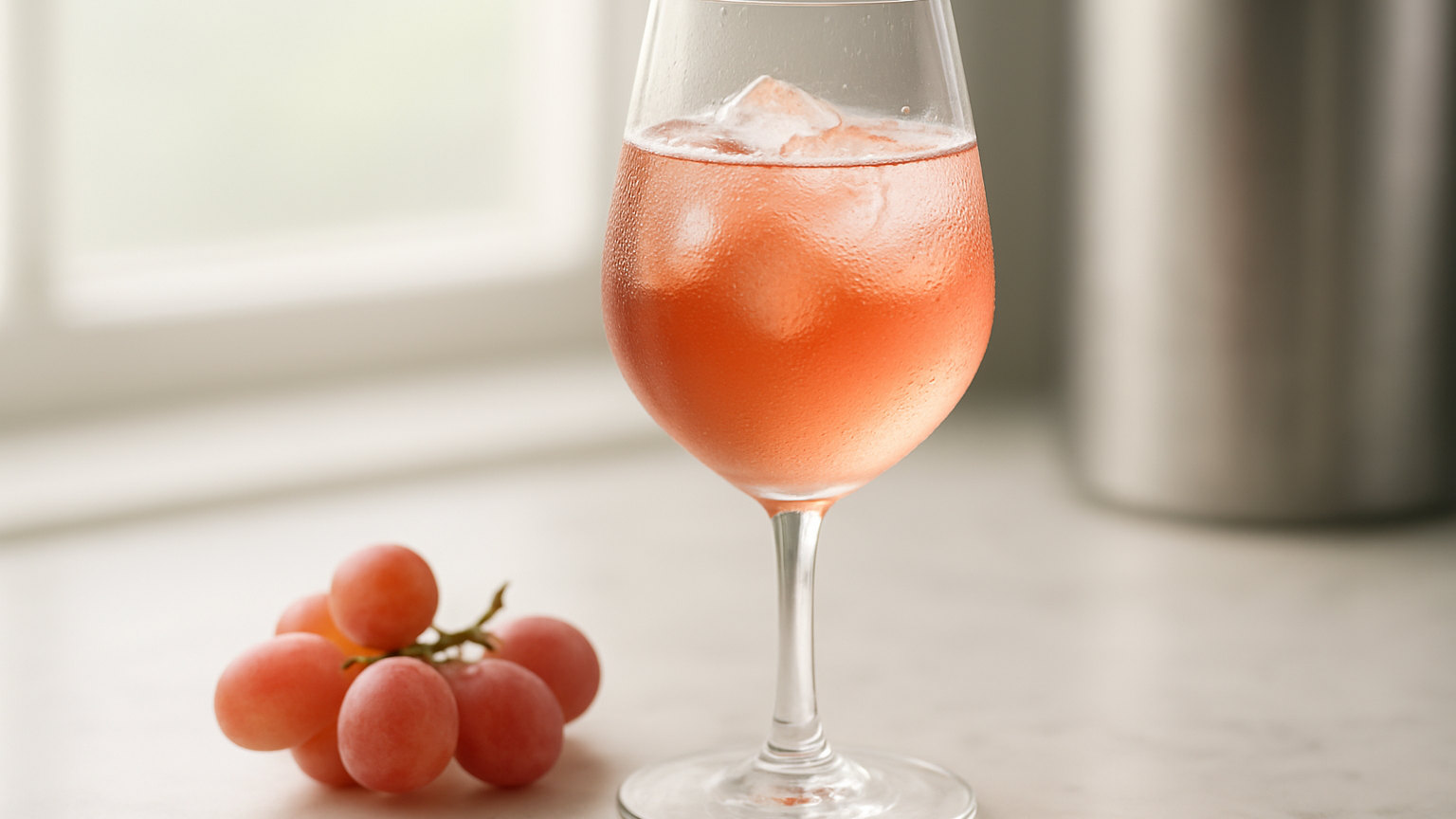
White zinfandel is a pale pink, sweet, low-alcohol wine made from the zinfandel grape in California. At its peak it was among the best selling wines in the United States, and it did more than any other product to shape what people assume pink wine tastes like.
It is also the reason a great many wine drinkers on both sides of the Atlantic believe they dislike rosé, having formed that view from a single sweet style and applied it to an entire category.
How it came about
The origin story is unusually well documented and involves a mistake. In the 1970s a Californian producer was making a saignée, drawing off pale juice from a tank of red zinfandel to concentrate the remaining wine, and fermenting that juice dry as a white wine.
In 1975 one of those fermentations stopped before all the sugar had been converted, a problem known as a stuck fermentation. The result was a pink wine with noticeable residual sugar. Rather than discard it, the producer bottled it, and it sold in quantities nobody anticipated.
Within a decade the style was being made deliberately at enormous scale, and by the 1980s and 1990s it was a mainstream American drink.
Why it is sweet, and why that worked
The modern wine is made intentionally rather than accidentally, with fermentation halted while sugar remains. Typical alcohol is around ten per cent, considerably lower than dry rosé, with residual sugar high enough to be immediately obvious.
Its commercial success rested on being approachable to people who found dry wine austere. Sweetness makes a wine easier to drink without food and forgiving of being served very cold, and the price was low. For a large market with little wine experience it was an effective entry point, and there is a reasonable argument that it introduced more Americans to wine than any other product.
The unexpected consequence
The most interesting part of the story concerns the vines. Zinfandel had been planted extensively in California from the nineteenth century, and by the 1960s and 1970s many of those old vineyards were commercially marginal. Old vines produce small crops, and there was little demand for the wine.
The white zinfandel boom created enormous demand for zinfandel grapes, which made those vineyards viable again at exactly the point when many would otherwise have been pulled up and replanted with more fashionable varieties.
The result is that California retains a substantial acreage of genuinely old zinfandel vines, some over a century old, which now produce highly regarded red wines. Those wines exist in part because a sweet pink wine paid the bills for two decades, which is an irony the industry acknowledges more readily now than it did at the time.
What zinfandel actually is
Worth noting, since the white version obscures it. Zinfandel is a black grape producing full-bodied, high-alcohol red wine with brambly fruit, pepper and often a jammy richness. DNA analysis established that it is genetically identical to the Croatian variety crljenak kastelanski and to Italian primitivo, a finding that settled a long-running question about its origins.
Anyone whose only experience of the name is the sweet pink version would not recognise the red at all.
Whether it deserves its reputation
The wine is what it claims to be and is enjoyed by a great many people, which is a legitimate defence. The criticism is not that it is sweet but that the better examples of the style are rare and the average is low in acidity, which leaves it cloying rather than refreshing.
Its real cost has been reputational, since it taught a generation to associate pink wine with sugar. If you have avoided rosé on that basis, a dry bottle from Provence, Spain or Italy is a completely different proposition, and the two share nothing but a colour.
The category's own market has shifted in any case. Sales of sweet blush wine have declined substantially as American drinkers moved towards dry rosé in the European style, and the same producers who built the blush category now make dry versions alongside it. The wine that defined pink wine for thirty years is no longer what defines it, even in the country where it was invented.


