
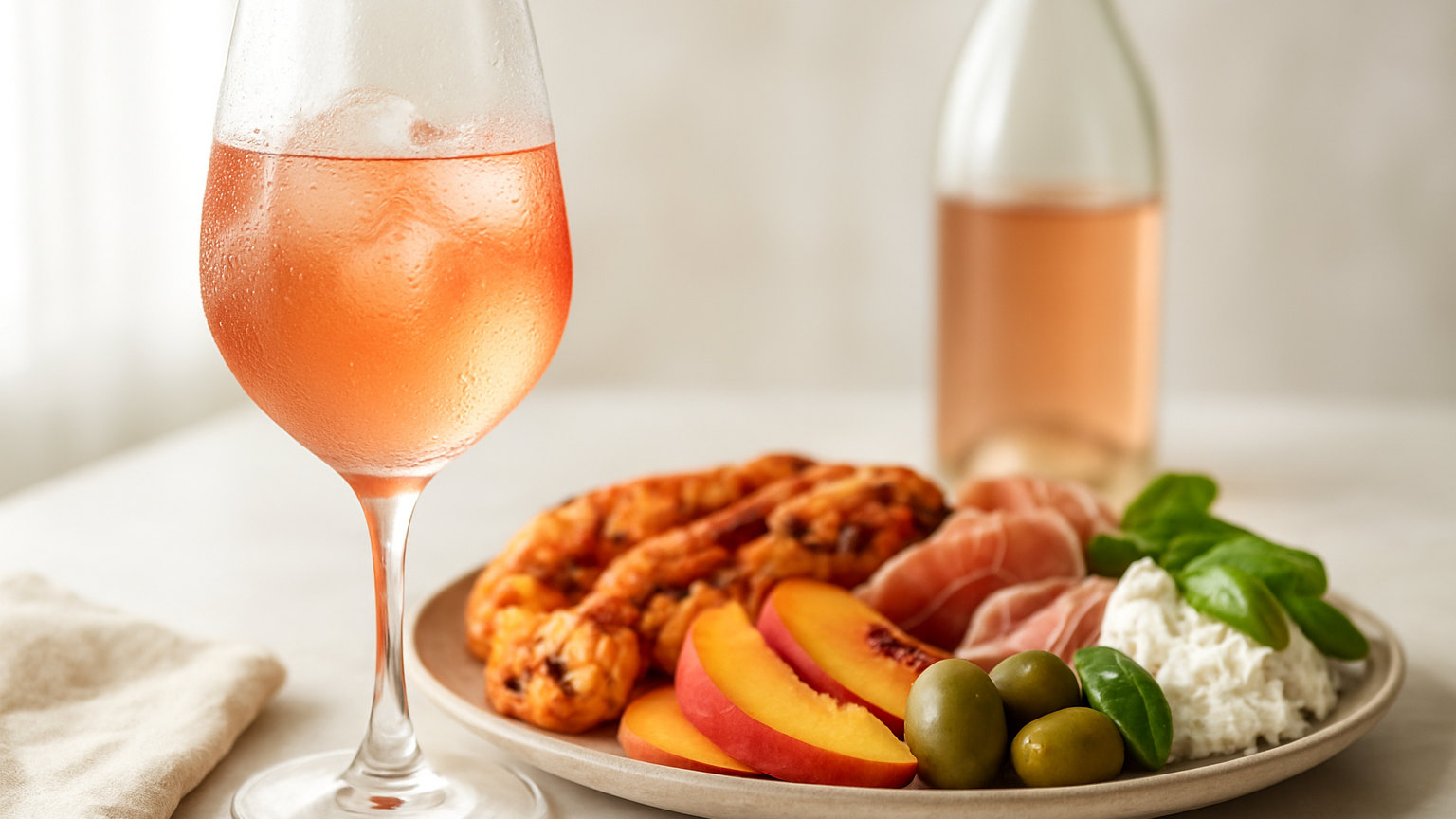
Rosé is frequently described as a compromise between red and white, which sounds like faint praise and is actually the reason it works so well at the table. It carries the red fruit character of a light red and the acidity and serving temperature of a white, and it does so without tannin.
Tannin is responsible for most spectacular food and wine failures, clashing with salt, chilli, oily fish and vinegar. Removing it while keeping the fruit produces a wine that will sit alongside a wider range of dishes than almost anything else.
Where it is genuinely the best choice
Mixed tables are the clearest case. A spread of charcuterie, salads, cheese, bread, olives and grilled vegetables offers no single dominant flavour for a wine to match, and any structured red will fight half of it. A dry rosé handles all of it comfortably.
Mediterranean food is the natural home. Salade niçoise, ratatouille, grilled fish with herbs, tapenade, aioli, paella and anything involving tomatoes, garlic and olive oil all pair well, which is unsurprising given where most rosé is made and what the people who made it were eating.
Salmon and other oily fish are worth singling out, since they clash badly with tannic red and can overwhelm a delicate white. Rosé has enough fruit weight to meet them and no tannin to react with the fish oils.
Spice, and the sweetness question
Rosé handles chilli heat better than most dry wine, because the fruit reads as slightly sweet and sweetness tempers capsaicin. A dry rosé with ripe strawberry character works well with moderate spice, and an off-dry one works with more.
Thai, Vietnamese, Indian and Middle Eastern cooking all suit it, and the same applies to dishes combining sweet and savoury elements, such as tagines or anything with dried fruit, where a dry red would taste hard.
What defeats rosé is the same thing that defeats most wine: extreme heat. A genuinely fiery dish will overwhelm it, and the answer there is beer or something with residual sugar rather than a heroic bottle.
Matching style to dish
The category covers enough range that the choice within it matters. A pale, delicate Provence style is an aperitif wine and suits light food: shellfish, salads, goat's cheese, crudites and anything eaten in the sun.
A fuller Spanish rosado or an Italian rosato from the south has the weight for grilled meat, sausages, pizza and tomato-based dishes. Tavel and Bandol go further still, handling roast lamb, duck and rich autumn cooking that would flatten a lighter pink wine entirely.
Rosé champagne and other sparkling rosés add carbonation to the equation, which cuts through fried food and rich sauces particularly well.
Cheese, and the picnic argument
Rosé is a better cheese wine than red, which surprises people who have absorbed the standard pairing. Goat's cheese in particular is excellent with a crisp dry rosé, and soft cheeses that would clash with tannin are handled easily. Only the strongest blues are beyond it, and those want something sweet.
For outdoor eating, rosé is close to the ideal wine. It is served cold, which suits warm weather; it goes with the miscellaneous food that picnics involve; and it does not require the attention that a serious red would be wasted without.
The one situation where it is the wrong choice is a single, focused dish where a specific wine would clearly be better. A great steak wants a red with tannin to meet the protein, and a plate of oysters wants something sharper and more mineral. Rosé is the wine for tables where several things are happening at once, which describes most meals people actually eat.
Serving it with food rather than before it
One practical adjustment makes a considerable difference. Rosé served at aperitif temperature, straight from the fridge, will struggle alongside a main course, because the cold suppresses the fruit weight the dish needs it to have.
Letting the bottle sit out for fifteen minutes before the food arrives, or simply not returning it to the ice bucket, brings it to a temperature where it can hold its own. It is the same wine, and it behaves quite differently at ten degrees than at seven.


