
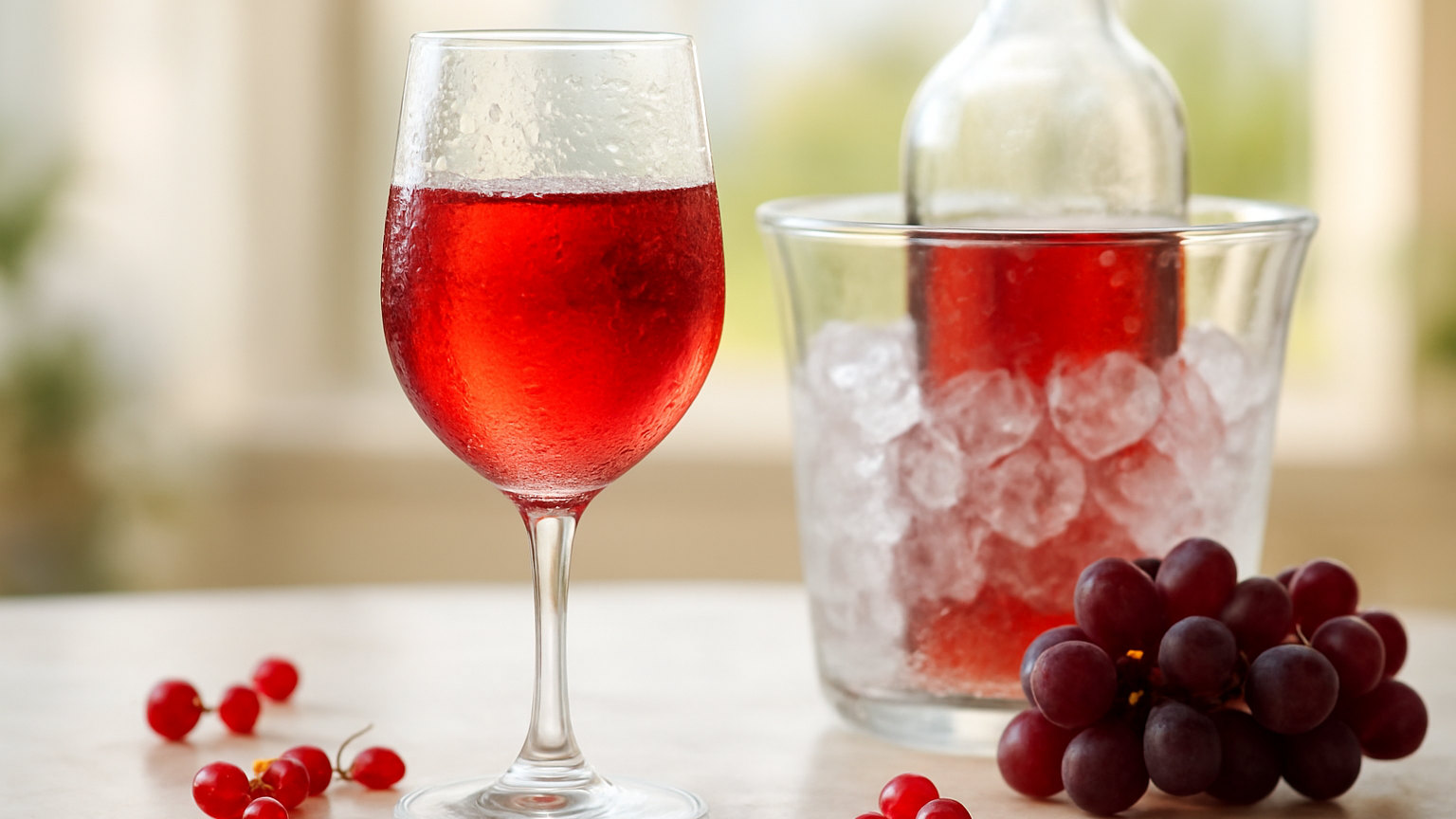
Putting red wine in the fridge sounds like something to apologise for, which is odd given that it has been standard practice across large parts of France, Italy and Spain for as long as anyone can remember. The reason it works for some bottles and ruins others comes down to structure, and once the mechanism is clear the practice stops seeming like a novelty.
Cold does three things to wine. It suppresses aromatics, it emphasises acidity and it makes tannin feel firmer and more astringent. Whether that combination helps or harms depends entirely on how much tannin the wine has to begin with.
The tannin problem, and the wines that avoid it
Chill a big tannic cabernet and the tannin hardens into something bitter and metallic while the fruit that would have balanced it retreats. The wine tastes stripped and severe, which is why chilling red wine has a poor reputation among people who have only ever tried it with the wrong bottle.
A wine with very little tannin has no such problem. There is nothing to harden, so the cold simply sharpens the acidity and makes the wine taste more refreshing. Light-bodied reds with bright fruit and low tannin gain crispness and lose nothing that matters, and the same wine at room temperature on a warm evening can taste soft and slightly flat by comparison.
Which grapes to look for
Gamay is the obvious starting point, and Beaujolais is the classic chillable red. Much of it is made using carbonic maceration, a fermentation technique in which whole uncrushed bunches ferment inside their own skins in a carbon dioxide atmosphere. The method extracts very little tannin while producing vivid red fruit and a characteristic banana and bubblegum aromatic lift, which is exactly the profile that suits chilling.
Beyond gamay, look for lighter pinot noir, particularly from cooler regions, and Loire cabernet franc, which brings a fresh, herbaceous edge. Italy offers frappato and schiava, both pale and fragrant, and lighter examples of barbera with its high acidity and modest tannin. Cinsault, whether from the Languedoc or South Africa, is another good candidate, as are the pale Jura reds made from poulsard and trousseau.
Portugal and Spain both produce light, fresh reds intended for exactly this treatment, and Austrian zweigelt deserves more attention than it gets.
How cold, and for how long
Aim for around twelve to fourteen degrees, which is cooler than a cellar and warmer than a fridge. In practice that means about forty five minutes to an hour in a domestic fridge, or twenty minutes in an ice bucket with water and ice.
Straight from a fridge set at four degrees is too cold, and a wine served that way will seem thin and closed for the first few minutes before warming up. If you overdo it, simply leave the glass alone and it will come round on its own within ten minutes.
Why it is worth doing
The obvious case is weather. A chilled light red is a considerably better proposition on a hot afternoon than a warm heavy one, and it fills a gap for anyone who wants red wine in summer without the ponderousness that usually comes with it.
The less obvious case is food. Chilled light reds are unusually versatile at the table, working with charcuterie, roast chicken, salmon, pork, mushroom dishes and a good deal of what is normally assigned to white wine. Their acidity does the same job that a white's would, while the red fruit adds something a white cannot.
The habit also solves a practical problem, since these wines tend to be inexpensive. A category of red wine that is cheap, food-friendly, refreshing and improved by twenty minutes in the fridge deserves more attention than it usually receives in Britain, where it remains slightly suspect for no good reason.
If you are unsure whether a particular bottle qualifies, the label gives you two useful clues before you open it. Pale colour visible through the glass suggests low extraction and therefore low tannin, and an alcohol figure below about 13 per cent suggests a lighter body. A pale, low-alcohol red is almost always a candidate for the fridge.


