Most beginner wine advice starts and ends with a recommendation to buy something soft and fruity, usually merlot. It is not bad advice as far as it goes, but it treats the reader as someone to be soothed rather than taught, and it tends to produce people who drink the same style for years without ever finding out what else exists.
A more useful approach is to think of the main red varieties as a set of contrasts rather than a ladder from easy to difficult. There are perhaps six grapes that account for the overwhelming majority of red wine sold in Britain, and each of them does something the others do not. Working through them deliberately, paying attention to what changes, will teach you more in two months than years of buying whatever is on offer.
The two ends of the range
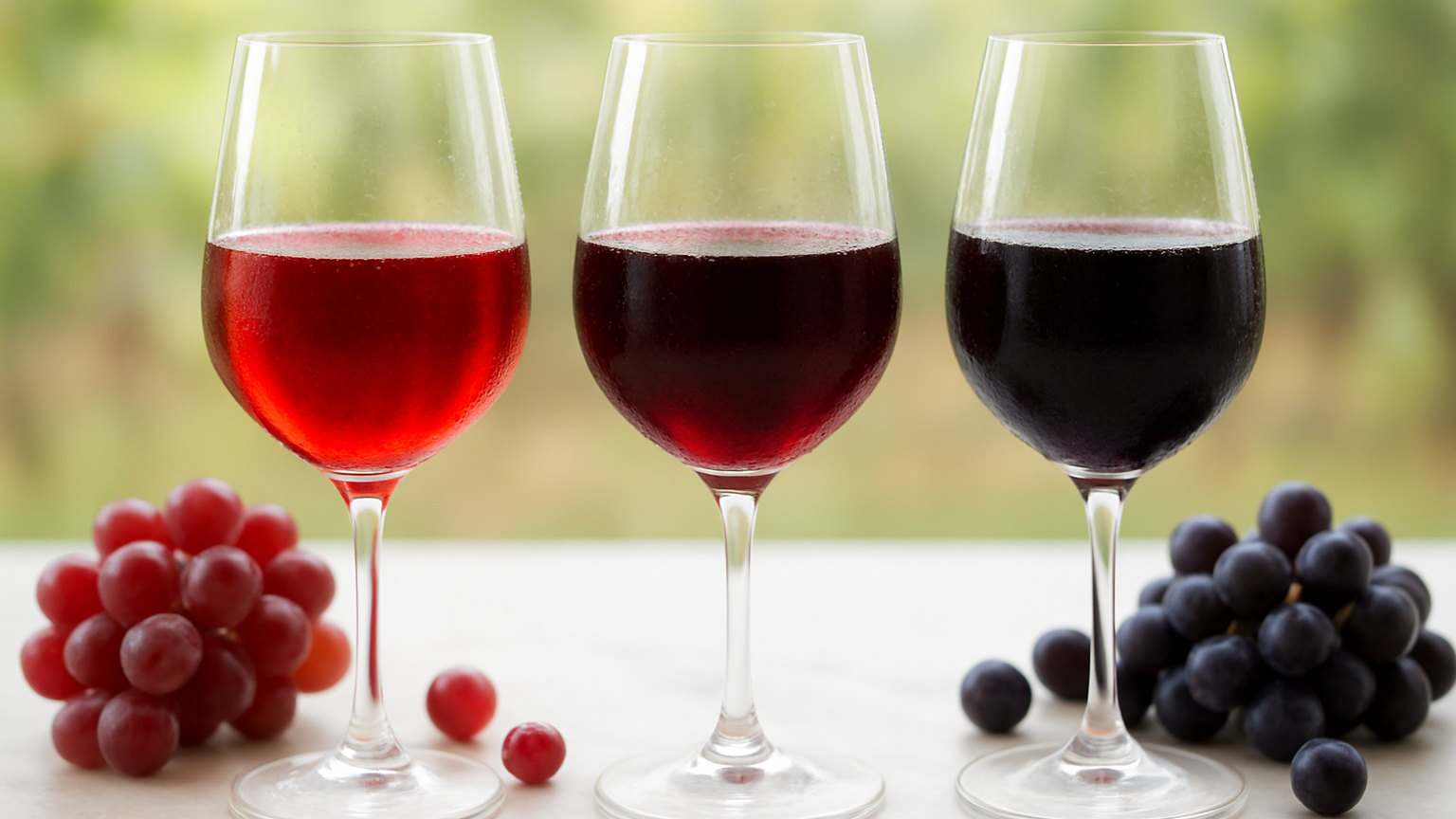
Start with the extremes, because contrast is what makes flavour legible. At one end sits pinot noir: pale, light-bodied, low in tannin, high in acidity, tasting of red cherry, raspberry and often something earthy or savoury underneath. At the other sits cabernet sauvignon: deeply coloured, firmly tannic, tasting of blackcurrant and cedar, and usually needing either food or a few years in the bottle.
Buy one of each and drink them a night apart. Almost everything else in red wine sits somewhere between those two poles, and having them as reference points makes the rest of the field far easier to place. If you drink them in the wrong order, incidentally, the pinot will taste thin, so open the lighter wine first.
Filling in the middle
Merlot occupies the space next to cabernet but rounder and softer, with plum and blackberry replacing blackcurrant and considerably less grip. Syrah, sold as shiraz in Australia and elsewhere, brings black pepper, dark fruit and a smoky, meaty quality that neither of the first two has. Malbec gives dense, plush black fruit with a velvety texture and moderate tannin, which explains why it converted so many British drinkers so quickly.
Grenache, often blended, is the one that surprises people: pale in colour but high in alcohol, tasting of strawberry and dried herbs, and quite unlike what its appearance suggests. Italy's contribution is sangiovese, savoury and sour-cherried with firm acidity, which behaves better with food than on its own.
How to buy while you learn
Spend between eight and twelve pounds a bottle and buy single-variety wines from the New World while you are establishing what each grape tastes like. Australian, Chilean, Argentine and South African producers label by grape and make wines where the variety speaks clearly, which is exactly what you want at this stage. European wines are frequently labelled by place instead, so a bottle of Chianti tells you nothing about sangiovese unless you already know the connection.
Keep a note of what you drank and one line about it. Not tasting notes, which are intimidating and mostly performative, but something practical: too sharp, liked the softness, would buy again with a roast. After a dozen bottles a pattern appears, and that pattern is worth more than any recommendation list.
What to do once you have a favourite
The interesting move is not to buy more of the same wine but to buy the same grape from somewhere else. If you like Argentine malbec, try one from Cahors in south west France, where the grape originates and the style is firmer and more savoury. If you like Australian shiraz, try a northern Rhône syrah.
This is the point at which most people stop treating wine as a collection of brands and start understanding how climate and tradition shape a bottle. It is also, conveniently, where the value is, because the less fashionable version of a grape you already like is almost always cheaper than the famous one.
What you should not do is skip ahead to the wines everyone agrees are great. A famous Burgundy or a classed growth Bordeaux opened before you have any reference points is largely wasted, because appreciating them depends on recognising what they are doing differently from everything else. Build the map first, then visit the landmarks.