Oak has become so integral to red wine that many drinkers assume vanilla and spice are grape flavours. They are not. They come from wood, and the decision about how much wood to use is one of the most consequential a winemaker makes, as well as one of the most expensive.
A new French oak barrel costs several hundred pounds and holds around 300 bottles. That cost lands on every bottle of wine that passes through it, which is the practical reason inexpensive wine is rarely aged in new barrels and why the industry developed cheaper ways of achieving a similar effect.
Three things happen in a barrel
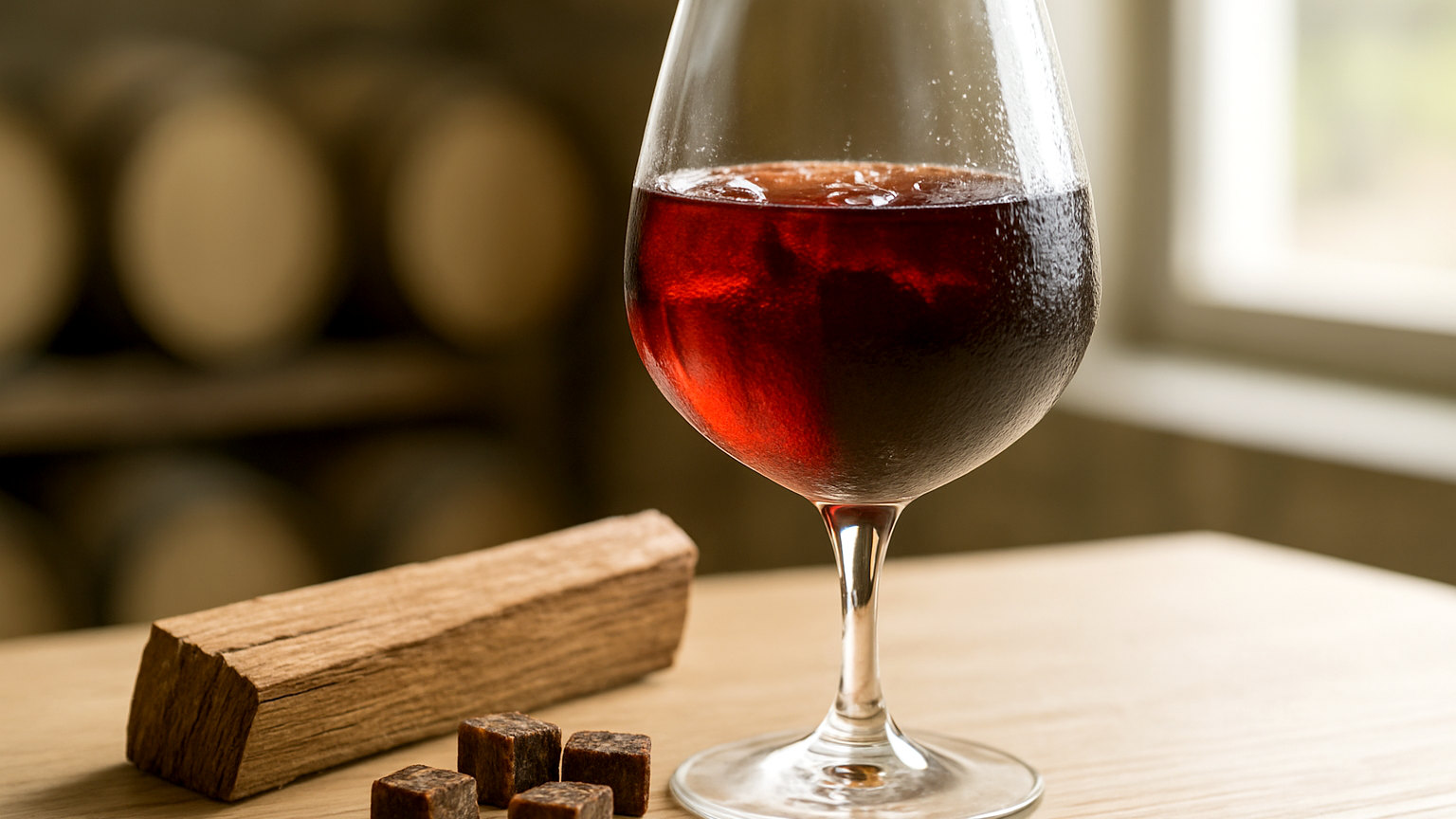
The first is flavour extraction. Oak contains vanillin, which gives vanilla, and lactones, which give coconut and creamy notes. Toasting the inside of the barrel over a flame caramelises the wood sugars and creates additional compounds responsible for caramel, smoke, clove and toast.
The second is textural. Oak contributes its own tannin, which adds structure and firmness on top of whatever the grape skins provided. In a wine with soft tannin of its own, this can be the difference between something flabby and something with backbone.
The third is slow oxidation. Wood is slightly permeable, so a barrel allows a tiny, controlled amount of oxygen to reach the wine over months. That gradual exposure softens harsh tannins and stabilises colour in a way that a sealed steel tank cannot replicate. It is arguably the most valuable thing a barrel does and the hardest to imitate.
New oak, old oak, and the difference between forests
A barrel gives up most of its extractable flavour in its first use. By its third or fourth fill it contributes very little flavour and functions mainly as a vessel that permits slow oxygenation. Producers therefore talk about the percentage of new oak in a wine, and that figure is a reliable predictor of how obviously oaky the finished bottle will taste.
Origin matters as well. American oak is wide-grained and high in vanillin and lactones, giving pronounced vanilla, coconut and sweet spice, and it is traditional in Rioja and common in Australia. French oak is tighter-grained, giving subtler spice, cedar and finer tannin, and it dominates in Bordeaux and Burgundy. Size matters too: a small barrel exposes wine to more wood per litre than a large cask, which is why traditional Italian producers using very large old casks make wines that taste of grape rather than of timber.
Chips, staves and the wines you actually buy
Below about ten pounds a bottle, barrel ageing is rarely economic. Instead, producers add oak chips, staves or powder to wine in a steel tank, sometimes alongside micro-oxygenation to imitate the slow air exposure a barrel provides.
This is legal, widely practised and not inherently dishonest, though it is almost never mentioned on a label. The results can be perfectly pleasant, but the flavour tends to sit on the surface of the wine rather than being integrated into it, and there is a characteristic sawdust or coffee-grounds quality that is easy to spot once you know it.
When there is too much of it
Oak is a seasoning, and the failure mode is the same as with any seasoning. A wine dominated by vanilla, coconut and toast, in which the fruit is a distant presence, has been over-oaked, and no amount of expensive wood makes that a good wine.
The style had a long period of fashion, particularly in the 1990s and 2000s, and a reaction against it has produced a generation of winemakers using older barrels, larger formats, concrete and amphora specifically to keep wood out of the picture. Unoaked red wine, once unusual, is now easy to find and worth trying for the contrast.
The useful test is whether you can still taste the grape. Oak should frame a wine, adding structure and a little complexity around the edges. When it becomes the first thing you notice and the last thing you remember, the balance has gone, whatever the barrel cost.