
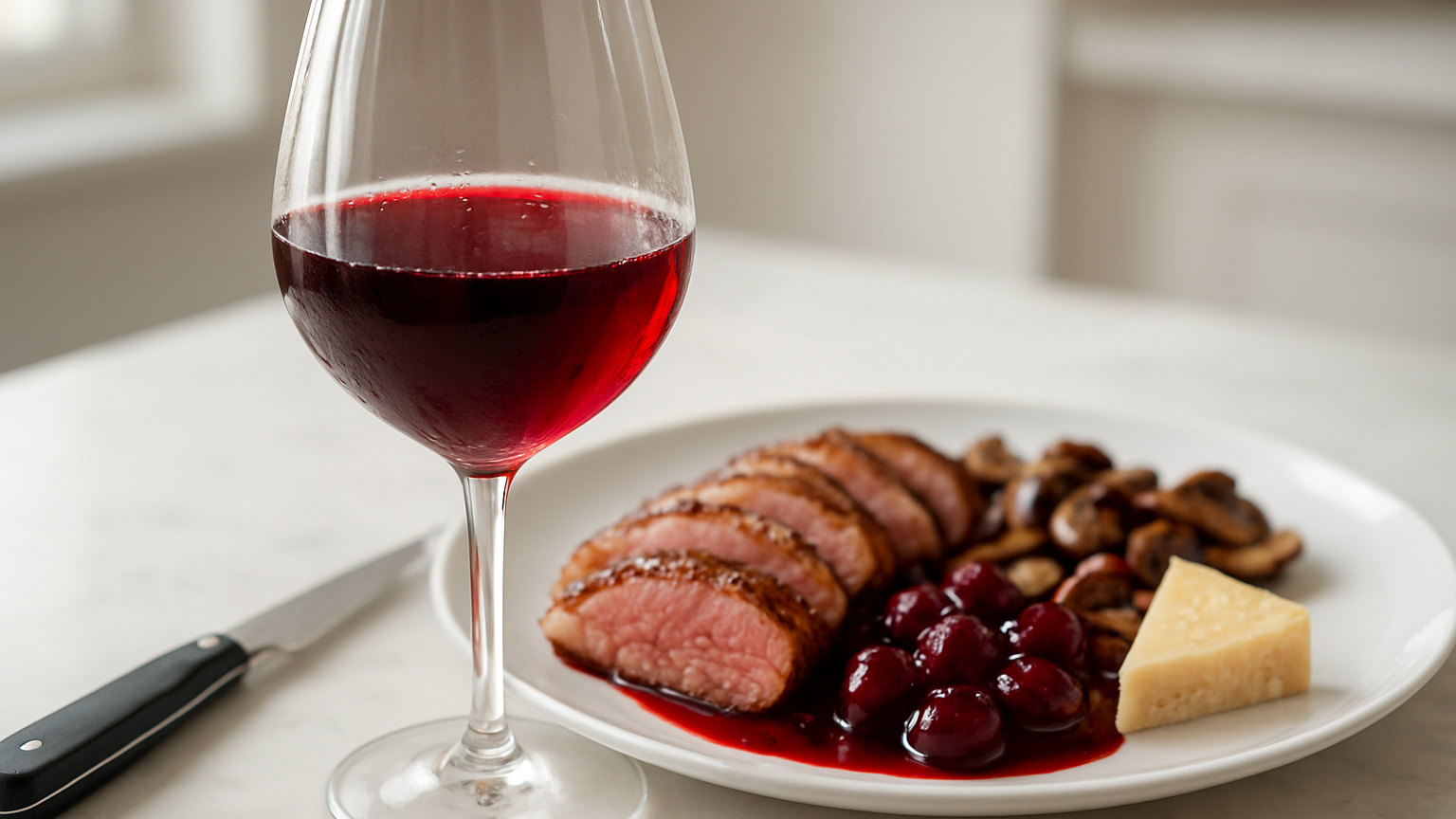
Food and wine matching is usually presented as a set of rules to be learned by heart, which makes it feel like an examination rather than a pleasure. The lists are also unreliable, because they cannot anticipate what you are actually cooking. It is far more useful to understand the three mechanisms that make a pairing work, after which you can improvise with reasonable confidence.
The old instruction to drink red with meat and white with fish survives because it is right often enough to be useful and simple enough to remember. What it does not explain is why, and the why is where the interesting decisions live.
Tannin needs protein and fat
The first principle is the one that does most of the work with red wine. Tannin binds to proteins, and given the choice between the proteins in your saliva and the proteins in a piece of beef, it will bind to the beef. The wine consequently tastes softer and fruitier alongside a steak than it does on its own, while the fat in the meat is cut through by the wine's structure. Both sides improve, which is what a genuinely good pairing means.
This is why a firm cabernet sauvignon suits roast lamb and why the same bottle can seem austere and unfriendly with a plate of pasta and tomato sauce. The heavier the tannin, the more protein and fat the dish needs to carry it.
Acidity matches acidity, and weight matches weight
The second principle concerns acid. A wine must be at least as acidic as the food it accompanies, or it will taste flat and flabby. Anything cooked with tomatoes, vinegar or a squeeze of lemon needs a wine with genuine freshness, which is precisely why Italian reds work so well with Italian food. Sangiovese and tomato sauce evolved together for good reason.
The third principle is weight. A delicate wine is overwhelmed by a rich dish, and a powerful wine flattens a delicate one. Pinot noir with mushroom risotto works because both are earthy and neither dominates. The same wine with an oxtail stew disappears entirely, which is a waste of an expensive bottle.
Where reds genuinely clash
Three combinations go beyond disappointing and into actively unpleasant, and all three involve tannin. Chilli sharpens the perception of tannin and alcohol, so a big red with a hot curry tastes harsh, bitter and burning. Salt does something similar, though less dramatically.
Oily fish and red wine produce a distinctly metallic, fishy note that researchers have linked to iron content in the wine reacting with compounds in the fish. It is not snobbery, it is chemistry, and it explains the traditional rule better than the traditional rule explains itself.
The last trap is sweetness. A dessert served with a dry red will make the wine taste sour and thin. Sweet dishes need a wine at least as sweet as the food, which for red wine means a fortified style rather than anything from the standard shelf.
The awkward truth about cheese
Red wine and cheese is the most repeated pairing in circulation and one of the least reliable. Hard aged cheeses work well, since the protein and fat handle tannin as meat does. Soft and blue cheeses frequently do not, because their intensity and salt overwhelm the fruit and leave the wine tasting sour.
White wine is the better partner for a great deal of the cheeseboard, and sweet fortified wine is the classic match for blue cheese. Suggesting this in company is a reliable way to start an argument, which does not make it less true.
None of this needs to be applied rigidly. A pairing that fails is a mildly disappointing evening rather than a disaster, and the point of learning the principles is to make sensible choices quickly rather than to construct a perfect match every time.
If you want one rule that covers most situations, match the wine to the sauce rather than to the meat. A chicken in a rich red wine sauce wants a red; the same bird roasted plainly does not. The dominant flavour on the plate decides the pairing far more reliably than the animal it came from, which is where the old red-with-meat instruction goes wrong most often.


