Decanting has acquired an air of ceremony that puts people off, and the scepticism is understandable when the ritual is performed on a supermarket bottle for an audience. The confusion arises because decanting does two quite different things depending on the wine, and the arguments for and against usually conflate them.
The first job is aeration, exposing a young wine to oxygen to open it up. The second is separating an old wine from the sediment it has thrown. They call for opposite handling, and a technique that helps one will damage the other.
Aeration and what it does to young wine
Wine in a sealed bottle has had almost no contact with oxygen for years. When first opened, a young, tannic, concentrated red often smells muted and tastes tight, with the fruit sitting behind the structure. Exposure to air begins a set of changes: volatile compounds disperse, some sulphur notes blow off, and aromatics that were bound up become more expressive.
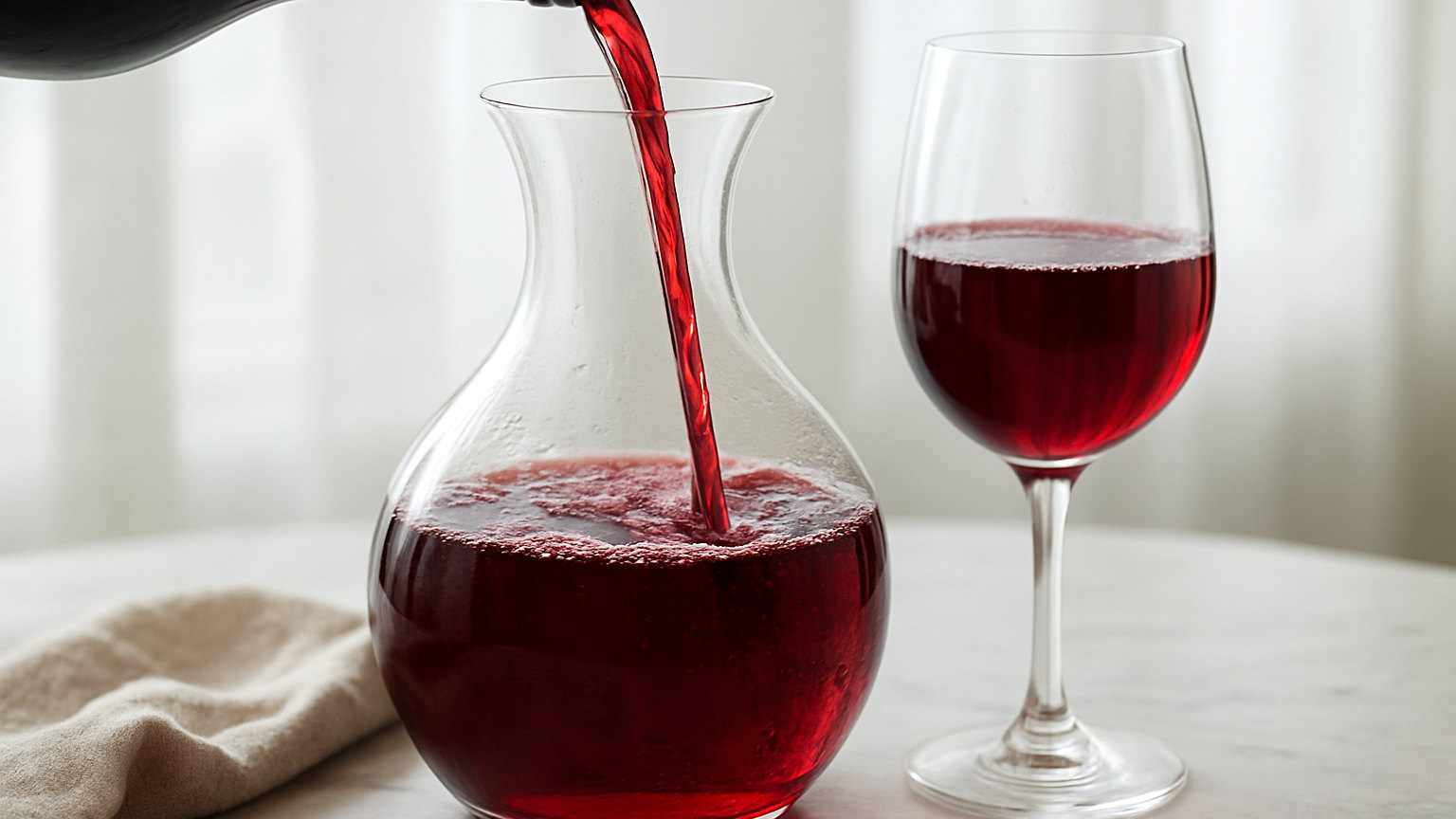
Pouring a bottle into a decanter with a broad base achieves in an hour what standing an open bottle on a table achieves in roughly never. This is the point most often missed. Simply pulling the cork and leaving the bottle exposes a circle of wine about the size of a two pence piece to the air, which does essentially nothing. If a wine needs air, it needs to be poured.
The wines that benefit are young, structured reds: cabernet sauvignon and Bordeaux blends, syrah, nebbiolo, tempranillo, Douro reds and anything under about five years old with obvious tannin. An hour is usually plenty, and two is generous.
Sediment and old bottles
The second purpose is entirely mechanical. As red wine ages, tannin molecules link together and eventually become heavy enough to fall out of solution, taking colour pigments with them. The deposit is harmless but gritty and bitter, and nobody wants it in the last glass.
Handling an old bottle requires the opposite instincts to aerating a young one. Stand it upright for a day or two so the sediment settles to the bottom. Open it gently, pour slowly and steadily in one movement without letting the wine slosh back, and stop when you see the deposit reach the neck. A light beneath the bottle makes this straightforward.
Crucially, an old wine should be decanted immediately before serving rather than an hour ahead. Fragile mature wines can fade dramatically once exposed to air, and a bottle that was lovely on opening can be tired within twenty minutes. The decanting is for clarity, not for oxygen.
Which wines gain nothing
Light, low-tannin reds are not improved and are sometimes diminished. Beaujolais, most inexpensive pinot noir and soft everyday wines have delicate aromatics and no structure to soften, so air simply disperses what little there is.
Inexpensive fruity reds designed for immediate drinking are made to taste good on opening. Decanting them is harmless but pointless, which is probably the origin of the practice's reputation for showing off.
What to use if you have no decanter
Any clean glass vessel with a wide base does the job, including a water jug. The shape matters more than the object, since surface area is what drives aeration.
Failing that, pouring the wine into a large glass and swirling it vigorously for thirty seconds achieves a surprising amount, and pouring the bottle into the jug and back again does more still. Aerating pour spouts and electric gadgets work by the same principle and are neither necessary nor fraudulent.
The honest summary is that decanting matters for a minority of bottles, matters a great deal for those, and can be safely ignored for the wine most people drink on a Tuesday. Knowing which category is in front of you is the whole skill.
There is also a diagnostic use worth mentioning. If a young wine tastes closed or slightly reduced on opening, with a struck-match or rubbery note, pouring a glass and leaving the rest in a decanter for an hour will usually tell you whether the wine was faulty or merely shut down. Most of the time it opens up, and you have saved yourself from writing off a perfectly good bottle.