Fortified wine occupies an odd position at the table. Port arrives after the cheese, sherry is poured before anyone sits down, and neither is considered for the meal itself. That convention wastes what is arguably the most useful set of food wines available, particularly on the sherry side.
The reason sherry works so well is that it combines high alcohol, savoury oxidative or yeasty character and complete dryness, which between them handle dishes that ordinary wine struggles with.
Fino, and the food it was built for
Fino and manzanilla are aperitif wines in Spain and are drunk with tapas rather than instead of them. The pairing is not decorative: the wines are saline, bone dry and high in acidity, and salt on the plate makes them taste rounder and fruitier.
Olives, salted almonds, cured ham, anchovies, fried fish and shellfish all work outstandingly. So do crisps, which is less elegant and equally true.
The more interesting claim is that fino handles food that defeats most wine. Artichokes, asparagus, eggs and vinegar-dressed salads are all famously difficult, and a cold fino manages them because it has no fruit sweetness or tannin to be distorted.
Amontillado and oloroso at the table
Amontillado is the wine for the middle of a meal. Its nutty, savoury character suits mushrooms, consommé and other soups, roast chicken, hard cheeses such as manchego, and anything involving toasted nuts.
Oloroso has the weight for serious food: beef, game, oxtail, stews and rich winter cooking. It works where a red wine would need tannin to cope, and because it has none, it avoids the clashes that tannin causes. A glass of dry oloroso with a plate of roast lamb is an unfamiliar combination that makes complete sense once tried.
Both handle strong cheese comfortably, and oloroso is one of the few wines that will not be flattened by a mature cheddar.
Port and cheese, examined
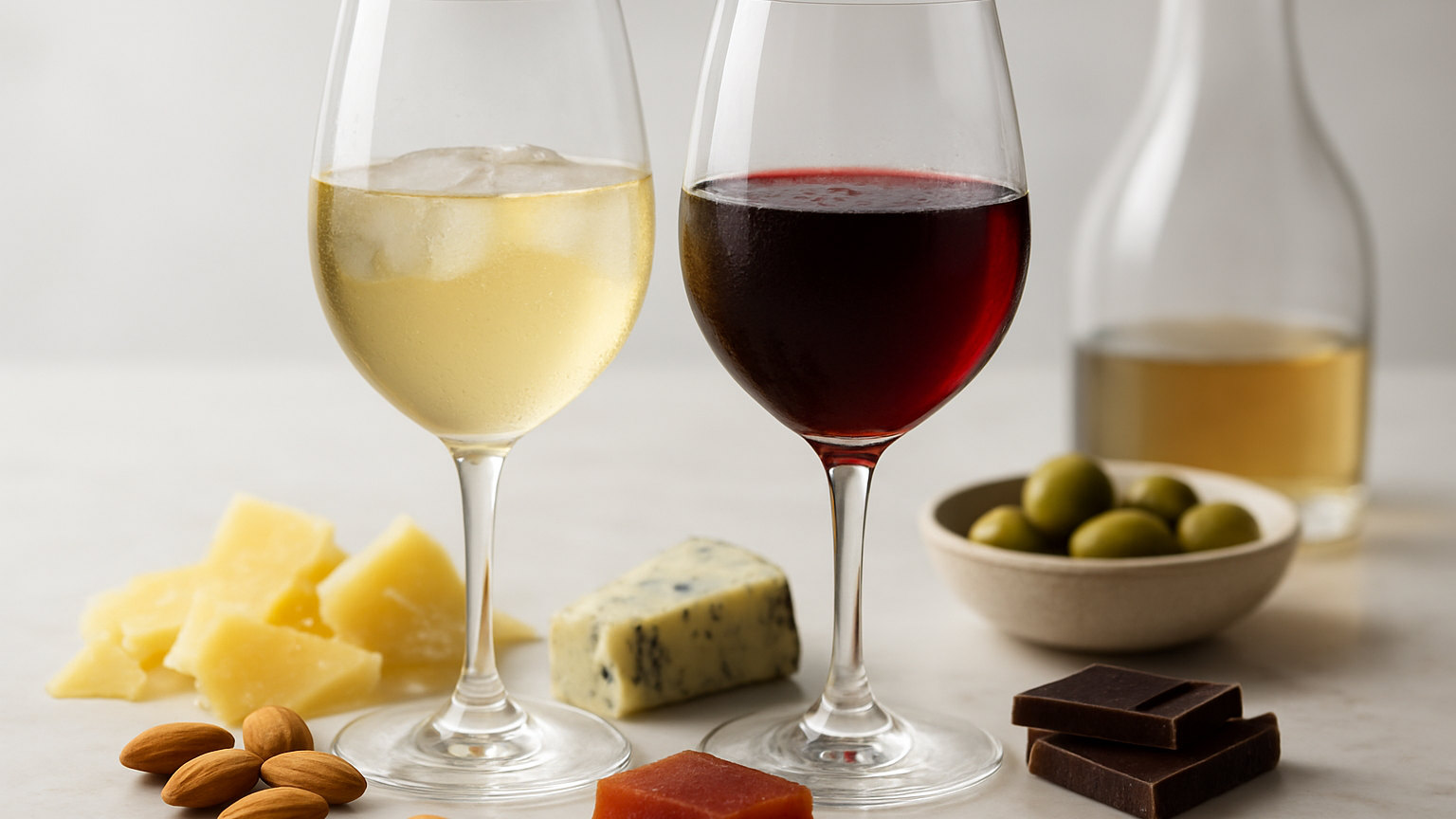
The port and blue cheese pairing is genuinely excellent and worth understanding rather than simply repeating. Blue cheese is salty, sharp and intense, and salt suppresses the perception of sweetness while the cheese's fat is cut by the wine's alcohol. The sweetness of the port meanwhile balances the cheese's aggression, which a dry red wine cannot do.
Vintage port and LBV suit this best. Aged tawny is better with nuts, dried fruit, caramel desserts and anything involving toffee or almonds, since its own nutty character echoes them. Tawny with a tarte tatin or an almond tart is one of the best matches in the category.
Chocolate is difficult with most wine and manageable with port, particularly a ruby or LBV against dark chocolate rather than milk.
The sweet wines and their one job
Pedro Ximénez has an obvious and unimprovable use: poured over vanilla ice cream. The temperature contrast and the wine's raisin and molasses character make it a dessert in itself, and it takes ten seconds to assemble.
Beyond that, PX suits chocolate desserts, blue cheese and Christmas pudding. Sweet madeira and marsala work with dried fruit, hard cheese and almond pastries.
The rule that applies to all of them is that the wine must be sweeter than the dish. A moderately sweet fortified wine served alongside a very sweet dessert will taste sour and thin, which is the most common failure in the whole category.
The practical suggestion
Try a fino with a bowl of olives and salted almonds before your next meal, at proper fridge temperature and in a wine glass. It costs about eight pounds a bottle, takes no preparation, and demonstrates the point faster than any argument.
The one rule that covers most of it
Match the intensity of the wine to the intensity of the dish and let the alcohol do the work that tannin does in red wine. Fortified wines are strong, savoury and long, which means they stand up to food that would overwhelm an ordinary bottle, and they carry no tannin to clash with salt, chilli or oily fish.
That combination is why they handle the difficult end of the menu so well, and why the convention of confining them to the beginning and end of a meal makes so little sense once you have tried them in the middle of one.