
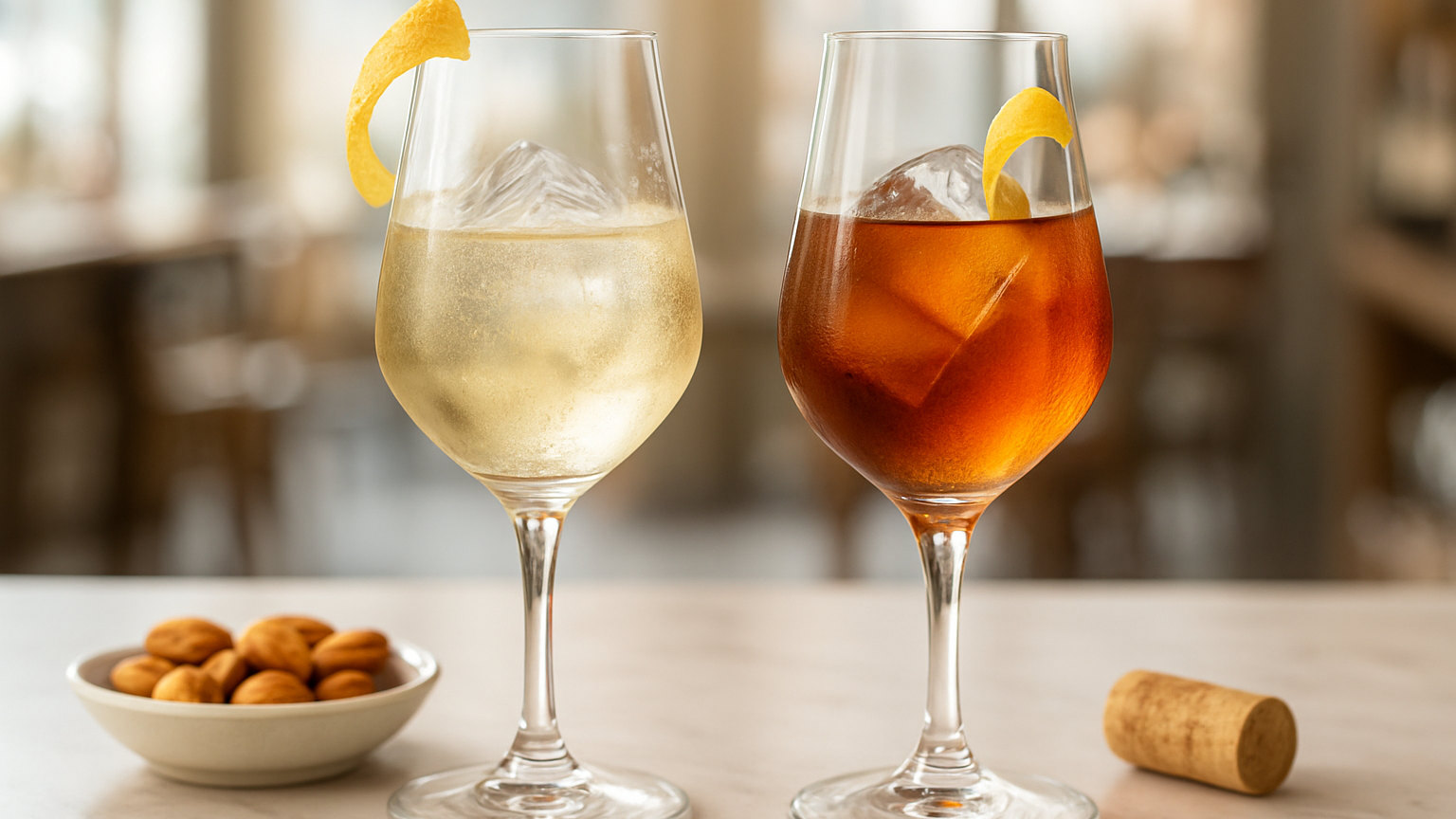
The single most useful thing to know about sherry is that the main styles are all dry. Fino, manzanilla, amontillado, oloroso and palo cortado contain no sugar whatsoever unless a producer has added some, and the sweet wines that gave the category its reputation are a separate group entirely.
Within those dry styles, the choice comes down to which of two ageing processes the wine underwent, and the two produce results so different that a newcomer would not guess they came from the same region.
The pale, sharp end
Fino is aged under flor, the living yeast film that shields it from oxygen. It emerges pale straw in colour, around fifteen per cent alcohol, and tastes bone dry, tangy and saline with notes of green almond, bruised apple and fresh dough.
Manzanilla is fino made in the coastal town of Sanlúcar de Barrameda, where the damper, cooler climate produces a thicker flor and a wine that is lighter and more markedly saline. The two are close relatives and largely interchangeable in use.
Both should be treated as white wine rather than as fortified wine. Serve them properly cold, at six to eight degrees, in an ordinary wine glass rather than a thimble, and drink them within a week or so of opening while keeping the bottle in the fridge.
The dark, rich end
Oloroso is fortified above the level flor can survive, so it ages in contact with air for years or decades. It is deep brown, seventeen to twenty two per cent alcohol, and tastes of walnut, dried fig, orange peel, leather and caramel, with real weight and length.
Crucially it is dry. The richness of the aromas fools people into expecting sweetness, and a genuine dry oloroso finishes clean and savoury. Sweetened versions exist and are labelled differently.
Serve it cool rather than cold, around thirteen to sixteen degrees, and it keeps for a month or two once opened because it has spent its life exposed to oxygen already.
The two in between
Amontillado begins life under flor and then loses it, so it carries both characters: the tangy, nutty edge of biological ageing followed by oxidative depth. It is amber, medium bodied and among the most complex wines available at its price. Serve it at twelve to fourteen degrees.
Palo cortado is the rare one, a wine that started as a fino and developed unusually, ending with the aromatic finesse of an amontillado and the body of an oloroso. Genuine examples are scarce and the term is used loosely by some producers, but the good ones are extraordinary.
How to choose
Match the wine to the occasion rather than looking for a hierarchy. Fino and manzanilla are aperitif wines, at their best cold with salty food before a meal, and they are among the best food wines in existence for olives, almonds, cured ham and fried fish.
Amontillado suits the table proper, working with soups, mushrooms, hard cheese and poultry. Oloroso has the weight for red meat, game, stews and strong cheese, and it is one of the few wines that will stand up to a rich winter dish without tannin.
For a first purchase, buy a fino and an oloroso together. They cost very little, they demonstrate the full range of the category in one evening, and the contrast between them explains sherry better than any amount of reading.
One practical warning applies to fino. Because it is fragile and best drunk fresh, a bottle that has sat on a shelf for two years will taste flat and tired. Buy from somewhere with turnover, check for a bottling date if the producer prints one, and treat it as a wine with a shelf life rather than as something indestructible.
What the age designations mean
Above the standard bottlings sit two certified categories that are worth knowing. VOS indicates an average age of at least twenty years and VORS at least thirty, both verified by analysis rather than simply claimed.
Because sherry is aged in a solera, these are averages across a blend rather than minimum ages, which is unusual in wine labelling and stated openly. What they reliably indicate is concentration and depth, and the wines carrying them are among the most underpriced fine wines available anywhere.


