
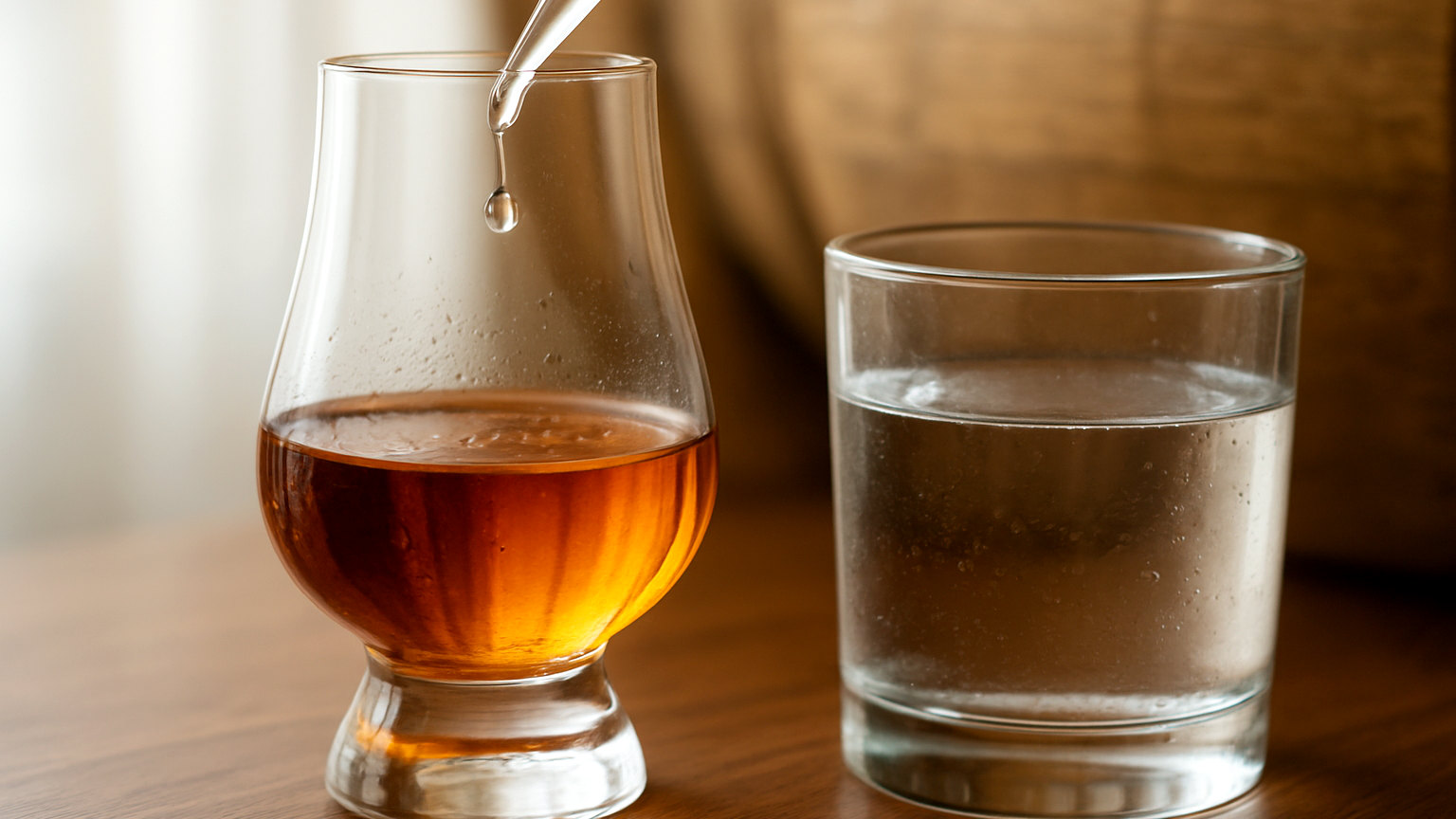
Cask strength means a spirit bottled without being reduced with water, at whatever strength it had reached in the cask. Figures typically run from the high forties to the low sixties, and each cask is different.
Why the strength varies
A spirit goes into the cask at a set strength, generally around sixty three per cent for Scotch, and changes over the years.
Both alcohol and water evaporate through the wood, and the balance between them depends on the humidity of the warehouse.
In a damp warehouse, proportionally more alcohol is lost and the strength falls. In a dry one, more water is lost and the strength can rise.
The overall loss is called the angels' share, and it is typically a small percentage of the volume each year, which compounds over a long maturation.
So a twelve year old cask strength bottling might be fifty six per cent and another from the same distillery fifty nine, purely because of where they sat.
Why people buy it
Control, principally.
A spirit reduced to forty per cent at the distillery has been diluted to someone else's judgement. One bottled at cask strength lets you take it wherever you want.
You can also dilute a cask strength spirit to forty per cent yourself, but you cannot concentrate a forty per cent spirit back up, which is a straightforward argument for the stronger bottling.
Cask strength spirits are also generally unfiltered, since hazing is unlikely at high strength, which preserves compounds that chill filtration would remove.
What water does
This is the interesting part and it is genuinely chemical rather than merely a matter of taste.
Many aromatic compounds in a spirit are more soluble in alcohol than in water. At high strength they remain dissolved; as the strength falls, some are pushed towards the surface of the liquid where they evaporate more readily.
The practical result is that a spirit frequently smells considerably more expressive with a small amount of water added.
Ethanol also has a numbing effect on the nose and palate at high concentrations, which reducing the strength lessens.
This is why distillers and blenders assess spirits diluted rather than neat.
How much to add
Start with a few drops rather than a splash.
Use a pipette or the end of a spoon, taste, and add more if it needs it. It is easy to add and impossible to remove.
A cask strength spirit at fifty seven per cent might open up substantially with enough water to bring it to around fifty, and further again at forty five.
Different spirits reach their best at different points, and finding it is part of the appeal.
Which water
Still, at room temperature, and low in minerals.
Heavily chlorinated tap water will be tasted, so filtered or bottled still water is preferable.
Cold water is less effective, since chilling suppresses the aromatics you are trying to release.
Ice instead
A different proposition, and a legitimate one.
Ice chills as well as diluting, and cold suppresses aroma. So ice gives you the benefit of dilution and takes away part of what dilution released.
For a spirit you want to assess, water is better. For one you want to drink on a warm evening, ice is entirely reasonable, and a single large cube dilutes slowly.
The unit implication
Worth stating clearly.
A 25 millilitre measure at fifty seven per cent contains around one and four tenths units, against one at forty per cent.
Adding water does not change that, since it dilutes rather than removing alcohol.
A measure of cask strength spirit is a substantially larger amount of alcohol than a standard measure looks like, which is worth accounting for.
Single cask
Frequently confused with cask strength and a separate thing.
Single cask means the bottling came from one cask rather than a blend of several. It may or may not be at cask strength.
A single cask bottling is a snapshot of one barrel, so it will never be repeated exactly, which is much of its appeal and the reason for the price.


