The United Kingdom uses a unit of ten millilitres of pure alcohol. Almost every other country that defines a standard drink uses a different figure, which makes advice from elsewhere difficult to interpret without converting.
The variation
The United States uses a standard drink containing around fourteen grams of pure alcohol, which is close to eighteen millilitres, and therefore nearly two British units.
Australia uses ten grams, which is around twelve and a half millilitres and therefore around one and a quarter British units.
Several European countries use figures in the range of ten to twelve grams.
Japan uses a figure considerably higher than the British one.
The British unit at eight grams is among the smallest in use.
Why it matters
Advice does not translate directly.
A guideline expressed in standard drinks means something quite different depending on where it was written.
Someone reading American guidance and mentally converting to British units without adjusting will substantially underestimate what is being described.
The same applies to research, which is frequently reported in grams of alcohol rather than in any national unit, and grams are the figure worth looking for when comparing across sources.
Converting
Grams of pure alcohol is the common currency.
A British unit is eight grams. Multiply grams by 0.125 to get British units, or divide by eight.
An American standard drink of fourteen grams is 1.75 British units.
An Australian standard drink of ten grams is 1.25 British units.
Where a source gives volume and strength, the British formula works regardless of country: millilitres times percentage divided by a thousand.
Serving sizes differ too
A separate source of confusion.
An American pint is smaller than a British one, at around 473 millilitres against 568.
Wine pours vary widely between countries and venues.
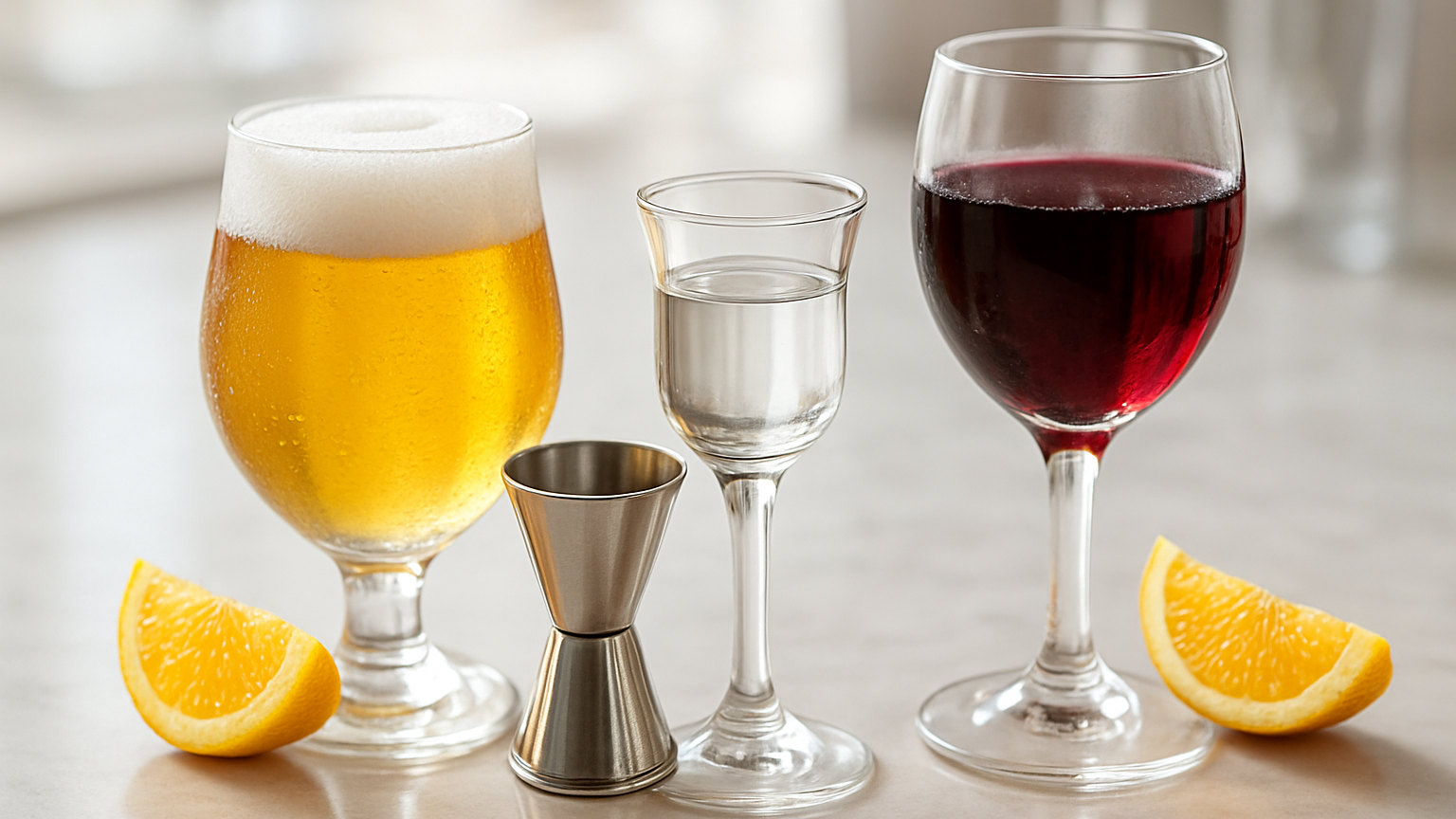
Spirit measures differ: the British prescribed measures are 25 or 35 millilitres, while other countries use different quantities and some do not prescribe them at all.
So a drink described as a pint or a glass of wine in a foreign source is not necessarily the size you would receive here.
Guidelines differ as well
Not only the units but the recommended limits.
Countries have set different weekly and daily figures based on their own assessments of the evidence, and several have revised them downwards in recent years.
Some distinguish between men and women and some, including the United Kingdom, no longer do.
Comparing them meaningfully requires converting everything to grams first, at which point the differences are smaller than the headline numbers suggest, though they remain real.
Labelling
British bottles generally state the units per container as well as the strength, which is unusual internationally and genuinely useful.
Elsewhere the strength is stated and the unit content frequently is not, which means the arithmetic falls to the drinker.
Where a bottle bought abroad carries no unit information, the formula covers it.
What to use
For anyone in the United Kingdom, British units and the guidance from the Chief Medical Officers.
Advice from elsewhere is worth reading with the conversion in mind rather than taken at face value.
And the NHS is the appropriate reference for current guidance, since it is written for the units and the drinks people here actually encounter.
Travelling
Worth being aware that a measure abroad may be larger or smaller than you expect, and that drink-driving limits differ substantially between countries, with several considerably lower than the British ones and some at zero.
Checking the local limit before driving anywhere unfamiliar is a sensible precaution, and the safest approach when driving remains not drinking at all.
Reading research
Studies generally report in grams of alcohol rather than in national units, which is the most reliable figure to work from.
Converting to British units means dividing grams by eight.
Menus abroad
Wine by the glass and spirit measures both vary considerably between countries, and some are substantially larger than the British equivalents.
Asking the size is a reasonable thing to do if you are keeping any kind of count.