The United Kingdom Chief Medical Officers published revised guidance on alcohol in 2016, and it is the reference point for anyone wanting to know what current advice actually says rather than what it is assumed to say.
The main guidance
Both men and women are advised not to regularly drink more than fourteen units a week.
That figure is the same for both, which was a change from earlier guidance and reflects the evidence as it was assessed at the time.
If you do drink as much as fourteen units a week, the advice is to spread it over three or more days rather than concentrating it.
Having several drink-free days each week is recommended.
And the guidance is explicit that there is no level of regular drinking that can be described as completely safe.
What fourteen units looks like
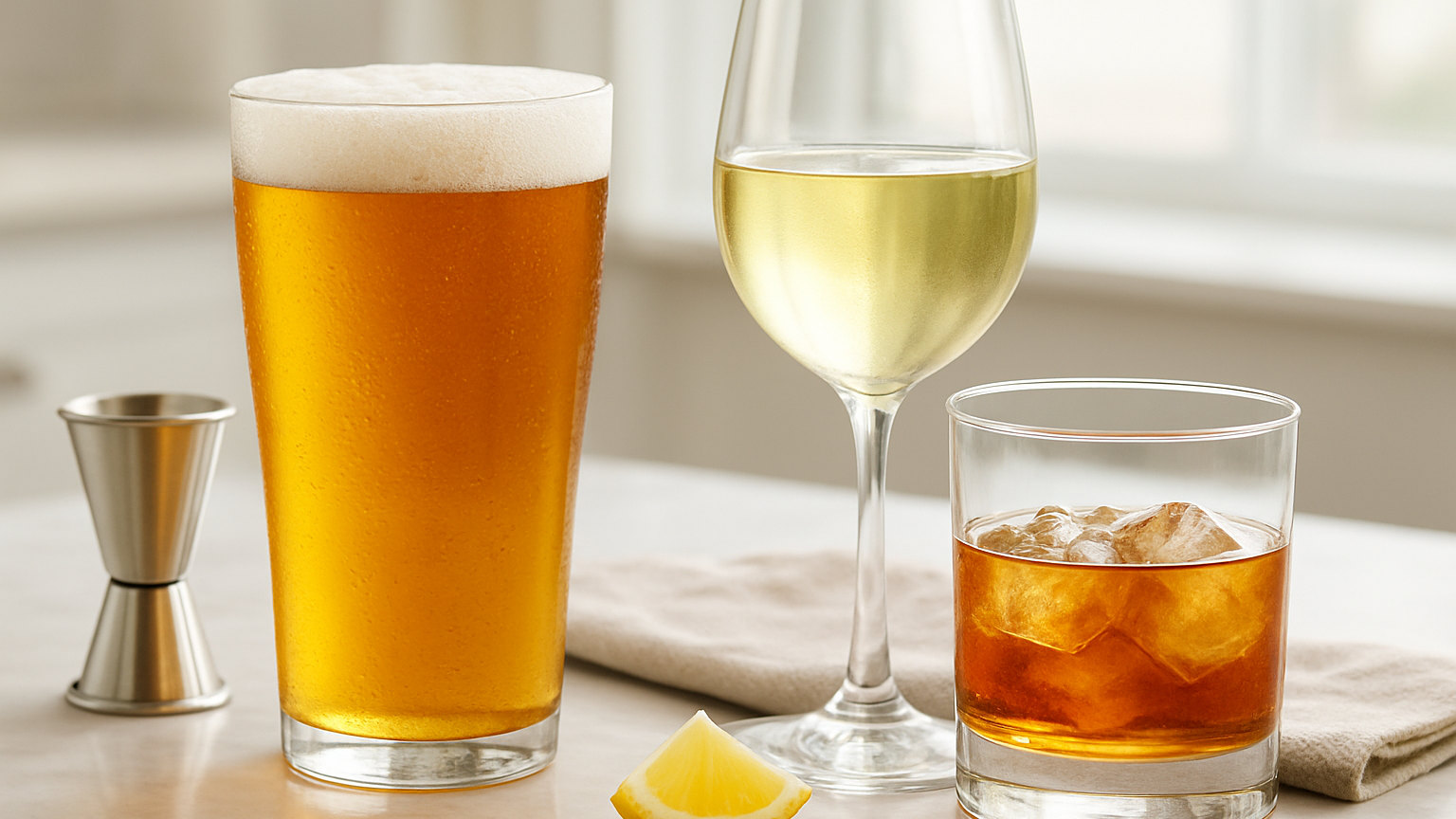
Roughly six pints of beer at around four per cent.
Roughly six standard 175 millilitre glasses of wine at thirteen per cent.
Roughly fourteen single spirit measures.
Around five or six cocktails.
Spread over a week with drink-free days, rather than in one or two sittings.
Single occasions
The guidance also addresses drinking a lot in one session, separately from the weekly figure.
The advice is to limit the total drunk on any occasion, to drink more slowly, to drink with food, and to alternate with water.
It also notes the importance of avoiding situations where the risk of accident or injury is increased.
Pregnancy
The advice is that the safest approach is not to drink alcohol at all if you are pregnant or planning a pregnancy.
This changed from earlier guidance that permitted small amounts, and the current position is that no safe level has been established.
Anyone with questions about this should speak to a midwife or a GP, who can give advice specific to the person rather than general information.
Where the guidance does not apply straightforwardly
The figures are for healthy adults and are not appropriate for everyone.
Anyone taking medication should check whether it interacts with alcohol, since a great many do. A pharmacist can answer this quickly and without an appointment.
Anyone with a health condition affecting the liver, the heart or mental health may have been given different advice, which takes precedence over any general guidance.
Anyone who has been advised to avoid alcohol entirely should follow that advice.
Young people
Guidance for under-eighteens is separate and considerably more cautious, advising an alcohol-free childhood as the healthiest option.
It is illegal to sell alcohol to anyone under eighteen in the United Kingdom, and the rules around what is permitted at home are worth looking up rather than assuming.
What the guidance is for
It is a description of risk rather than a permission or a target.
Fourteen units is not an allowance to be used up, and the guidance is not saying that fourteen is safe and fifteen is not.
It is a threshold above which the risk becomes more significant, on a curve that starts at zero.
Where to find help
If you are concerned about your own drinking, or about someone else's, several routes exist and none requires anything to have gone seriously wrong first.
A GP is a reasonable starting point and these conversations are routine for them.
A pharmacist can advise on interactions with medication.
The NHS website carries the current guidance, a unit calculator and information on local services.
There are national helplines and charities offering free, confidential advice, including services aimed at people worried about a friend or family member rather than themselves.
Asking a question is a low-cost thing to do, and doing it early is considerably easier than doing it late.
What changed in 2016
Two things principally.
The figure for men was reduced to match that for women, having previously been higher.
And the framing shifted from daily limits to a weekly figure, alongside a clearer statement that no level of regular drinking is risk-free.