
Research into self-reported drinking consistently finds that people underestimate how much they consume. The reason is rarely dishonesty. It is that a drink is not a fixed quantity and most people have never checked what theirs actually are.
Start by measuring your own glasses
The single most useful thing on this page and it takes thirty seconds.
Pour 175 millilitres of water into the wine glass you normally use and note where it comes to.
Do the same with 125 millilitres.
Most people find that what they thought was a standard glass is considerably more, since wine glasses have grown substantially over recent decades and people judge quantity by how full a vessel looks rather than by volume.
Someone reporting two glasses of wine may have had anywhere between 250 and 500 millilitres depending entirely on the glassware.
Measure spirits at home
A free-poured measure at home is almost always larger than a pub's 25 or 35 millilitres.
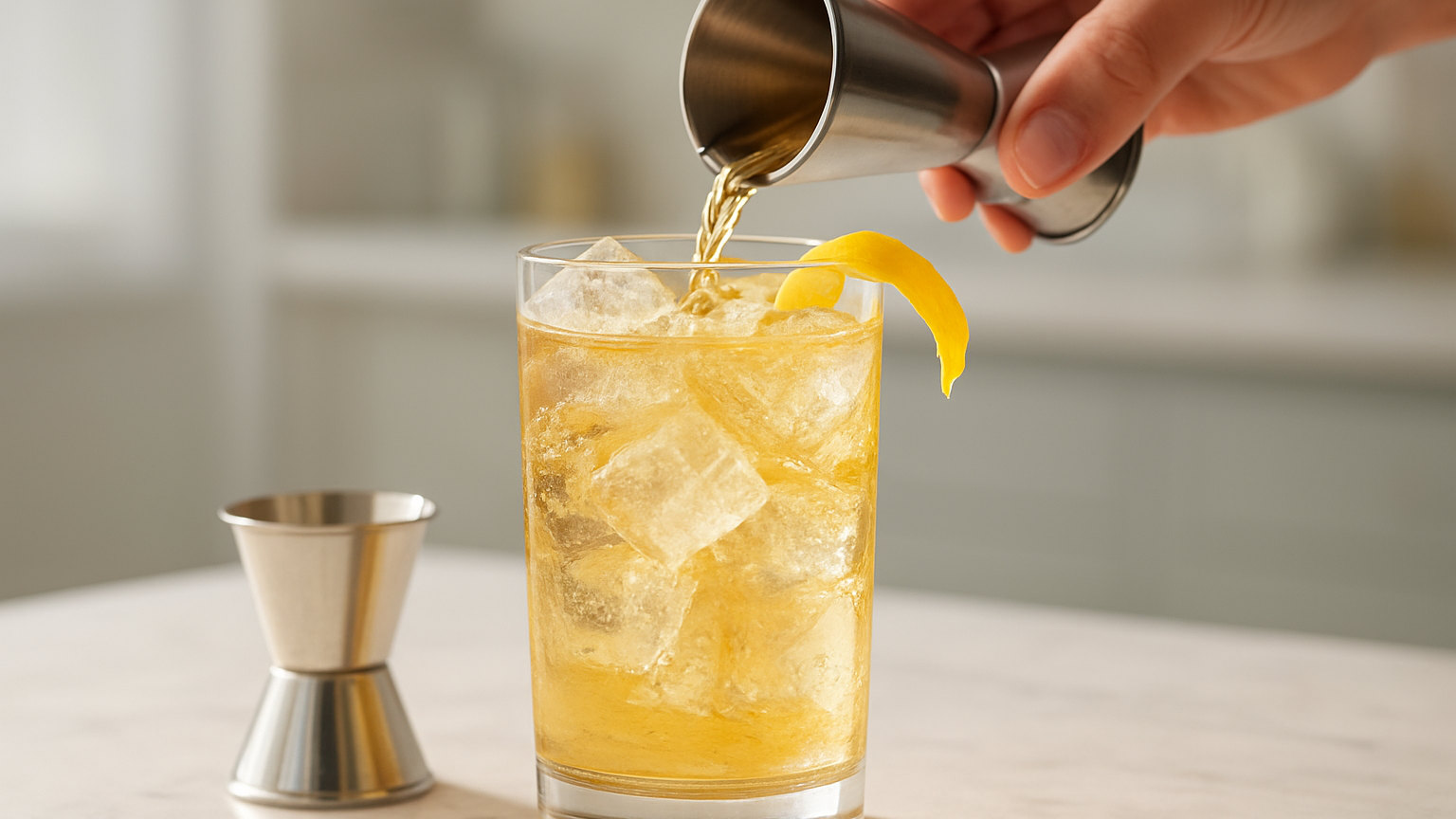
A jigger costs a few pounds and improves the drinks as well as the count, since accurate measurement is what makes a cocktail balanced.
This is the rare case where the thing that helps you drink more carefully also makes the drink better.
Read the labels
Bottles sold in the United Kingdom generally state the units per container as well as the strength, which removes the arithmetic entirely.
A bottle of wine at thirteen per cent contains around nine and three quarter units, which is more than half a week's guidance in one bottle.
Beer strengths vary considerably more than people assume, and a pint at six per cent contains around half as much again as one at four.
Keeping a record
A note on a phone is enough. Several apps track units and some are produced by health organisations.
Two weeks of recording is usually enough to be informative, since the point is to establish what a normal pattern actually looks like rather than to maintain a permanent log.
Most people find the total higher than expected, and the useful part is knowing rather than the number itself.
Practical adjustments
These work without anything feeling like a restriction.
Smaller glasses, which reduce the pour without changing the drink.
Long drinks rather than short ones, since a gin and tonic is around one unit and a martini closer to three.
Lower-strength choices within the same style: an americano rather than a negroni, a spritz rather than a cocktail, a session-strength beer rather than a strong one.
Alternating with water or a soft drink.
Eating properly, which slows absorption.
Drink-free days, which the guidance specifically recommends and which are easier to keep to when decided in advance.
And not keeping large quantities in the house, since availability is a stronger influence than intention.
What the guidance says
United Kingdom Chief Medical Officers advise not regularly drinking more than fourteen units a week, spread over three or more days, with several drink-free days, and state that no level of regular drinking is completely safe.
It is a description of risk rather than an allowance to be used up.
Where to get advice
If you are concerned about your own drinking, or about someone else's, several routes exist.
A GP is a reasonable starting point and these conversations are entirely routine for them.
A pharmacist can advise on interactions with medication, quickly and without an appointment.
The NHS website carries the current guidance, a unit calculator and information on local services.
National helplines and charities offer free confidential advice, including services specifically for people worried about a friend or family member.
None of this requires anything to have gone seriously wrong first, and asking a question early is considerably easier than asking it late.
A last thought
Knowing what is in a drink is part of taking drinks seriously rather than the opposite of it.
Someone who measures, uses good ingredients and pays attention to what they are making generally ends up drinking better and less, which is a reasonable place for a site about drinks to end.


