
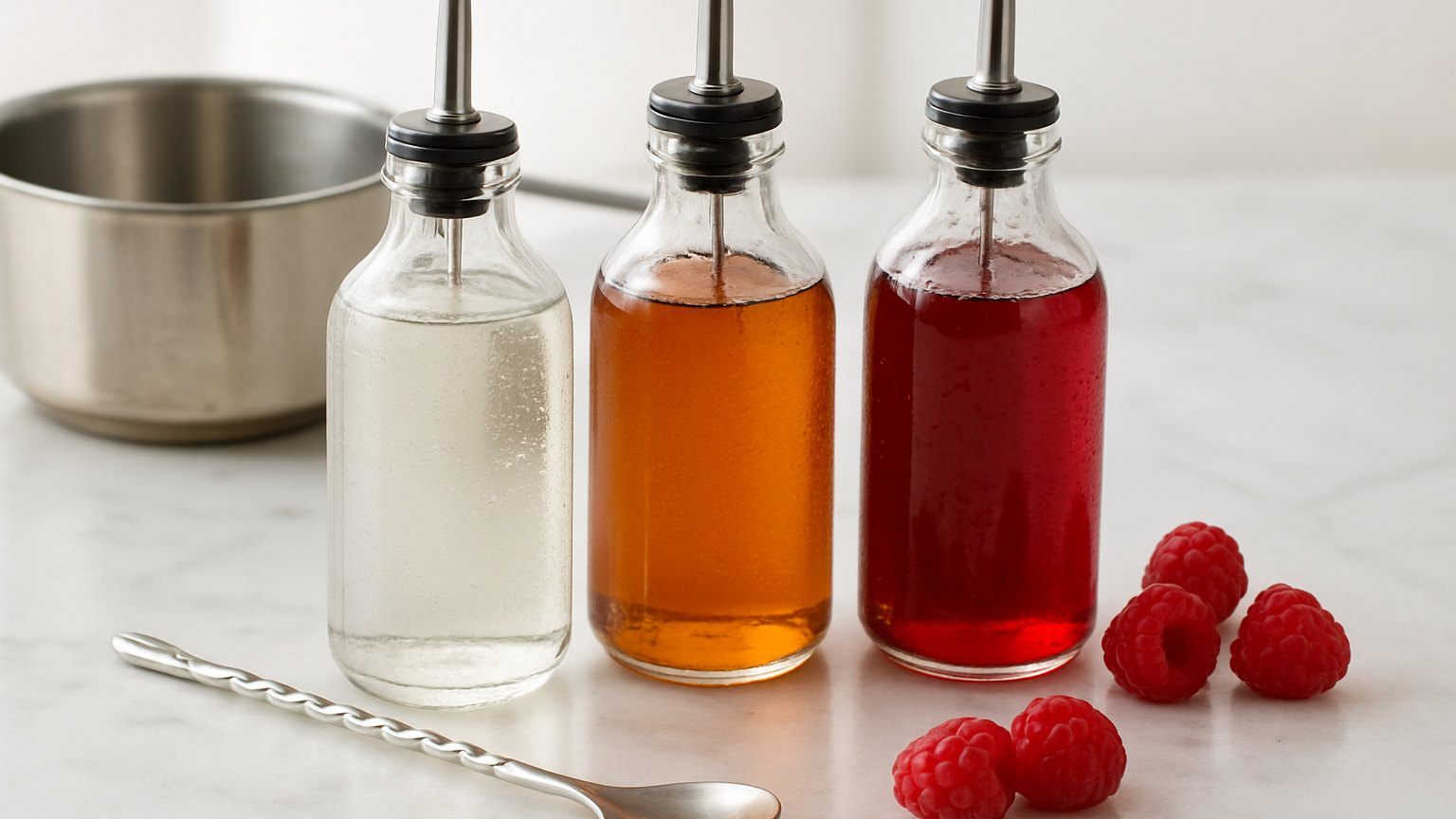
The temptation is to make six things at once and use two of them. A better approach is to make three, use them until they run out, and add more when a drink you actually want demands it.
First: simple syrup
Equal weights of sugar and water, stirred until dissolved. Five minutes and no heat required.
It appears in more drinks than any other made ingredient: sours, daiquiris, Collinses, old fashioneds and most non-alcoholic drinks.
Make a rich version at two parts sugar to one of water if you want it to last longer and add more body, remembering to use less of it.
This one is not optional. Buying syrup instead is among the least sensible purchases in drinking.
Second: honey ginger syrup
Warm equal weights of honey and water with a generous quantity of thinly sliced fresh ginger. Stir until the honey dissolves, steep for thirty minutes, strain.
It unlocks the penicillin, which is the best modern classic there is, and it works in whisky drinks generally, in non-alcoholic drinks with lemon and soda, and in tea.
The ginger should be assertive. More rather than less.
Keeps around two weeks refrigerated.
Third: oleo saccharum
Peel whatever citrus you are about to juice, combine the peels with an equal weight of sugar, muddle and leave for four to twelve hours. Strain.
The sugar draws the aromatic oil out of the peel, producing a syrup that carries the smell of the fruit rather than just its acidity.
It uses something that would otherwise go in the bin, which makes it the best value ingredient on this list.
Use it in punches, in sours in place of syrup, and with soda as a non-alcoholic drink.
What those three cover
Between them: every sour, every highball needing sweetness, the penicillin, punches, and a substantial range of non-alcoholic drinks.
Total work is well under half an hour, spread across a couple of sessions, and the ingredient cost is a few pounds.
The next three
Add these when a drink calls for them rather than in advance.
Demerara syrup, made exactly like simple syrup with unrefined sugar, for old fashioneds and anything with aged spirits.
Grenadine, made from pomegranate juice and sugar, which transforms several drinks usually dismissed as sugary.
A spiced syrup for autumn: cinnamon, clove and star anise steeped in warm syrup for an hour.
The infusion to start with
If you want to try infusing a spirit, a chilli tequila is the fastest way to see the technique work.
One sliced jalapeño in 200 millilitres of blanco tequila, tasted every ten minutes and strained after fifteen to forty five. It makes an excellent margarita.
A tea-infused gin is equally quick: one Earl Grey bag in 200 millilitres of gin for five minutes, tasted carefully.
Both demonstrate the principle and neither commits a whole bottle.
The rules that apply to all of it
Make small quantities, since almost everything perishes faster than expected.
Taste as you go and stop early, since over-infusion cannot be corrected.
Strain the solids out rather than leaving them in the bottle.
Refrigerate everything with sugar or fresh ingredients in it.
Label with the contents, the date and any allergens.
The point of doing it
Cost is part of it: a syrup made at home costs a fraction of a commercial equivalent and is generally better.
Freshness is more of it, since a syrup made on Sunday tastes of the ingredient rather than of a flavouring.
And control is most of it. Once you can make the ingredients, a recipe becomes something you can adjust rather than something you have to follow.
Where to keep the recipes
Write down the ratios that worked, since a syrup you made once and liked is impossible to reproduce from memory a month later.
A page in a notebook or a note on a phone is enough, and it turns occasional successes into a repertoire.


