
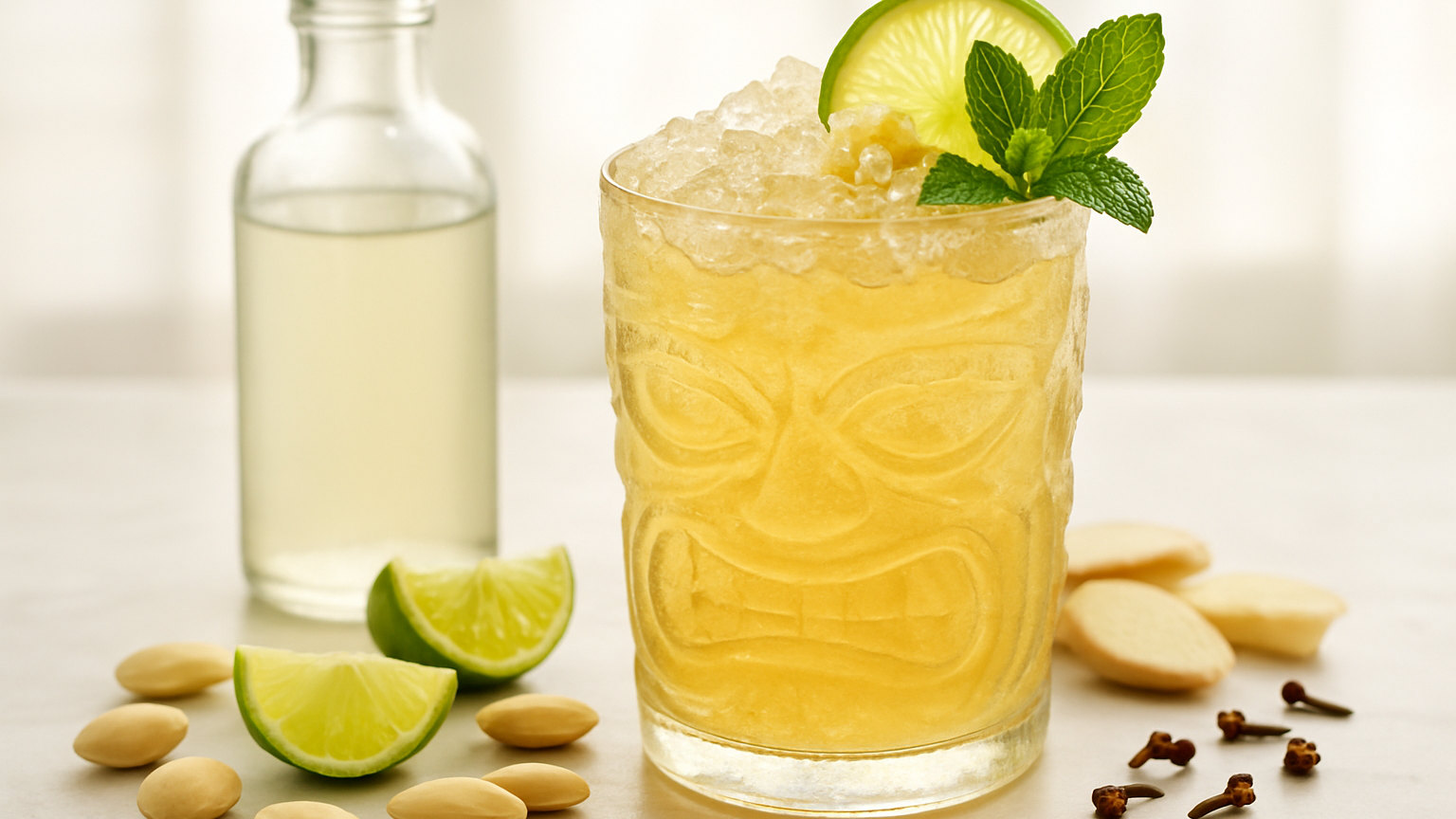
Falernum comes from Barbados and combines lime zest, ginger, almond, clove and sugar. It is spicy, citrusy and faintly nutty, and it does a great deal of work in a small measure.
The two forms
Falernum exists as a syrup and as a low-strength liqueur, generally around eleven per cent, and recipes are not always clear which they mean.
The liqueur is the more common commercial product and is what most recipes calling for falernum assume.
The syrup is non-alcoholic and slightly sweeter, and it is what you get if you make it without spirit.
Substituting one for the other works with a small adjustment, since the alcoholic version is drier and the syrup version needs slightly less.
What is in it
Lime zest, which supplies the citrus aroma without acidity.
Fresh ginger, providing heat and warmth.
Cloves, which are assertive and used sparingly.
Almonds, contributing nuttiness and body, though some recipes use almond extract instead.
Sugar, and in the alcoholic version, rum.
Allspice appears in some recipes and not others.
The allergen point
Most falernum contains almonds, which is a declarable allergen.
Commercial products vary and some use almond flavouring rather than nuts, so the label is worth reading if it matters.
Say what is in a drink when serving it, since a small measure of a spiced syrup gives no indication that it contains nuts.
Making it
Zest six limes, taking the coloured layer only.
Combine the zest with 40 grams of sliced fresh ginger, 30 blanched almonds roughly chopped, and 12 whole cloves.
For the alcoholic version, cover with 250 millilitres of overproof white rum and leave for 24 hours.
Strain, then combine the infused rum with a syrup made from 250 grams of sugar and 150 millilitres of water, plus the juice of two of the limes.
For the syrup version, steep the same ingredients in warm syrup for a few hours rather than in rum, then strain and add the lime juice.
Bottle and refrigerate. The alcoholic version keeps for a couple of months; the syrup version for two weeks.
Getting the balance right
Cloves are the ingredient most likely to take over, and twelve is already generous. Taste as it infuses and strain early if the clove becomes dominant.
Ginger heat builds over the infusion, so more is not always better.
Lime zest is the element that makes it recognisable, so do not skimp on it, and keep the white pith out since it contributes bitterness.
Which drinks use it
The Corn 'n' Oil, which is Barbadian rum, falernum and bitters over ice, and the drink that demonstrates it most clearly.
The Royal Bermuda Yacht Club, rum, lime, falernum and orange curaçao.
A great many tiki drinks, where it appears alongside other syrups.
The Zombie and several other multi-ingredient rum drinks.
And it works simply with rum and lime over crushed ice, which is the easiest way to find out whether you like it.
Beyond rum
Falernum is versatile in a way its tiki association obscures.
It works with gin, particularly in a highball with soda and lime.
It suits whisky, where the clove and ginger meet the oak.
And it is excellent in non-alcoholic drinks with lime and soda, since it supplies spice, body and aroma at once.
Buying it
Several commercial versions exist and they vary considerably in sweetness and clove intensity.
A bottle lasts a long time given the small measures involved, and it is a reasonable purchase for anyone who drinks rum.
The homemade version is fresher and more limey, and it does not keep nearly as long.
Storage and strength
The alcoholic version keeps for months thanks to the rum. The syrup version is perishable and should be refrigerated and used within a fortnight.
At around eleven per cent, the liqueur contributes a small amount of alcohol to a drink, which is worth knowing if you are making something for someone avoiding it.


