
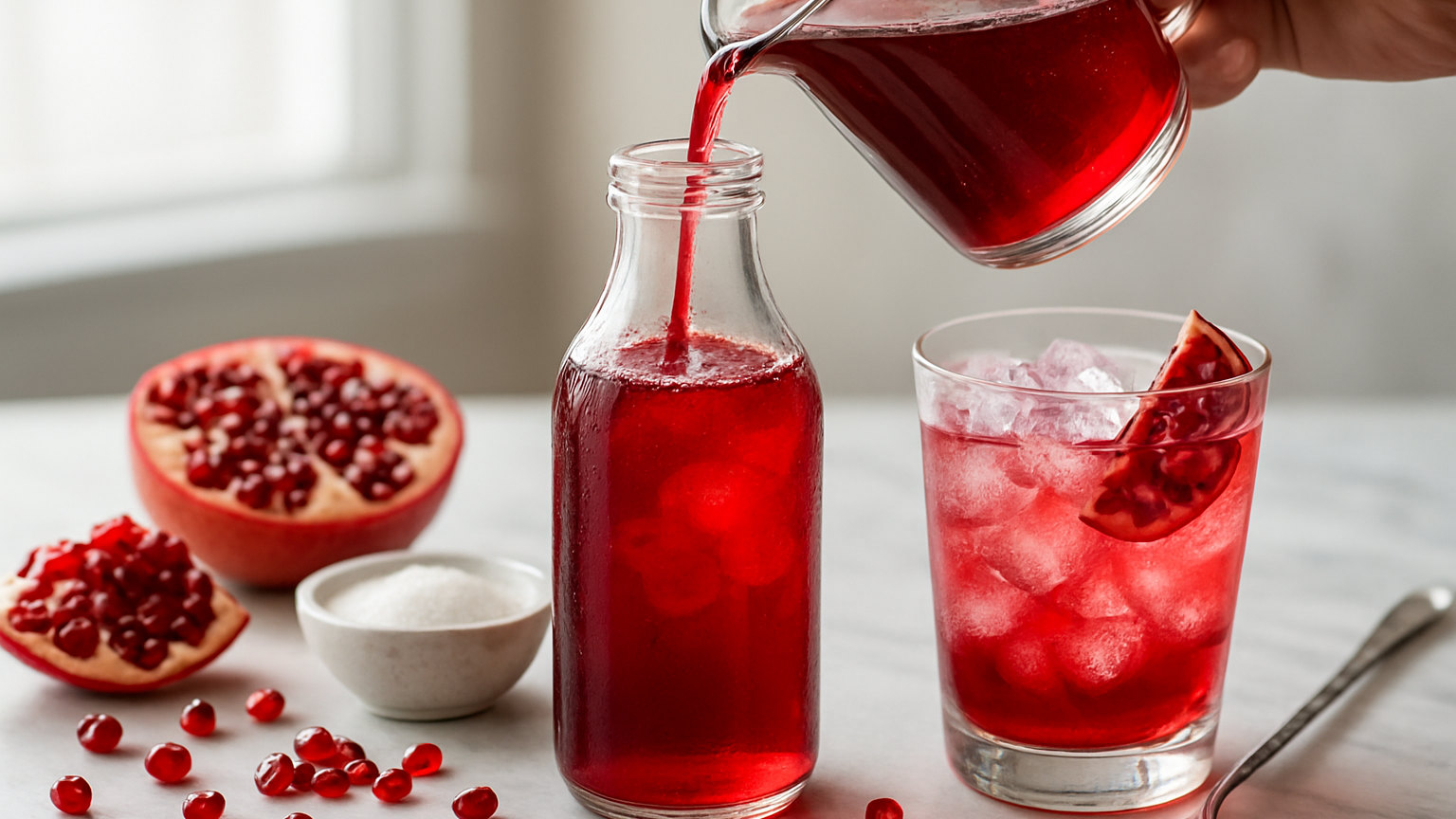
Grenadine takes its name from the French for pomegranate, and that is what it is: a syrup made from pomegranate juice. The bright red product sold in most shops frequently contains no pomegranate whatsoever.
What the commercial version is
Typically sugar syrup with artificial colouring and flavouring, sometimes with a small proportion of fruit juice from elsewhere.
It tastes sweet and generically fruity, with none of the tartness and tannin that real pomegranate contributes.
This is why drinks built on grenadine acquired a reputation as sugary and childish. Made with the real thing they are considerably drier and more interesting.
Some producers do make a genuine pomegranate grenadine, and reading the ingredients is the way to tell.
Making it
Combine 250 millilitres of pure pomegranate juice with 250 grams of caster sugar.
Warm gently, stirring, until the sugar dissolves. Do not boil, which drives off the fresh fruit character.
Take it off the heat and let it cool.
Add a teaspoon of pomegranate molasses if you have it, which deepens the flavour and adds tartness.
A few drops of orange flower water is traditional and gives the floral note that distinguishes a good grenadine. Use it sparingly, since it is powerful.
A small measure of vodka, around 15 millilitres, extends the shelf life.
Bottle, refrigerate and use within two to three weeks.
The juice
Use pure pomegranate juice rather than a juice drink, and check the label, since many products are largely apple or grape juice with a proportion of pomegranate.
Fresh pomegranates give the best result and are considerably more work. Halve them, and either juice them on a citrus press or scoop out the seeds and press them through a sieve.
The seeds themselves are edible and the white pith is bitter, so keep it out.
Bottled pure juice is entirely adequate and is what most people should use.
What it tastes like
Sweet, definitely, and also tart and slightly tannic, with a dry finish that the commercial version lacks entirely.
The colour is a deep ruby rather than a bright pillar-box red, which is a reasonable way to tell the two apart on sight.
Which drinks use it
The tequila sunrise, where real grenadine transforms a drink usually dismissed as sugary.
The Jack Rose, applejack or calvados with lemon and grenadine, which is an excellent and forgotten classic.
The Ward Eight, a whiskey sour with grenadine.
The Clover Club is sometimes made with grenadine, though raspberry syrup is the better choice.
And a great many tiki drinks, where it contributes colour and tartness alongside other syrups.
Non-alcoholic drinks benefit particularly, since real grenadine supplies acidity and tannin that a fruit juice mixture otherwise lacks.
Adjusting it
The sugar ratio can be reduced to around three parts juice to two of sugar for a tarter syrup, at the cost of a shorter shelf life.
Adding a strip of lemon peel during the warming gives a citrus lift.
A small amount of hibiscus makes it sharper and deepens the colour.
Storage
Refrigerate in a clean sealed bottle and use within two to three weeks, or freeze in portions.
It contains fruit juice, so it is more perishable than a plain syrup and should be treated accordingly.
Discard anything cloudy or fizzing, and label the bottle with the date.
Buying it instead
Perfectly reasonable, and the label is what matters.
Look for pomegranate juice high in the ingredients list rather than sugar, water and colouring. The good ones exist and cost more than the red syrup sold alongside them.
Pomegranate molasses
A related ingredient worth having: reduced pomegranate juice with no added sugar, intensely tart and used in cooking.
A teaspoon in a homemade grenadine deepens it considerably, and it works on its own in drinks where you want tartness without sweetness.
Why it is worth making
Grenadine is the ingredient where the gap between homemade and commercial is largest.
Ten minutes of work turns several drinks from sugary curiosities into things worth ordering, which is a better return than most bottles on a shelf.


