A flavoured syrup carries sweetness, body and aroma in one ingredient, which is why so many good drinks are built on one. Making them is straightforward and the only judgement required is when to stop.
The two methods
Hot infusion: warm the syrup, add the flavouring, leave it to steep off the heat, then strain.
Cold infusion: combine the flavouring with cold syrup and leave it for a day or more in the fridge.
Hot is faster and extracts more, including some compounds that only come out with heat. Cold is slower and preserves delicate aromatics that heat would drive off.
As a rule, use heat for roots, spices and hard ingredients, and cold for herbs, flowers and anything delicate.
Timings
These matter more than anything else, and the range is wide.
Ginger, sliced thinly: warm and steep for thirty minutes. One of the most useful syrups there is.
Hard spices such as cinnamon, cardamom, star anise and clove: thirty minutes to an hour, tasting as you go, since they intensify quickly.
Vanilla: a split pod in warm syrup for a few hours, or overnight for a stronger result.
Robust herbs such as rosemary, thyme and sage: fifteen to twenty minutes.
Delicate herbs such as mint and basil: five to ten minutes, and no longer. Beyond that they turn grassy and vegetal, which is the most common way a herb syrup is ruined.
Hibiscus, dried: ten to fifteen minutes, producing a sharply acidic red syrup that supplies sourness as well as sweetness.
Chilli: fifteen minutes to a couple of hours depending on the chilli, tasting every ten minutes at first.
Coffee beans: four to twelve hours cold.
Tea: minutes rather than hours, since tannin extraction turns it astringent quickly.
The method in detail
Make a syrup at your preferred ratio.
For a hot infusion, warm it gently without boiling, add the flavouring, take it off the heat and cover it.
Taste every ten or fifteen minutes with a clean spoon. When it reaches the intensity you want, strain immediately, since it continues extracting while the solids remain.
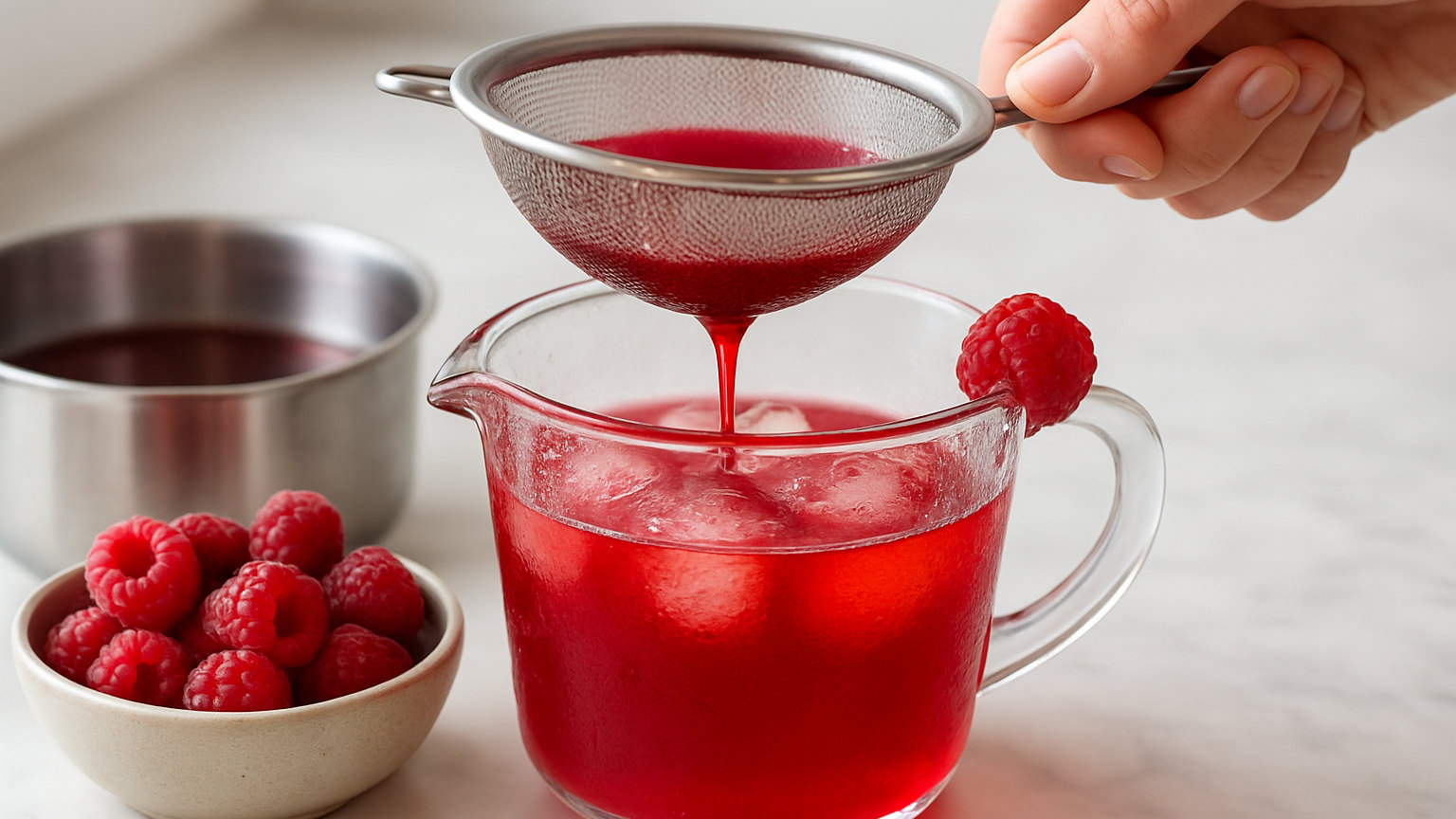
Strain through a fine sieve, then through muslin or a coffee filter if you want it clear.
Cool completely before bottling, since warm syrup in a sealed bottle creates condensation.
Preparing the ingredient
Surface area governs extraction speed.
Slice ginger thinly rather than chopping it in chunks. Bruise herbs gently rather than tearing them. Crack whole spices rather than grinding them, since ground spice makes the syrup cloudy and difficult to strain.
Split a vanilla pod lengthways and scrape the seeds in along with the pod.
Slice chillies and decide whether to include the seeds and membrane, which carry most of the heat.
Under rather than over
The general rule.
A syrup that is not quite strong enough can be returned to the pan with more of the ingredient. One that has gone too far cannot be rescued, and diluting it with plain syrup weakens everything rather than just the excess.
Delicate herbs and strong spices are where this matters most.
Storage
Refrigerate in a clean sealed bottle and use within one to two weeks for anything containing fresh ingredients.
Syrups made with dried spices keep longer, often a month.
Always strain the solids out rather than leaving them in the bottle, since prolonged contact continues extracting and the solids themselves spoil.
Label with the contents and the date, and discard anything cloudy, fizzing or smelling of fermentation.
Freezing in an ice cube tray extends the life indefinitely and gives measured portions, which is particularly useful for seasonal ingredients such as elderflower or rhubarb.
Combining flavours
Two or three ingredients in one syrup works well and four or more tends to muddle.
Ginger and honey, cinnamon and vanilla, rosemary and lemon peel are all reliable pairs.
Where the ingredients extract at very different rates, infuse them separately and combine the finished syrups instead.