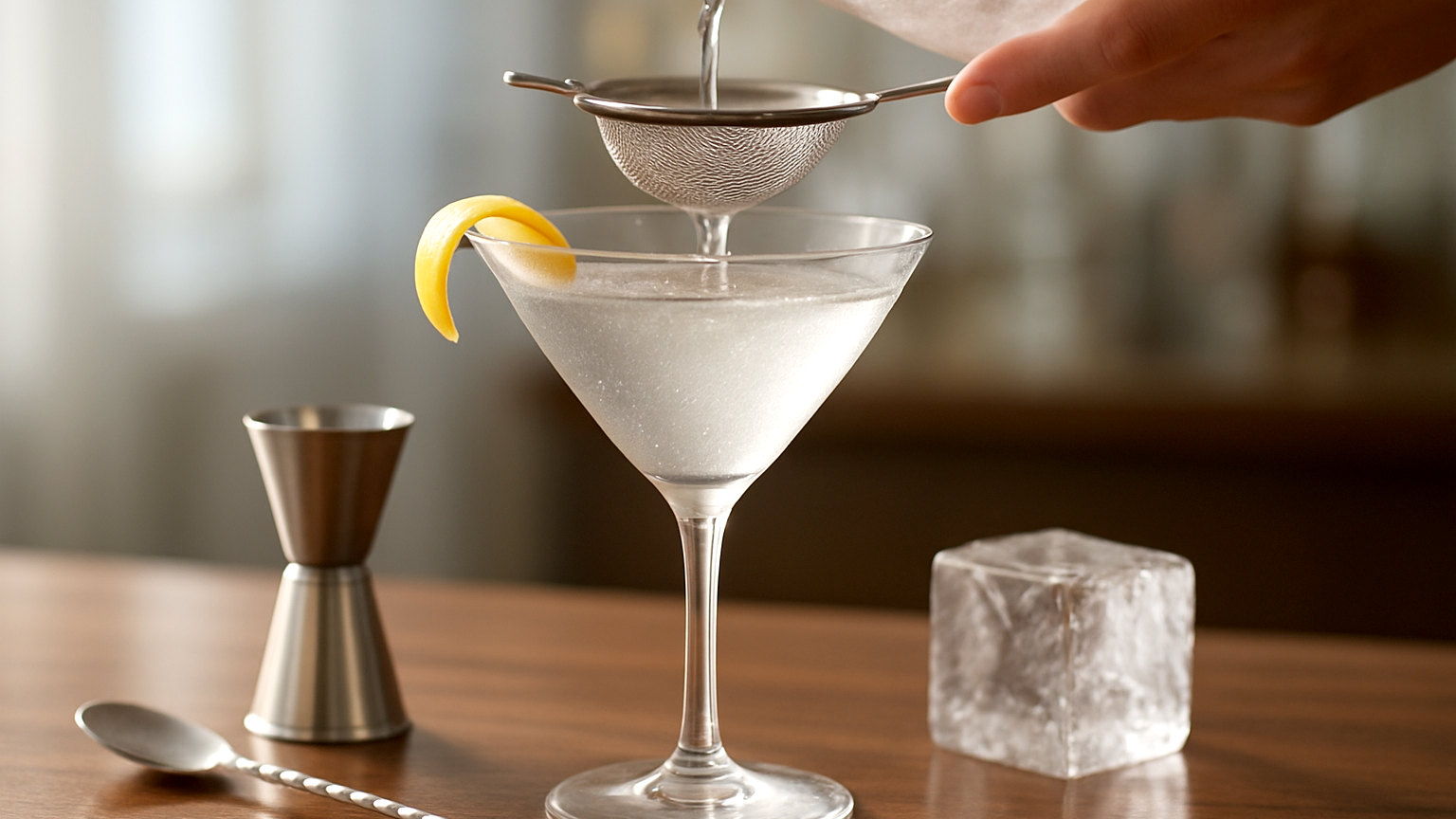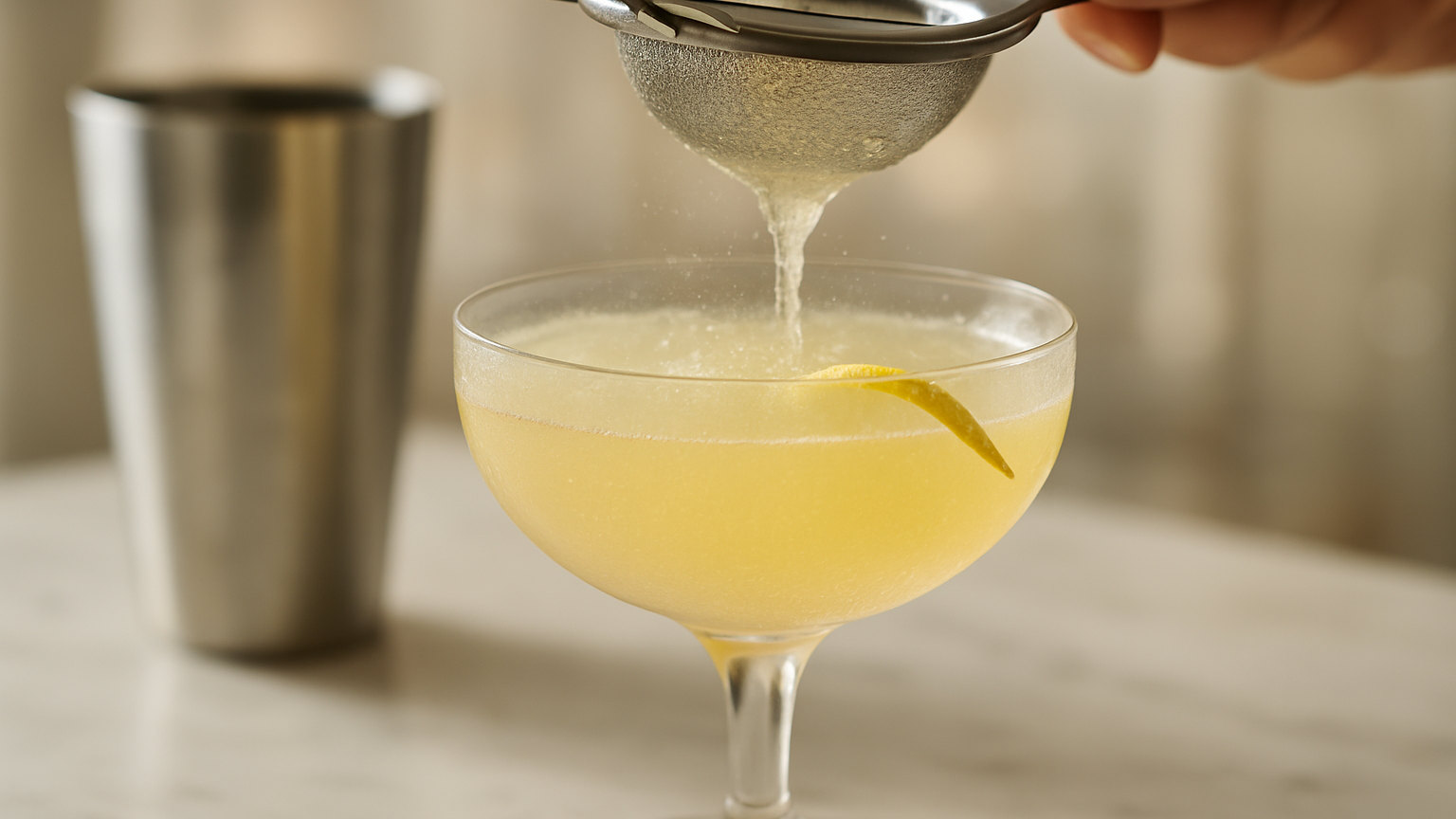
Double straining means pouring through a Hawthorne strainer and a fine mesh sieve at the same time. It takes an extra second and it matters for a specific set of drinks.
What the first strainer misses
A Hawthorne strainer, with its coiled spring, catches ice cubes and large fragments.
What passes through is tiny ice shards produced by shaking, along with citrus pulp, herb fragments and fruit particles.
In a drink served over fresh ice, none of that matters. In a drink served up with no ice, all of it does.
Why ice shards matter
A drink served up has been diluted to a specific point and is intended to stay there.
Ice shards continue melting in the glass, diluting the drink further over the following minutes, which is precisely what the careful shaking was meant to control.
They also affect the texture, giving a slightly gritty quality that is noticeable in a drink meant to be silky.
And they look careless in a clear glass.
Which drinks need it
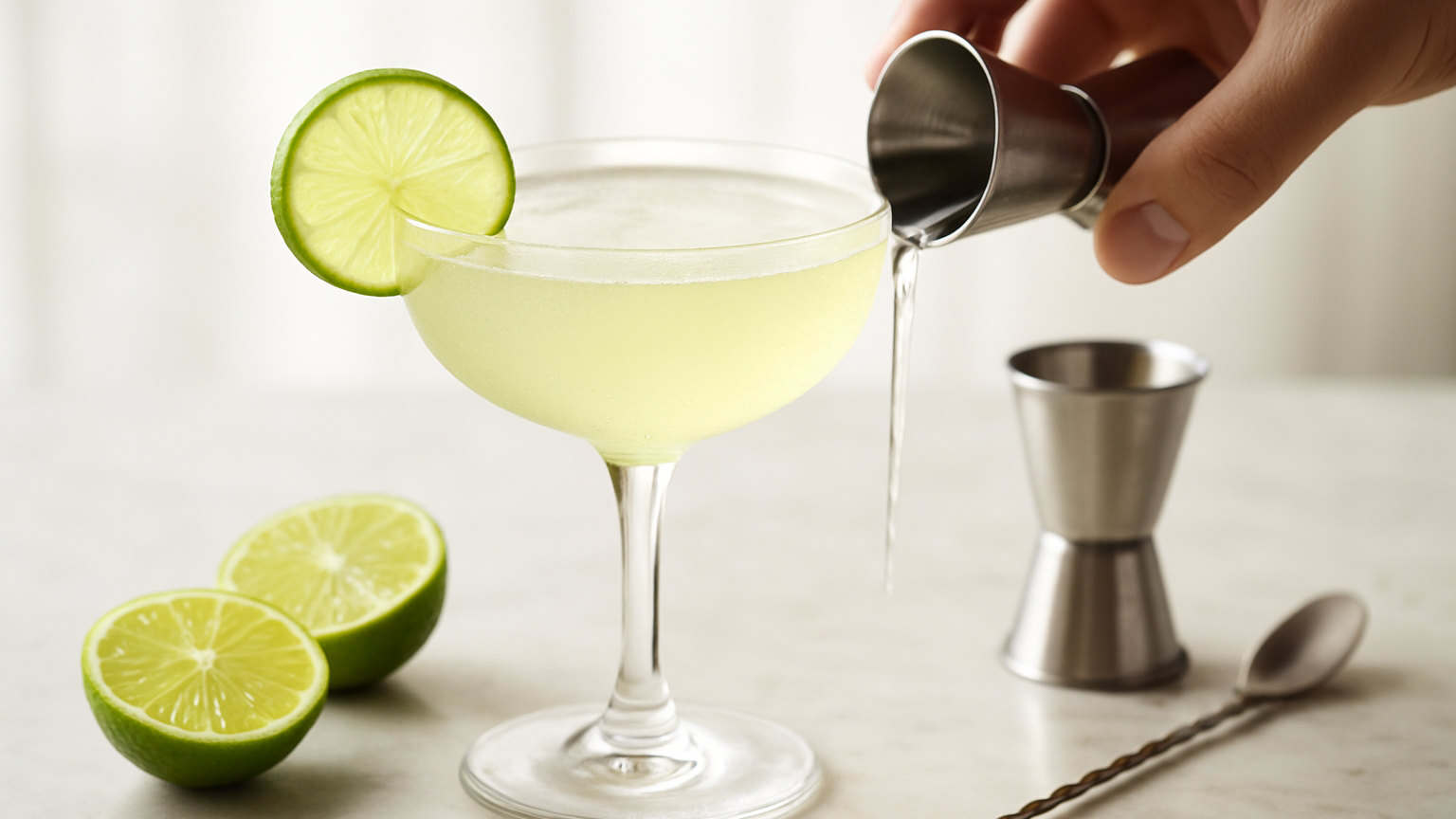
Anything shaken and served up: daiquiris, margaritas, sours, sidecars, gimlets.
Anything containing muddled herbs or fruit, where fragments would otherwise float in the glass.
Anything with egg white, where a clean surface holds the foam better and lets bitters sit on top rather than sinking through debris.
Anything with citrus pulp, which is most fresh citrus drinks unless the juice was strained.
Which do not
Anything served over fresh ice, where shards are irrelevant.
Anything stirred, which produces very few fragments in the first place.
Anything built in the glass, which needs no straining at all.
Drinks where a little texture is wanted, which is a matter of preference.
The technique
Hold the Hawthorne against the tin with your index finger on the tab.
Hold a fine mesh sieve in the other hand over the glass.
Pour through both in one steady movement.
Do not tap or scrape the sieve to get the last drops, which drags fine particles through and defeats the purpose.
Equipment
A small kitchen sieve works perfectly well and there is no need to buy a dedicated one.
A conical strainer with a fine mesh is the professional version and is easier to hold with one hand.
The mesh should be genuinely fine. A coarse sieve catches herb leaves and lets ice shards through, which achieves half the job.
Cleaning it
The main practical point.
Rinse immediately in cold water, particularly after egg white, which sets hard in the mesh and is the usual reason a fine strainer stops working.
Cold water first, then hot with detergent. Hot water alone cooks protein into the mesh.
A soft brush clears anything caught.
Straining the juice instead
An alternative worth knowing.
Straining citrus juice through a fine sieve when you squeeze it removes the pulp before it reaches the shaker, which means the finished drink needs only a single strain.
For batching, this is the sensible approach, since straining a litre of juice once is quicker than double straining twenty drinks.
Some bartenders prefer a little pulp for texture, which is a legitimate preference rather than laziness.
What it does not achieve
Double straining removes solids. It does not remove cloudiness caused by aeration, which is dissolved air rather than particles.
A shaken drink will remain slightly cloudy however carefully it is strained, and that is intended rather than a fault.
If you want a genuinely clear drink, stir it.
For batching
Strain the citrus juice once when you squeeze it rather than double straining every drink, which is considerably faster at volume.
The visual difference
A double-strained drink has a clean, even surface. A single-strained one has visible fragments floating on top.
In a coupe under a light, that is immediately apparent, which is a fair part of why bars bother.
The extra second
It genuinely takes one, once the sieve is to hand.
Keeping it next to the shaker rather than in a drawer is what makes the difference between doing it and not.