
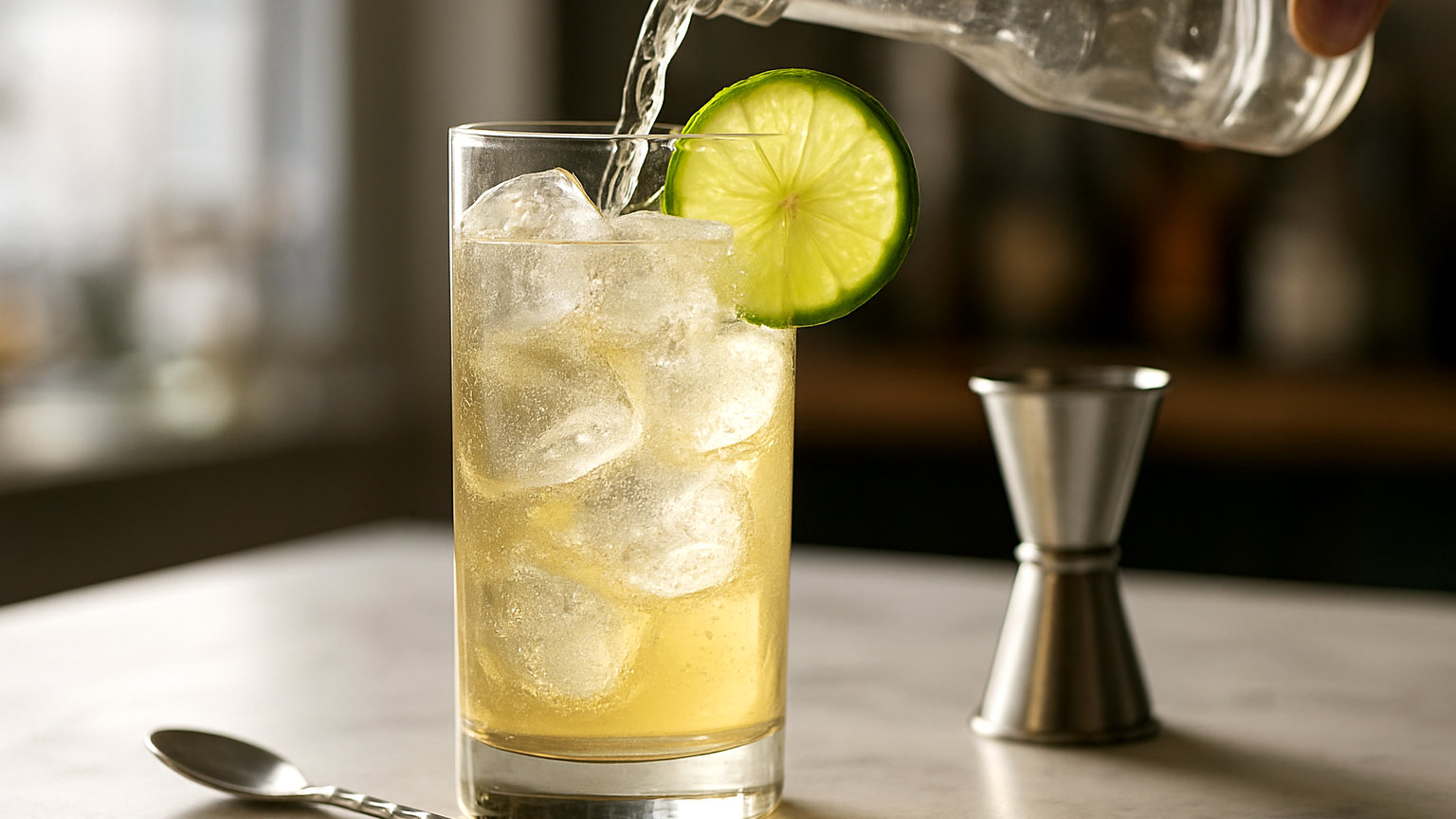
Building means assembling a drink in the serving glass with no separate mixing vessel. It is how highballs, mules, palomas and a great many other drinks are made, and it is the technique used most often and thought about least.
Which drinks are built
Anything long and carbonated, since the mixer would lose its bubbles in a shaker.
Anything where continuous dilution is intended, such as a drink over crushed ice.
Some spirit-forward drinks, notably the old fashioned in its traditional form and the negroni, which many bartenders build over ice rather than stirring separately.
Anything where speed matters more than precision.
The order
It matters more than people assume.
The general principle is to add the cheapest and most voluminous ingredients last, so a mistake earlier costs less.
For a highball: ice first, filling the glass completely, then the spirit, then any citrus or syrup, then the mixer poured gently down the side.
Putting the ice in first means the spirit is chilled as it goes in and the mixer arrives on a cold surface, which preserves carbonation.
Adding the mixer last and gently is the step that matters most, since agitation drives off the bubbles.
The stir
One brief lift with a bar spoon, no more.
The temptation is to stir thoroughly, which flattens the drink. Density differences and the pour itself do most of the mixing.
A single vertical lift from the bottom of the glass brings the spirit up through the mixer without much agitation.
Ice first, always
The most common error in building is putting the ice in last or using too little.
Fill the glass completely before anything else goes in. A packed glass chills the drink quickly and then melts slowly; three cubes produce a watery drink within minutes.
Use fresh ice straight from the freezer rather than cubes that have been sitting out.
Building spirit-forward drinks
A negroni built in the glass rather than stirred separately is common practice and produces a slightly different drink.
It dilutes continuously rather than reaching a fixed point, so it starts stronger and lengthens as you drink.
A single large cube minimises that, and a glass of small cubes maximises it.
Either is legitimate, and stirring separately gives more control over where the drink starts.
The old fashioned
Traditionally built: sugar, bitters and a splash of water muddled in the glass, then the spirit, then ice, stirred as you go.
Modern practice frequently stirs it in a mixing glass and strains over a fresh cube, which gives more control over dilution.
Both are correct, and the built version is closer to how the drink was originally made.
What building cannot do
Emulsify. Anything with egg white, dairy or a substantial quantity of citrus needs shaking to combine properly.
Achieve precise dilution, since the drink continues diluting rather than stopping at a target.
Produce a clear drink where the ingredients have different densities, which will separate visibly if not stirred.
Why it is worth doing well
Built drinks are the ones most people make most often, at home and in pubs.
Small improvements therefore have a disproportionate effect: filling the glass with ice, chilling the mixer, pouring gently and stirring once takes no longer than doing none of those things.
The difference in the glass is larger than switching to a more expensive spirit.
Layered built drinks
Some built drinks are meant to separate visually.
A tequila sunrise has grenadine poured in last, which sinks and creates a gradient. A dark and stormy floats dark rum on ginger beer.
In both cases the drink is stirred by the drinker rather than by the maker, which is a deliberate choice rather than an omission.
The advantage at home
Built drinks require no shaker, no strainer and no washing up beyond the glass.
Which is a substantial part of why they are the drinks people actually make on a weekday evening.
Getting the ratio right
Measure rather than free pouring, since a built drink has no shaker to disguise a heavy hand.
One part spirit to three or four of mixer is the usual range, and worth deciding deliberately.


